

This is 72: Joyce Maynard Responds to The Oldster Magazine Questionnaire
"My picture of what 72 looks like includes adventure, learning, open mindedness, physical challenges and, I’ll say these words: Love, sex and romance."

From the time I was 10, I’ve been obsessed with what it means to grow older. I’m curious about what it means to others, of all ages, and so I invite them to take “The Oldster Magazine Questionnaire.”
Sometimes you’ll find responses from writers, musicians, and artists you’ve heard of—like Kate Pierson, Neko Case, Rosie O’Donnell, Ava Duvernay, Jerry Saltz, Lucy Sante, magazine legend Tom Junod, Ricki Lake, Hilma Wolitzer, Elizabeth Gilbert, Judith Viorst, Cheryl Strayed, Deesha Philyaw, Chloe Caldwell, etc.—but more often it will be people (of all ages) you haven’t heard of, Humans of New York-style. (Check out all the Oldster interviews…)
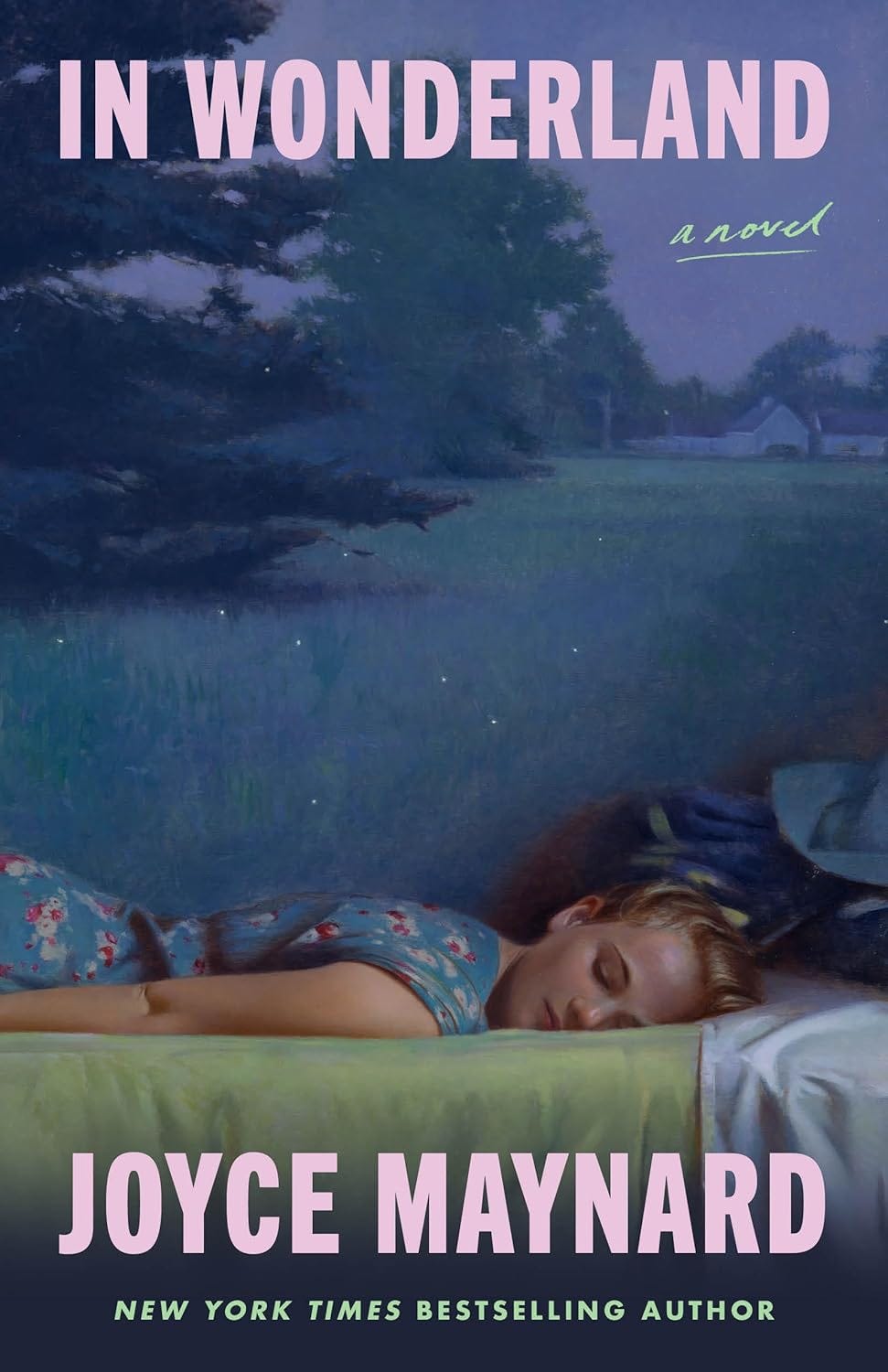
Here, celebrated author Joyce Maynard—most recently of the novel In Wonderland, released yesterday—responds. -Sari Botton
PS If you’re enjoying the work I do here at Oldster, please consider supporting it by becoming a paid subscriber. 🙏
“I love the spirit of Oldster and the fresh perspective it brings to aging with its wide-ranging essays and interviews.” - Deborah Batterman, paid subscriber.
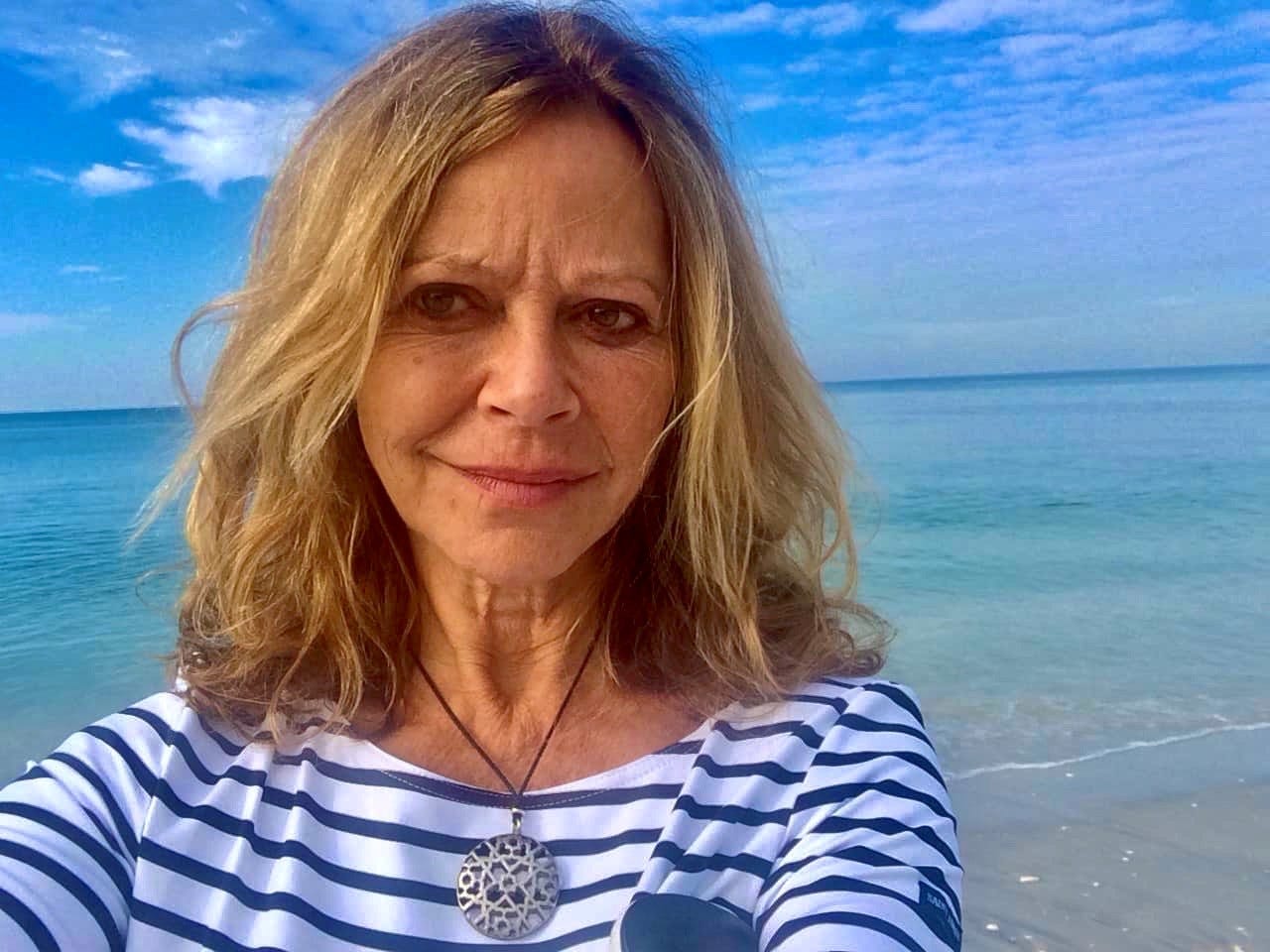
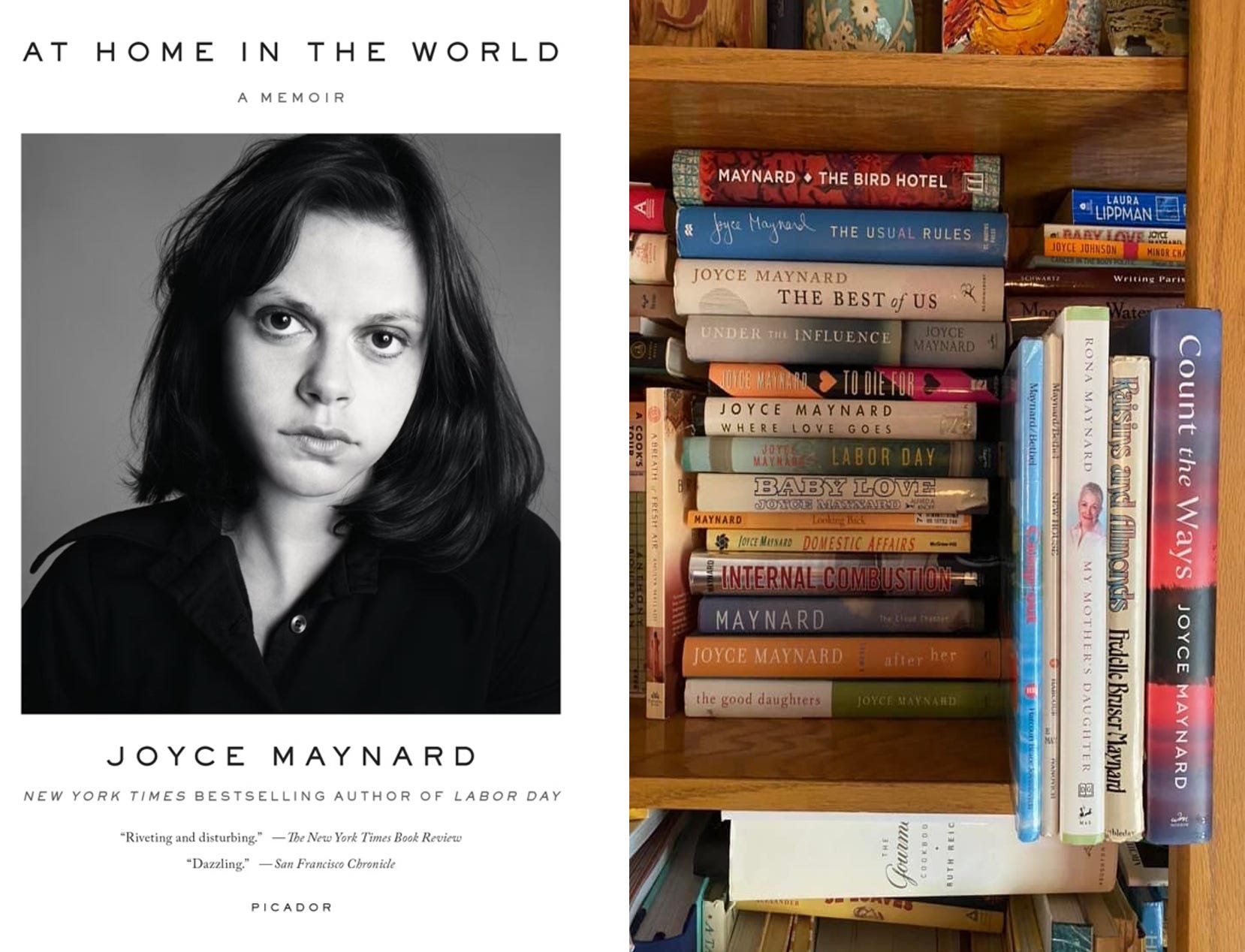
Joyce Maynard Joyce Maynard is the New York Times-bestselling author of fourteen novels and five books of nonfiction and the longtime syndicated column “Domestic Affairs”. Her memoir, At Home in the World has been translated into eighteen languages. Her novels To Die For and Labor Day were both adapted for film.
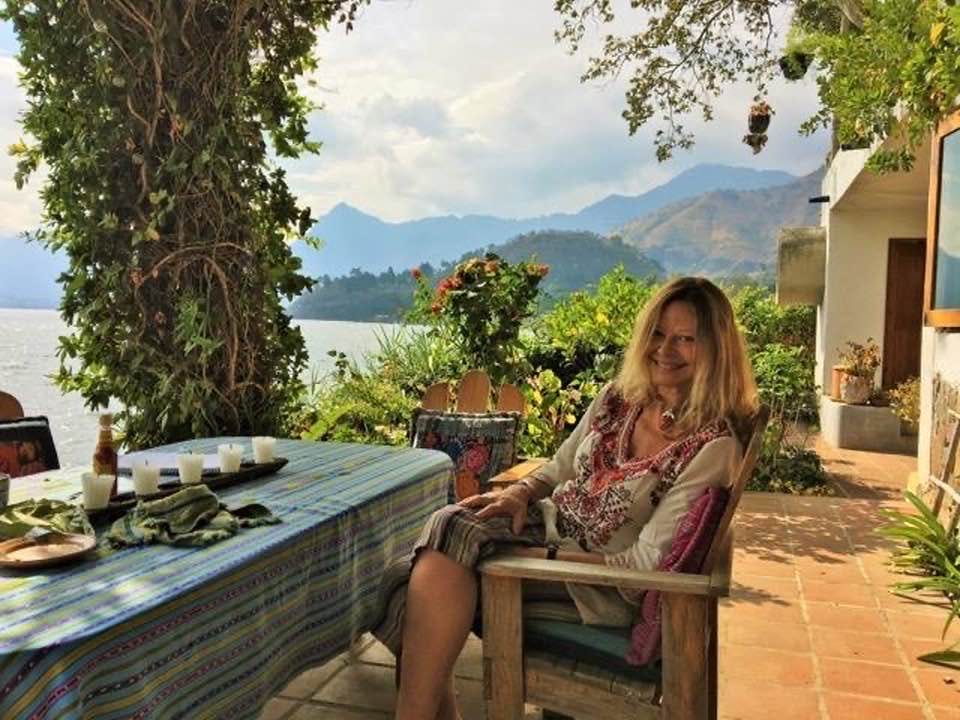
She is a fellow of MacDowell and Yaddo residencies, and is the founder of a retreat center, Casa Paloma, on the shores of Lake Atitlan, Guatemala, where she has been hosting writing workshops, helping women tell the stories of their lives, for over twenty-five years.
Her 14th novel, In Wonderland, was published yesterday, July 14, 2026.
—
How old are you?
72! And proud of it!
Is there another age you associate with yourself in your mind? If so, what is it? And why, do you think?
In my fiction, I often return to adolescence—as I do in my newest novel. As many years as have passed since my own teenage years, I still feel a burning connection to that young girl who used to be me, and to the struggle that accompanies moving from childhood into life as an adult. And by the way: I have not only focused my novels on female adolescents. In several of my novels—Labor Day, To Die For, The Cloud Chamber—I entered the world of an adolescent boy. That’s one of the great gifts of writing fiction. I get to explore other lives beyond my own. I even get to be a boy if I want to. And I get to revisit youth.
When I talk about my activities, I wouldn’t say I’m “not acting my age.” I prefer to frame it that I try to redefine—for myself, anyway—what this age truly represents. Just because a person’s in her 70s doesn’t mean she has to give up hiking. She might just get a pair of hiking poles.
Do you feel old for your age? Young for your age? Just right? Are you in step with your peers?
I have been blessed with great health—a gift I fully recognize I’ll have until I don’t, and one I never take for granted. I offer up my gratitude daily, out loud, for having an abundance of health and energy that might make some people think I’m younger than I am. Until they look at the lines around my eyes, anyway.
But in one way—the territory of life wisdom—I am in step with my age. I can look back now even on my 65-year-old self and reflect on all the things she didn’t know, that I know better now.
I guess my relentless interest in creating new work, embarking on ambitious projects, and learning new things, my approach to life, might seem more aligned with that of a considerably younger person. Just six years ago, I turned a simple little adobe house I own in Guatemala into a retreat center and hotel where I now host six retreats every winter. When the retreats were over, I went hiking in Utah for ten days.
When I talk about my activities, I wouldn’t say I’m “not acting my age.” I prefer to frame it that I try to redefine—for myself, anyway—what this age truly represents. Just because a person’s in her 70s doesn’t mean she has to give up hiking. She might just get a pair of hiking poles.
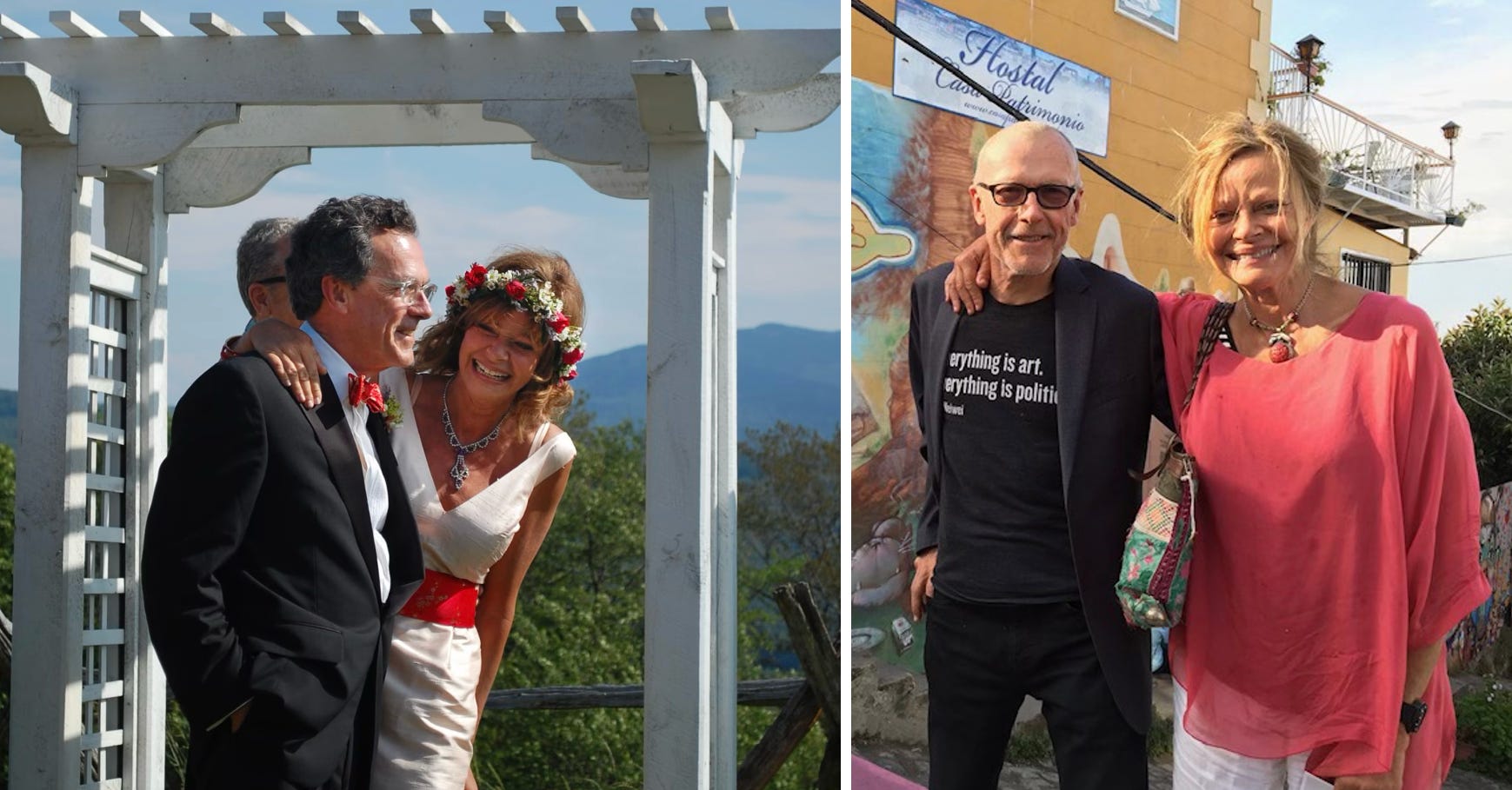
I never lie about my age, or yearn to be someone I’m not. But my picture of what 72 looks like includes adventure, learning, open mindedness, physical challenges and, I’ll say these words: Love, sex and romance. I married my very good second husband, Jim, when I was 59 years old and lost him when I was 62. Three days shy of my 71st birthday, I met the man I love and live with now.
I’ve never been a woman who viewed the presence of a partner as an essential element of life; in fact, over the decades I’ve been single far more than I’ve been part of a couple—but finding deep love, again, at an age when some might suppose that was no longer a possibility is, for me, a source of continued inspiration and wonder. And it’s an expression of optimism. I don’t kid myself that my boyfriend and I (yup, I use the word boyfriend) can count on decades of life ahead of us. But I see no advantage in living as if we’re lowering our horizons, closing up shop.
Case in point: We just got a house together that needs a vast amount of work before it’s habitable. A lot of that work will be done by us. (Okay. It helps that my boyfriend is a builder, a few years younger than I.)
If you took a look at this piece of property—at the end of a road so steep and bumpy I couldn’t drive my car up until my boyfriend brought in an excavator to fix it—you’d say this might be a great project for a couple of unusually energetic (or crazy) 35-year-olds to take on. In our case, I think continuing to seek out large challenges is our way of dealing with growing older. We’re realistic, but optimistic. And on the list of requirements, when we considered where to live, “proximity to a major medical facility” or “low maintenance” didn’t make the list.
We went for “great redwood trees” and “great soil for a garden.”
What do you like about being your age?
I won’t be the first to say this: All those things I used to care about so much—top of the list, what other people thought or had to say about me—no longer matter. I know who I am, who I am not, and if I rub some people the wrong way, I accept that.
I like having reached the point in life where—after decades of meeting the needs of parents, then children, and shaping my days around providing for those I loved—I am able, finally, to look around and ask, “What might I like? What do I want?” I will always want to be a help and source of support for people I love, or those in need of assistance. But I can also be, at long last, guiltlessly selfish sometimes. That might look like nothing more than buying myself a pair of cowboy boots, or spending a whole day taking a very long hike by myself. I’ve put in my time.
What is difficult about being your age?
Losing people you love. Seeing our culture and society evolve in ways that trouble me—the rise of AI—(which has its place, no doubt, but in my view, should never become a tool employed in any aspect of artistic endeavor). I could say more, about what I see as the erosion of basic principles of democracy and human decency in our country today, but I would be feeling this at any age. The difference is that at the age I’ve reached now, I recognize that the worst environmental calamities ahead of us, through the actions and inaction of the present administration, are more likely to affect the lives of my children and grandchildren than they will me.
Women of my age often speak about how hard it feels to become, gradually, invisible. But while it’s undoubtedly true, we aren’t getting the kind of attention we once did, the good news for me is how little I care. Not at all, in fact.
I’ve never been a woman who viewed the presence of a partner as an essential element of life; in fact, over the decades I’ve been single far more than I’ve been part of a couple—but finding deep love, again, at an age when some might suppose that was no longer a possibility is, for me, a source of continued inspiration and wonder. And it’s an expression of optimism. I don’t kid myself that my boyfriend and I (yup, I use the word boyfriend) can count on decades of life ahead of us. But I see no advantage in living as if we’re lowering our horizons, closing up shop.
What is surprising about being your age, or different from what you expected, based on what you were told?
My mother died when she was 67. I was 35. My father had been dead almost a decade by that point. And I barely knew my grandparents. So I think I approach my own aging, and the numbers associated with each new birthday, without a whole lot of preconceptions. I am older now than my mother ever got to be, and because I’ve lived without a mother for longer than I had one, I haven’t gone through the decades with a clear model within my family of what aging might look like. I have one older sister, Rona—going strong, and doing some of the best writing you’ll find on Substack—at age 76. But without having had a mother, all these years, I often approach each new age as uncharted territory.
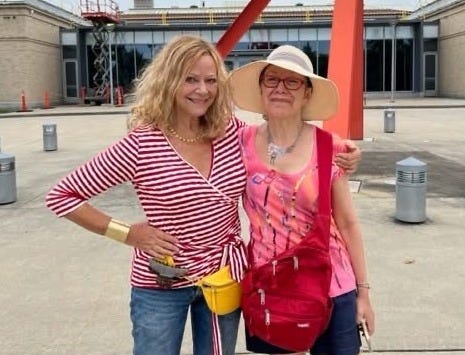
What I’ve done is to seek out older women in my life who are living their lives in ways I admire and try to emulate. I’d call these women “mother substitutes,” except that nobody could ever have stepped in for my mother. Still, these older women guide me.
One of my favorites, Bea, is 103 years old. She still lives—on her own—in the house where she raised her sons. She rides her exercise bicycle every day and, because macular degeneration has made reading impossible, listens to audio books. Sometimes, when I’m in a studio, recording a new audio edition of a book I’ve just written, I imagine Bea on her exercise bike, listening, as I know she will. This never fails to inspire me.
It’s no surprise to me, by the way, why this particular 103-year-old has made it to the age she has. She remains one of the most hopeful, positive and big-thinking people I know. She remains deeply curious about the world and the lives of others. I don’t go to visit her out of a sense of obligation. I visit her because it’s always deeply rewarding—also fun—spending time with her. If I make it to 103, I want to be like Bea.
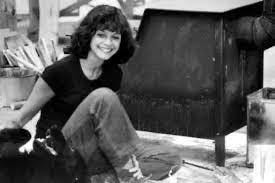
What has aging given you? Taken away from you?
What has it taken? Some cartilage in my knee joints. I wish I could get it back. The days of sitting on my haunches are gone. And while I can still get down on the floor—and do—to play with a child, I don’t get up as gracefully as I once did.
Age has given me perspective. What might have looked like a disaster or a tragedy to me, at 25, or 40, I can now view as part of a long and winding road that brings each of us along rough patches and smooth. I can even appreciate the gifts that loss has offered me.
The loss of my second husband, for one: Going through the nineteen months of the illness that led to his death ten years ago taught me a kind of patience and capacity for gratitude I might never have known, otherwise.
But Jim’s death wasn’t my greatest challenge. In my life as a parent, I have struggled with the choice of one of my three adult children, to remain largely distanced from me, which has also meant that I have not gotten to experience the joy—no doubt, incomparable—of knowing and being known by his children.
Estrangement from an adult child has reached epidemic proportions—particularly in middle class American culture, but those on the receiving end seldom speak of the pain that accompanies the decision of a beloved child to distance themselves or cut their parent off entirely. I’ll mention my sorrow on this front here, though it remains the absolute hardest part of my life, because I know this experience is shared by a surprising number of parents of adult children these days—loving, flawed people, who made mistakes as parents always do, but never failed to love their child, never dreamed they wouldn’t be a part of their child’s life, and their grandchildren’s lives, in a meaningful way.
Few of those who experience some form of estrangement speak about it, because there’s so much shame attached. I speak about this here out of the knowledge that so many parents of my generation—including, no doubt, some reading my words here—are going through this, and feel alone in their grief. I want to say, they are not alone.
But even this most painful experience has brought with it lessons. Radical acceptance being one of these. And the realization that it is possible to know great sorrow without surrendering one’s joy. I would have loved to have had the opportunity to be an active and involved grandmother in the lives of my older son’s three children—and who knows, maybe one day sometime in the future, if I live as long as my friend Bea, they may seek me out, and if they do, oh will I ever rejoice and welcome them. Meanwhile, I have had to learn that it works better for a person to celebrate the gifts in her life than mourn for what she doesn’t have.
In my fiction, I often return to adolescence—as I do in my newest novel. As many years as have passed since my own teenage years, I still feel a burning connection to that young girl who used to be me, and to the struggle that accompanies moving from childhood into life as an adult.
How has getting older affected your sense of yourself, or your identity?
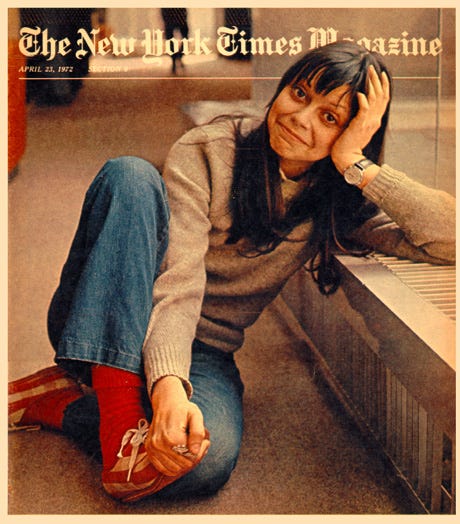
I was the baby in my family. And for years after that, my role seemed to be that of precocious ingenue. (I published my first memoir at 19; published my first novel at 26, got hired by the CBS News at 20, and went to work for the New York Times as a reporter at 21.) For a long time there, I always seemed to be the youngest person in the room.
Now when I’m on a plane, or in line at some store, or on a beach running down to the water, I often look around and realize I’m the oldest person in sight. My days of being the baby long gone, what I find now, to celebrate, is my capacity for survival, my resilience.
And one more thing: I get to play a part in the lives of other much younger women that nobody ever played in mine: that of mentor. As I write this, the names and faces of at least a dozen young women come to mind—readers of my books who sought me out over the years, students who came to a writing workshop I led, very young women with whom I sat in class when I returned to college, at age 65, after dropping out 47 years earlier, at the same age—18—they were now.
Going back to Yale as I did after my husband’s death did not in the end earn me a diploma, but it gave me something more valuable: a sense of myself as someone who still had a lot to contribute, and as someone young people might look to, and listen to, as I listened to them.
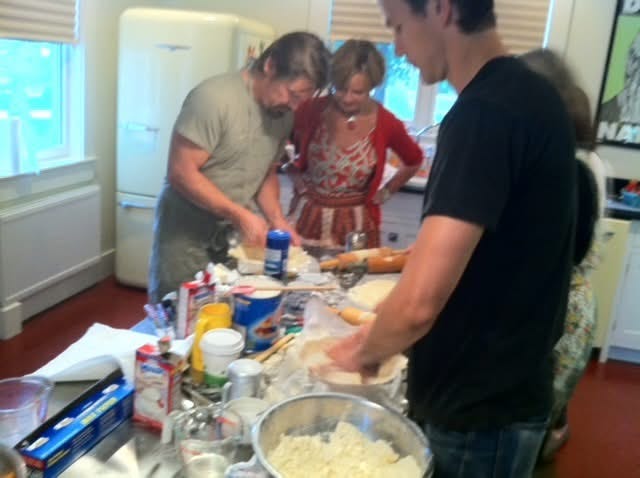
What are some age-related milestones you are looking forward to? Or ones you “missed,” and might try to reach later, off-schedule, according to our culture and its expectations?
I myself wonder when I will finally decide to stop coloring my hair and let it go grey. This hasn’t happened yet, though my daughter—at age 48, already showing strands of grey—has no plan to conceal her true hair color as it changes, and urges me to do the same.
I take a lot of tennis lessons these days, and remain a mediocre tennis player, at best. But the great thing about not having been any kind of an athlete when I was young is that at an age when those who were athletes express regret over all the physical accomplishments that lie behind them now, I am still actually improving. So I’m looking forward to playing in a doubles match, once I’m good enough to hold up my side of the game. By the time I’m 85 or so, I’ll really be something. Maybe.
Ten years ago, when my novels started getting very popular in France, I decided I needed to learn French well enough that I could have real conversations with readers, which I do now. But what do you know? Now my books are starting to get popular in Italy. You know what that means. Italian lessons. Taking Italian might not be an age-related milestone, but it’s a personal goal, along with signing up for Salsa lessons. Good for the brain. Good for the spirit. Good for ordering in out-of-the-way restaurants in Italy.
Then there’s this: Just last week, I spent two days in a studio, recording a memoir published by my mother over fifty years ago, about growing up in a Russian immigrant Jewish family on the prairies of Saskatchewan during the Depression. Reading, out loud, the words written by my mother so long ago, the wave of feeling that came over me was almost physical in its intensity—not just the part about missing my mother, but the discovery of a piece of myself I hadn’t ever fully acknowledged. The Jewish part. When a Yiddish phrase came up in the book, I was surprised to discover that I knew how to pronounce the words, as I did, the Hebrew prayer, Baruch ata adonai eloheinu…
In my next decade, I think, I will explore Judaism, and its role in my life. Who knows, I might even learn a little Yiddish.
I was the baby in my family. And for years after that, my role seemed to be that of precocious ingenue. (I published my first memoir at 19; published my first novel at 26, got hired by the CBS News at 20, and went to work for the New York Times as a reporter at 21.) For a long time there, I always seemed to be the youngest person in the room. Now when I’m on a plane, or in line at some store, or on a beach running down to the water, I often look around and realize I’m the oldest person in sight.
What has been your favorite age so far, and why? Would you go back to this age if you could?
What wouldn’t I give to be transported, for a day, back to the little farmhouse kitchen in the house where all three of my children were born—doing art projects with them, making little boats and tiny cork people to ride in them, to take to the stream down our long dirt road so we could launch them in the water every spring?
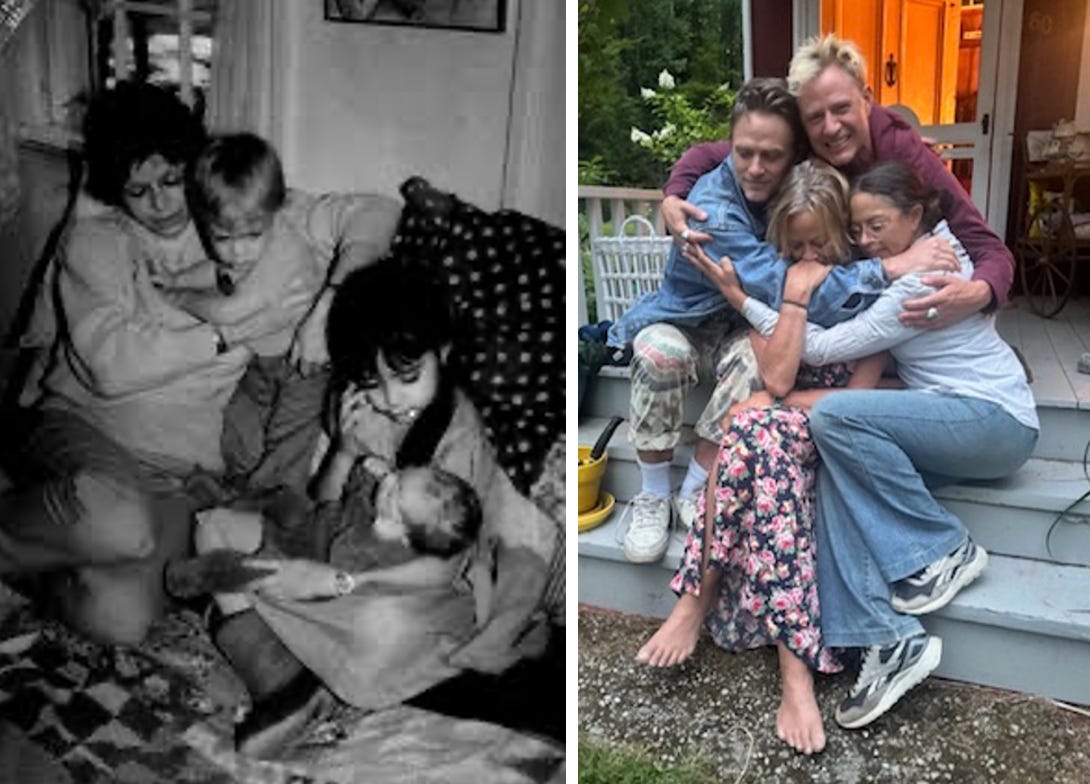
I loved raising my children. I loved snuggling on the couch with them—one on each side, one on my lap—reading to them at the end of the day (so tired my daughter sometimes had to poke me, when I lapsed into gibberish.) I also loved kissing them goodnight after, heading down the stairs, finally…finally...finally having a few minutes to myself before I fell asleep myself, totally exhausted.
No book I ever wrote came close, as a creative endeavor, to what it meant to raise a human being. But for many years there it took just about everything I had, and then some. The cost—to my work, my marriage, my state of mind—was great. So do I want to be 32 years old again? No.
Not 42 either. Or 50 (an age I once believed to be old. Or 67.
In the balance—after considering every age, I’ll choose where I am right now as the best yet. I’m doing work I love, living with a man I treasure. After many years of financial worry, I am not a wealthy woman, but I no longer start every day making columns of figures, deciding which bills I can pay and which have to wait. And I have time for old friends and new ones, and my family.
A week or so after I met the man who is now not only my boyfriend but my life partner, I told him that I had never driven across the United States. Not only that, I’d barely ever gone camping. So we made a plan to rectify that serious omission in my life experience, and last year, we took a full month to drive from the California coast all the way to New Hampshire, barely ever taking advantage of an interstate highway. Most nights we set up a tent and made a campfire. If no rain was forecast, we might forego the tent altogether and sleep under the stars. Mornings we woke with the sun. And so, at the age of 71 I discovered the joy of camping in the wilderness, and took in the extraordinary beauty and variety of this country that has been my home for over seven decades.
If that wasn’t enough to make my 70s the best decade yet, I’m not sure what could top it.
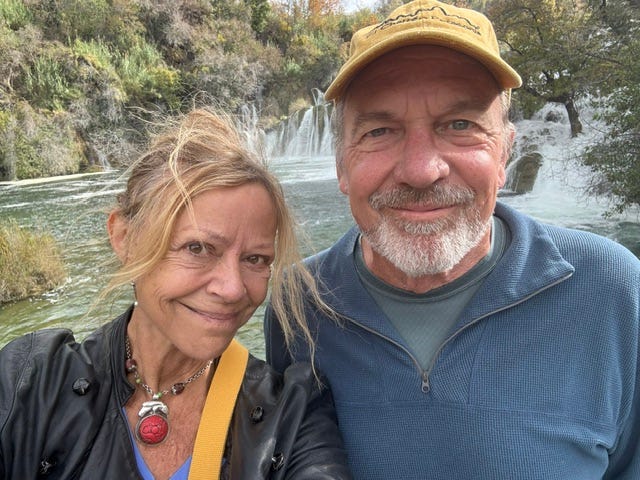
Is there someone who is older than you, who makes growing older inspiring to you? Who is your aging idol and why?
Well, I already mentioned my dear friend Bea, age 103. Now I’ll mention a writer I am lucky to name as a friend: Joyce Carol Oates. (We speak of each other as “the other Joyce”.) The other Joyce is 88 years old now, and she never stops writing. And the writing is still first rate.
I’ll also mention two artists: the painter, Alice Neel, who, in her final years, chose, as her subject her own naked and decidedly un-beautiful body (unbeautiful by conventional standards, anyway). Another artist from whom I draw inspiration and wonder: the Japanese-American sculptor, Ruth Asawa, who created the most extraordinary wire hanging sculptures, in her San Francisco home, with her six young children around her as she worked. She worked right up to the end of her life.
What aging-related adjustments have you recently made, style-wise, beauty-wise, health-wise?
I stretch. I walk. I use sunscreen, finally (which, for a longtime sun-worshipper like me, is like locking the barn door after the horses got out). I mostly drink non-alcoholic beer (far superior to non-alcoholic wine). I no longer do sit-ups, having decided it is not necessary to go through life with a flat stomach.
And…ok, here comes an admission for which some may judge me but as mentioned, I am okay being judged….a year ago I underwent a pretty major procedure called a deep plane face lift. This is not the kind of face lift that leaves a person looking as if her mouth is being held in place by rubber bands. I very specifically told my doctor I didn’t want him to try and make me look like a 55-year-old. I just wanted to look like myself again.
Which I do now. The whole thing wasn’t cheap—but the car I drive cost $3500. I might have spent the money on a car, but I preferred spending it on my neck.
I get to play a part in the lives of other much younger women that nobody ever played in mine: that of mentor. As I write this, the names and faces of at least a dozen young women come to mind—readers of my books who sought me out over the years, students who came to a writing workshop I led, very young women with whom I sat in class when I returned to college, at age 65, after dropping out 47 years earlier, at the same age—18—they were now.
What’s an aging-related adjustment you refuse to make, and why?
I will never use the phrase “I’m having a senior moment.” I will never call myself “a crone.” Language has a power to make things true, by the simple fact of uttering the words. I choose mine with this in mind.
What turn of events had the biggest impact on your life? What took your life in a different direction, for better or worse?
I will name four. The death of my mother, when I was 35—at precisely the same moment when the father of my children told me he didn’t want to be married to me anymore. It was an end, but also a beginning. First a tornado levels your house. Then you rebuild.
When I was 55, I adopted two young sisters from Ethiopia—age 6 and 13—believing, with the naivete (and no doubt arrogance) of a 55-year-old, that I could heal any wound in any child, and be, for my adopted daughters, the mother they needed. I wasn’t.
This one’s a long story, and one I do not tell, out of respect for the privacy of the children involved. We struggled for 14 months before I finally acknowledged I could not give the girls what they needed, and that it was best for us all—for me, but far more important, for them—to find them another family—younger, with a father on duty, and siblings. I carried with me the sense of terrible failure for many years before I could forgive myself. I carry the lesson, still, of my hubris in supposing I could do or be anything anyone needed me to be. Trying my best is not always enough.
Then came the death of my husband Jim, just shy of five years from the day we met. That brief marriage taught me what some people learn decades earlier: what it meant to be a true partner, and part of a couple. I think it was loving Jim, and staying at his side over the nineteen months of a brutally painful illness, that made me believe in myself again.
What is your number one regret in life? If you could do it all over again, what is the biggest thing you’d do differently?
I’m not big on regrets, because there’s not much we can do, once we recognize them. But I deeply regret my decision, at age 18, to give up my full scholarship at Yale after my freshman year, to move in with a famous 53-year-old writer whose letters to me allowed me to believe we were soulmates destined to be together forever. He sent me away twelve months later, but it took me another 25 years—when my own daughter turned 18—to recognize that I did not owe J.D. Salinger or anyone else my silence concerning what took place during that relationship. It took me 47 years to return to Yale. But I did, at age 65.
What is high up on your “bucket list?” What do you hope to achieve, attain, or plain enjoy before you die?
There has hardly been a day, since I was 16 years old, when I didn’t write something. Generally for publication. But the truth is, what I always wanted to do, when I was young, was be an artist.
I still draw all the time, but as someone who has reached a certain level of proficiency in my craft of writing, it’s difficult, and deeply humbling to make art in a dedicated way at this point in my life, knowing that the work I produce—as a maker of art—is unlikely to rise to a level of excellence I seek to achieve in my work as a writer. I hope the time comes when I can set up a painting studio and spend whole days with paints, caring less about the end product than about the simple joy of making paintings.
Is there a piece of advice you were given, that you live by? If so, what was it, and who offered it to you?
Some years back, my daughter Audrey taught me the Ho Oponopono prayer—four sentences that, she explained to me, can be spoken in any order, to a person with whom one may be having some difficulty. You just have to believe the words as you speak them.
The four sentences are as follows:
I’m sorry.
Please forgive me.
Thank you.
I love you.
I have spoken this prayer a few times, in moments of difficulty with someone. I’m here to say, it has been known to work.
I deeply regret my decision, at age 18, to give up my full scholarship at Yale after my freshman year, to move in with a famous 53-year-old writer whose letters to me allowed me to believe we were soulmates destined to be together forever. He sent me away twelve months later, but it took me another 25 years—when my own daughter turned 18—to recognize that I did not owe J.D. Salinger or anyone else my silence concerning what took place during that relationship. It took me 47 years to return to Yale. But I did, at age 65.
What are your plans for your body when you’re done using it? Burial? Cremation? Body Farm? Other?
Okay. This could sound a little macabre, but here goes: A student at one of my memoir workshops once shared her plans for donating her body to medical science in way that greatly inspired me. Knowing that her remains might serve as a teaching tool for a future medical student, she decided to write a letter to the person who would ultimately bend over a table in some laboratory, scalpel in hand, preparing to study her organs.
That day at our memoir workshop, she read out loud—to a spellbound group of her fellow writing students, and me—the letter in which she told this future medical student the story of many things her body had gone through over the years it carried her through life, including play with her siblings in childhood, first sex, childbirth, a terrible accident, operations, a late-life journey on the Camino in Spain… By the time she was done reading that letter I felt I might make the same choice she had done—to donate my body, if it could be of use in death, as it has been, in life, for me.
My performance on the tennis court notwithstanding, my body has done a pretty great job for me over these many years. It feels appropriate to assign it one final task, after my desk—as a teacher.
What do you expect to happen to your “soul” or “spirit” after you die?
No expectations. But I’m definitely open to the idea that some aspect of our living selves may endure. Where it goes I do not attempt to speculate. Having witnessed both birth (four times) and death (once) I regard both as profound experiences.
What’s your philosophy on celebrating birthdays as an adult? How do you celebrate yours?
My November birthday often falls on Election Day. In recent years, this has not made for the happiest of celebrations. But the day after my birthday, I like to fly to Guatemala, close my hotel for a week, invite friends over, and take a long swim under the volcano.
Dear Sari and Joyce,
This was profoundly moving for me. Joyce, I’m a year younger than you are, and I used to look a little like you, so when you were on the cover of the Times magazine, I identified strongly with you. I want to thank you for so generously opening up your life and sharing this with Sari's readers. Like you, I have been estranged from my adult child for many years, and you describe the pain of the deep wound it leaves about as perfectly as I can imagine. And also the need to grieve that loss so you can live your life with gratitude and joy. I wish every mother who has experienced this could read what you wrote.
I also loved the part about the writing student who wanted to donate her body to a medical school with a letter explaining what her body had been through. I love that so much that I’m actually going to put it into practice.
Wishing you a happy healthy long life.
With love and gratitude,
Barbara Reiss
Hi, Joyce! You’ve shared one or two things here even I didn’t know. I’m listening to your Wonderland audiobook now, and it’s terrific.