



From the time I was 10, I’ve been obsessed with what it means to grow older. I’m curious about what it means to others, of all ages, and so I invite them to take “The Oldster Magazine Questionnaire.” (*The Oldster Magazine Questionnaire is exclusive to Oldster Magazine. ©Sari Botton)
Here, Oscar-nominated, multiple award-winning filmmaker—and Onward with Ava DuVernay newsletter-writer—Ava DuVernay responds. -Sari Botton
PS If you’re enjoying the work I do here at Oldster, please consider supporting it by becoming a paid subscriber. 🙏
Readers, in case you missed it, yesterday I interviewed multitalented, award-winning filmmaker Ava Duvernay over Substack Live. It was a great conversation! I asked her the 20 questions included in The Oldster Magazine Questionnaire and she responded verbally. Sometimes she threw the questions back at me, and I responded. We had a lot of fun! You can watch the whole thing right above. ⬆️ I had the interview transcribed, and extracted/edited her answers to include in the text version of the questionnaire below. ⬇️
P.S. I probably should not have to explain myself when introducing an Oldster Questionnaire featuring someone of Ava Duvernay’s stature, but, just in case…A reminder that in my book, everyone who is alive and aging is considered an Oldster, and that every contributor to this magazine is the oldest they have ever been, which is interesting new territory for them—and interesting to me, the 59-year-old who publishes Oldster. Also, I’m trying to foster intergenerational conversations in which elders learn what it’s like to be younger, and younger people learn from elders what it’s like to be older.
When you see a piece featuring someone younger than you, try to remember when you were that age and how monumental it felt. Bring some curiosity to reading about how the person being featured is experiencing that age. Or, if you prefer, wait for the next piece featuring someone in your age group. In the last few weeks alone, I published pieces by several people in their 60s, 70s, and 80s. Not every piece will speak to every reader. I’m doing my best to cover a lot of ground and be inclusive. Please work with me! Thank you. 🙏 - Sari Botton
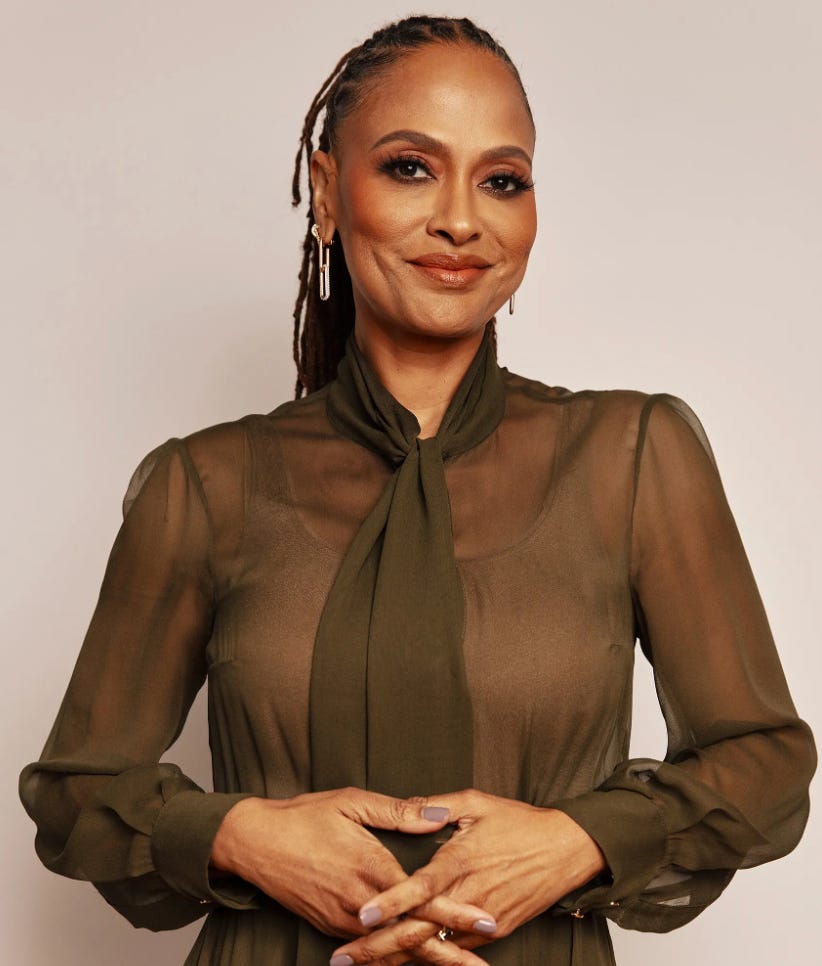
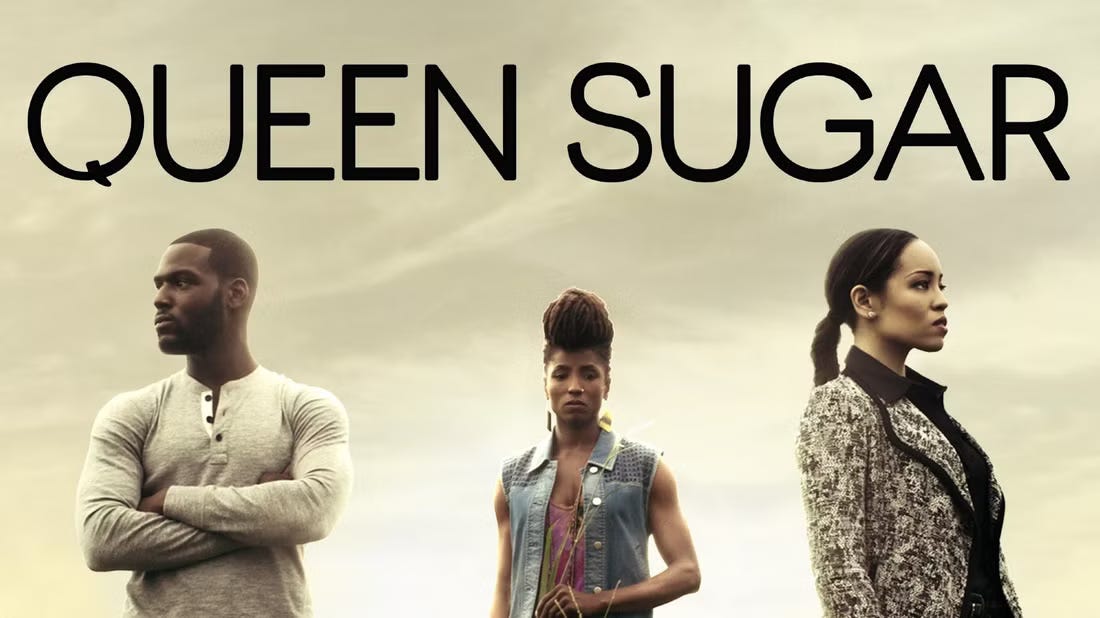
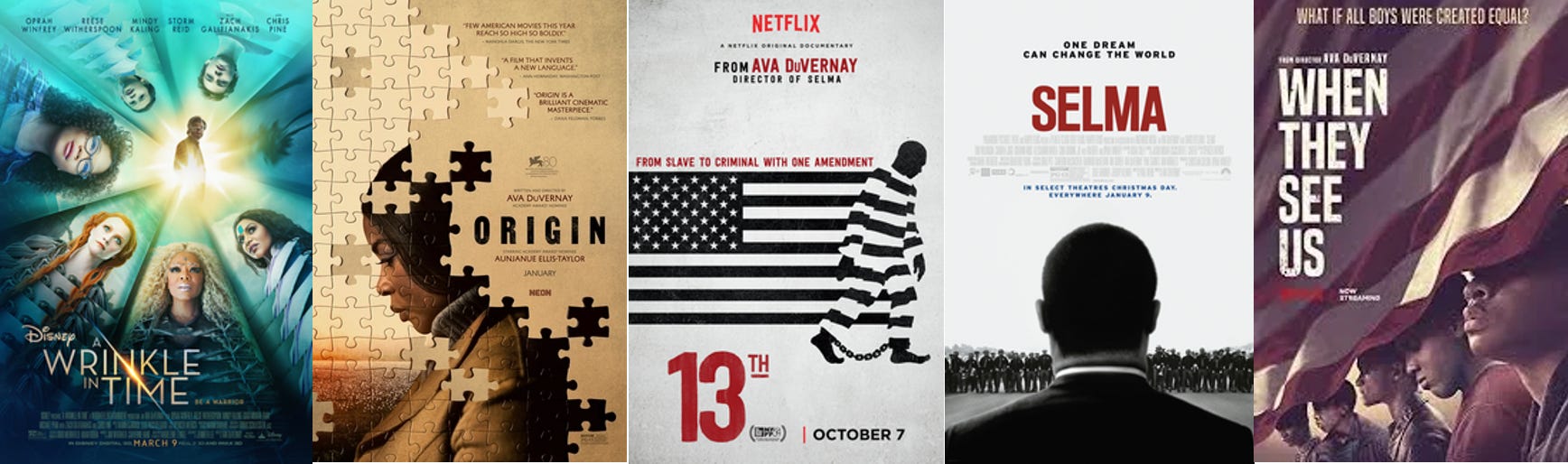
Ava DuVernay is an Academy Award nominee and winner of Emmy, BAFTA, Sundance, Image and Peabody Awards. Her films include SELMA, the first film directed by an African-American woman to be nominated for a Best Picture Oscar; 13TH, which made her the first African-American woman to be nominated for an Oscar in a feature directing category; MIDDLE OF NOWHERE, which earned her Sundance’s Best Director Prize; and Disney’s A WRINKLE IN TIME, which made her the highest grossing Black woman director in American box office history. DuVernay’s four-part series When They See Us was honored with 16 Emmy nominations. Her critically acclaimed series Queen Sugar took its place in history as the longest-running Black family drama series with 88 episodes across seven seasons.
A champion of independent voices, DuVernay founded the narrative change collective ARRAY in 2011, recipient of the Peabody Institutional Award. She was given an honorary Doctor of Fine Arts degree from Yale University, and her portrait had been commissioned by the Smithsonian’s National Portrait Gallery in recognition of her impact on American culture. In 2023, she made history again as the first African-American woman director to compete at the Venice Biennale in its 100 year history with her feature film Origin.
DuVernay serves on the Board of Governors of the Academy of Motion Picture Arts and Sciences, representing the directors branch, and holds leadership roles with the Directors Guild of America and the American Film Institute advisory boards. Her cultural influence is showcased with the making of a sold-out Ava DuVernay Barbie doll, a Funko Pop figurine, and even a custom Ben & Jerry’s ice cream flavor. She lives and works in her hometown of Los Angeles, California.
—
How old are you?
I’ll be 53 on August 24th.
Is there another age you associate with yourself in your mind? If so, what is it? And why, do you think?
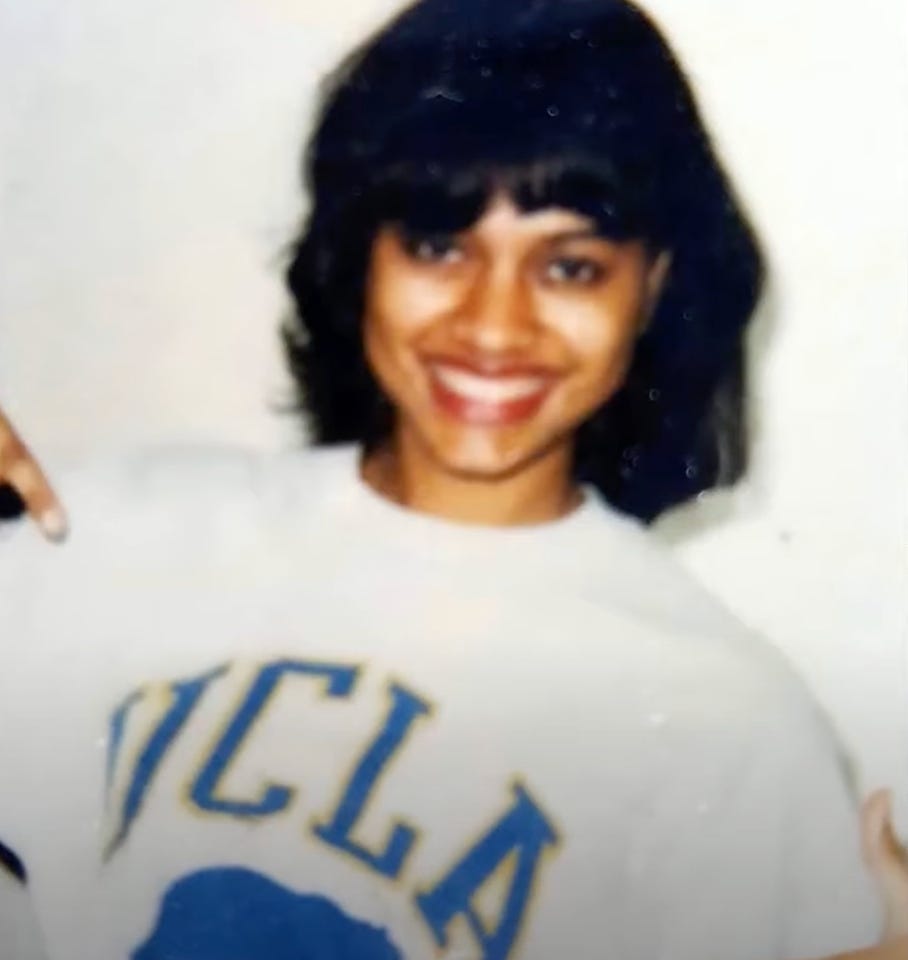
The first number that popped into my head was 27. And I don't know if I’ve associated myself with it, but it was such a significant time. It's the age at which I started my agency. Before I was a filmmaker, I was a publicist. When I graduated from UCLA, I went into the entertainment industry as a publicist and worked for several companies, studios, etc. At 27 I started my own PR agency. The first time, it failed. Then I started it again and it was a great success. My mother had always identified 27 as the age where you should buy a house, the age where things are going to start to click in. Instead of buying the house, I started the company. And it really is the age I associate with myself, because it's the age that I had a great deal of confidence that I acted on, and that sustained me for a long time.
But when I look back at myself, the way that I looked at 27, and the way that I felt about myself then, I see a mammoth shift between then and now. I think some people look back on their younger years and feel like they want to be that again. I feel much better now than I did then.
Do you feel old for your age? Young for your age? Just right? Are you in step with your peers?
I think I feel just right. Am I in step with my peers? Most of my good friends are slightly older than I am, just a touch—maybe three to four years older. I only have a couple of good friends who are younger, and almost no one my exact age. Everyone's kind of taking it in stride, and I think it's okay.
What do you like about being your age?
I always thought it was a cliche—women say, Oh, everything's going to turn different at 50, you're going to care a lot less. I don't care a lot less. I just care differently. The care is more constructive. It's not caring about the things that don't serve the process, the project, the thing, me, the moment, whatever. It's that I'm starting to process filtering out what not to care about, and what to care about, and that's a real distinction. I just care more selectively.
What is difficult about being your age?
The thing that's difficult about being my age is the loss of the generation before, loss of family members who are now moving into their sunset years and transitioning and realizing, Oh, we are the grownups. This is that time where you're caring for your elders in the ways that they used to care for you. The last five years has been the most challenging part of it.
At 27 I started my own PR agency. The first time, it failed. Then I started it again and it was a great success. My mother had always identified 27 as the age where you should buy a house, the age where things are going to start to click in. Instead of buying the house, I started the company. And it really is the age I associate with myself, because it's the age that I had a great deal of confidence that I acted on, and that sustained me for a long time.
What is surprising about being your age, or different from what you expected, based on what you were told?
I guess I was told that I wouldn't feel a vibrancy at this age, that I would be less interested in life, or there was nothing new to explore. But I also think within that, part of the trope of the older woman is also a bit of a dissatisfaction, and you're caring for other people. You're put upon—mom just needs Calgon to take her away. Just the stress and the being of service in that way.
Not having children has given me a different chance. I’m just generally wildly curious. There’s so much to explore, so much to still build with what I do. But also taking great care and pleasure in relaxing, restoring, taking time, taking quiet moments. I think that's something that's really shifted for me from my 30s and 40s, where I was trying to earn, earn, achieve, achieve, achieve. I still want to, but now I’m going about it in a different way. It has a less importance—now it's just for kicks and thrills. Whereas before it was like, I must do these things. It's just a nicer, smoother path.
What has aging given you? Taken away from you?
Aging has definitely given me discernment of knowing, okay, things can happen later. And clarity in a lot of ways, just in terms of prioritizing things. Everything doesn't have to be now. Now, now, right away. Clarity and understanding that you're going to get there.
I think the biggest lessons I've learned are around grief, because grief has been a lesson for me in many areas. Grief has taught me this, too, shall pass—the most horrible feeling that you can feel the most. Like when I don't even want to get up in the morning, and I don't know how to function. The most awful thing that can happen now lightens. It changes and it becomes tolerable and it becomes survivable, and then it becomes just a part of your story, and then you continue on. And if that's true for the worst thing that can happen to you, apply that to business, apply that to career, apply that to relationships. It's like, okay, there's going to be another side of this and you just have to get there. That's definitely something that's come from age.
I always thought it was a cliche—women say, Oh, everything's going to turn different at 50, you're going to care a lot less. I don't care a lot less. I just care differently. The care is more constructive. It's not caring about the things that don't serve the process, the project, the thing, me, the moment, whatever. It's that I'm starting to process filtering out what not to care about, and what to care about, and that's a real distinction. I just care more selectively.
How has getting older affected your sense of yourself, or your identity?
I'm fortunate in that I've been able to do a lot of the things that I set out to do and wanted to do—more than I ever imagined for myself. I'm like, wow, I should have dreamed this. This is really fantastic.
Because of the achievement part of it, I feel like I don't still have a thirst for doing. Of course there are things I want to do, but in the way of feeling like I've got to prove myself or achieve something in order to be valuable, I feel fortunate that at this age I don't feel that way. For so many people, achievement is a part of their identity. Even achievement of other folks. If your child graduates from college, it’s an achievement. There's all of these benchmarks of I'll be good, I'll be happy when these things happen, and they're beautiful things to enjoy. But when they dictate your own value to yourself, I think that becomes a challenge for people to overcome. And I can't say I'm completely rid of it, but mostly in career, the big benchmarks, the that I wanted to achieve—or things that I never even thought I wanted to—have happened. And so I feel like I'm more free in my work now because I don't feel like I have to prove things.
So I'll go make Origin, an independent film about [Isabel Wilkerson’s nonfiction book] Caste: The Origins of Our Discontents—not the hot topic in Hollywood—because I want to and am able to. And so without being so concerned about what that's going to do to my career, if that's going to take if off track. It has had repercussions for my career. It has moved things in different directions that I may not have anticipated, that might not all be positive. But I would do it again.
Ava Duvernay being interviewed by Pat Mitchell on the TED stage in 2023:
What are some age-related milestones you are looking forward to? Or ones you “missed,” and might try to reach later, off-schedule, according to our culture and its expectations?
I'm fortunate that I have two women that I love and look up to, and feel excited to emulate. They would be my mom and Oprah. They're the same age. They were both born in 1954 and they're on newfound health kicks. They move differently. They look different. I guess when they hit 70, they were like, Guess I’d better start. Something about 70 for them both ignited a new vitality that I think is really fantastic and interesting. It's working on me in positive and negative ways. I'm like, Wow, 70’s the new 50, these women are vibrant. They're having their traveling, they're having fun, they're doing their thing. But it also is making me—a person who was never really athletically inclined or loved exercise or is particularly fit or a health nut—be like, Oh, I got 20 more years. I'm kind of like, I'll be okay and I'll turn it on at 70.
But I really am trying to get out of that. And when it comes to longevity, I think it has to be something that's practiced. It's not just physical health, it's mental health. So on the mental health side, I feel like I do a lot more of that practice, and I have for a long time. But I can never find anything physically that I like to do. People always tell me, Well, you're not supposed to like it.
Not having children has given me a different chance. I’m just generally wildly curious. There’s so much to explore, so much to still build with what I do. But also taking great care and pleasure in relaxing, restoring, taking time, taking quiet moments. I think that's something that's really shifted for me from my 30s and 40s, where I was trying to earn, earn, achieve, achieve, achieve. I still want to, but now I’m going about it in a different way. It has a less importance—now it's just for kicks and thrills. Whereas before it was like, I must do these things. It's just a nicer, smoother path.
What has been your favorite age so far, and why? Would you go back to this age if you could?
I've had great moments and great times, but to be honest with you, huge swaths of my 30s and 40s I don't even remember. I can look at the milestones and the things that happened. A lot of beautiful things happened, beautiful experiences, beautiful revelations, beautiful places, and relationships. But I don't remember the details of it because it was all going so fast and I wasn't taking stock as it was happening. It was just all happening to me—going from movie to movie, TV show to TV show, premier to premier, with a lot less backyards by the pool with friends, which I just did a couple days ago at a friend's house and thought, We should have been doing this the whole time.
But that striving, that going, going. I wasn't taking enough time to take stock in the moment. So now that's all a blur. Now feels much better because it's a bit slower. I'm making room for more meaningful relationships, taking stock, spending more time. I like this age, now.
Is there someone who is older than you, who makes growing older inspiring to you? Who is your aging idol and why?
My aging idol is Cicely Tyson. I had the honor of knowing her. She was very supportive of me when I came on the scene and started making films. I got a call one day from a small theater in D.C. that I booked for my first first film, I Will Follow, and a message on my Instagram from someone saying, “Cicely Tyson's in this theater at your movie.” I was able to get through to the person who she was with and talk to her. I kept in touch with her over the years. The last project she worked on was portraying a grand diva in a romantic drama that I had on the OWN Network at the time called Cherish the Day.
She lived to 96. She hit her 90s and was just vibrant, curious, beautiful. The fashion, hair, and makeup to the end. I dress very conservatively, but she would come into room and I'd be like, “Ms. Tyson, if you weren't a size zero, I would really want to take that dress that you have on.” I mean the style, the nails, everything.
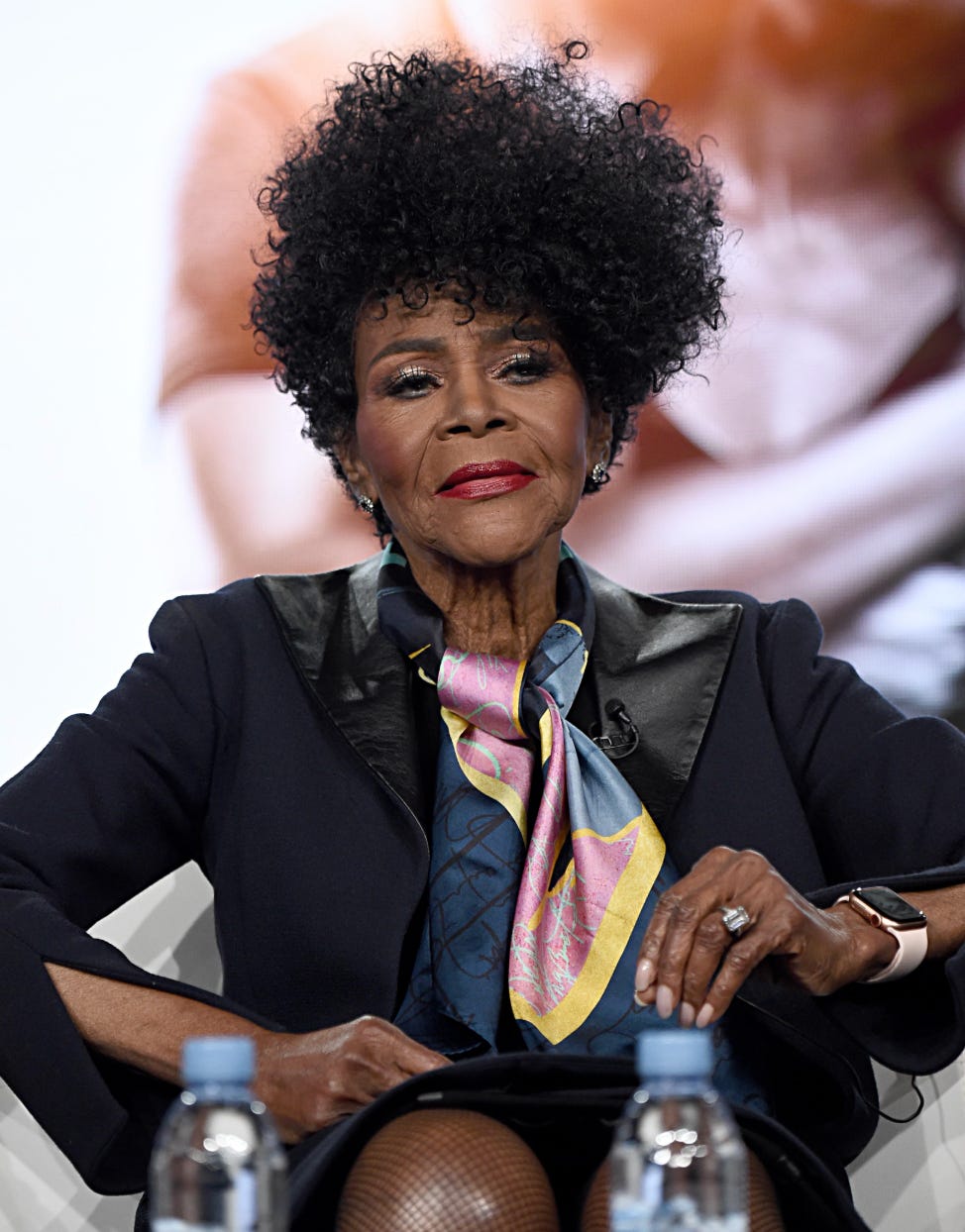
One day, we were sitting somewhere, at an event or something, and I got up and she said, “Sit down.” I said, okay, and sat down—yes, ma'am. She said, “Try it again.” I got up and she said, “Sit, Ava, sit down.” I sat down again and got up again. She slapped my hand and she said, “Do not push up off of the chair. Stand up.” I had been pushing up with my hands off the chair, and she said, “Can you not just stand up? Stand up.” And I literally couldn't. I was 42 and I'm trying to get up out of the chair just with my own stomach muscles to stand. And literally she said, “Don't ever push up off a chair. Don't ever take the escalator when you can take the stairs. Don't ever go up the elevator when you can exercise your body, move your body, and make sure that you are strong. Stay strong. You don't need that chair to push up. You don't need the rail. Why are you holding the rail? You are 42.” She said that these props are all around to make us dependent on them.
And so that was something about herself that I think gave her longevity, and why she was an aging idol. She was really, in terms of the environment around her, not allowing it to make her feel and be old. I thought that was an incredible thing. And I've tried to practice it as much as possible. When I feel myself pushing up, pushing off, or holding a rail, it's like, do I need this?
What aging-related adjustments have you recently made, style-wise, beauty-wise, health-wise?
I don't do any kind of milk any more. It’s all oat milks and nut milks. About four years ago I lost a significant amount of weight, about 40 pounds. I did that on purpose because I was going towards my 50th birthday and I had heard that it's harder to lose weight as you get older for various reasons, especially for the ladies. So I said, Well, let me lose this weight now because I might not be able to later. That was an adjustment that I made, and really changing my eating during that time.
I was still not exercising regularly like I should, but really changed my eating in a deliberate way because of the aging, and wanting to safeguard against not being able to lose. Because I think for me, especially in my industry, there's always a red carpet, or there's an event. I know every way to lose 10 pounds in four days. There are many, none of them healthy. And so I said, I'm not going to be able to do that as I get older, so I need to really deliberately lose this.
I'm fortunate that I have two women that I love and look up to, and feel excited to emulate. They would be my mom and Oprah. They're the same age. They were both born in 1954 and they're on newfound health kicks. They move differently. They look different. I guess when they hit 70, they were like, Guess I’d better start. Something about 70 for them both ignited a new vitality that I think is really fantastic and interesting.
What’s an aging-related adjustment you refuse to make, and why?
Remember bifocals? Remember when you could see the second prescription in the lenses? I could see on my grandma’s or my mom’s glasses the literal line. The glasses inside the glasses. I've worn glasses since I was 7, and never wanted that. I need it now, but refuse to get it. So literally I'm one of those people taking my glasses off and on all the time. It’s my last gasp not to be old with the bifocals. My apprentice said, “It's not bifocals now. People can't tell, only you can tell.” I refuse. I'm not going to do it. Eventually I'm going to have to, because I get headaches taking my glasses on and off.
What turn of events had the biggest impact on your life? What took your life in a different direction, for better or worse?
Changing careers at 35 changed everything. I was happy—I was a publicist for movies. Oh my gosh, I'm a girl from Compton, California. I'm working in movies. I'm on sets. I'm creating red carpets for people to walk down. I'm getting to be on movie sets, watching movies be made. I mean, there's nothing better. I made good money, was able to take care of myself and family and have a little house, pay off my car note, and all of the things that my parents had struggled with as we were growing up. I didn't have to get extension on my bills, I didn't have to be late on things. All of that was a really big deal for me.
But then I was on a set and I was watching a director do his thing and thought, I want to do what he is doing, and started to walk towards that in ways that were really not about career. They were just about exploration and being interested, because at that time, I really had no picture of having a career as a director. It sounds silly now when I say it to people. But a lot has changed for black women directors in the last 20 years, where you can actually name 10 if you're into film and TV.
At the time, those filmmakers were not making things regularly. And so to think that I could do it professionally and could support myself doing this was not a normal thing. I was just doing it for fun. I thought, Oh, if I could make a film and take it to a film festival, wouldn't that be a fun thing. I was thinking of it like a hobby, like summer vacation. Going to a film festival is so fun, and being able to show your work. That’s as far as I thought it would go. By stepping into it, not for anything other than self-satisfaction at that point, everything changed. I think because I got into it for the right reason—not to be famous, not to change the world, not to make money. None of that was in the cards. I just did it because I thought it would be cool to try.
Changing careers at 35 changed everything. I was happy—I was a publicist for movies. Oh my gosh, I'm a girl from Compton, California. I'm working in movies. I'm on sets. But then I was on a set and I was watching a director do his thing and thought, I want to do what he is doing, and started to walk towards that in ways that were really not about career. They were just about exploration and being interested, because at that time, I really had no picture of having a career as a director.
What is your number one regret in life? If you could do it all over again, what is the biggest thing you’d do differently?
I would have lived the last 14 years differently. I was very deliberately single during my 30s and 40s. As I was pursuing my career in film, I really had it in my head that I was not going to have both.
I thought, I want this: movies. I was making movies for the small film festival circuit. I’d had been rejected from Sundance seven times, then got in, won, and it felt like there was a small window in which to do this work, go for this, try to make it my actual job.
I still had my PR firm during that time so I could actually make a job out of this, a career out of this. And then Selma came along and that continued to be my trajectory. Once that happened, I really deliberately cut off from the idea of long-term romantic relationships because I thought, I can't do both the way that I go into relationships. I want to do this for my work and I can't do both.
So in that time, I was very, I use the word “breezy.” I was just breezing in and out of relationships, purposely not wanting to be locked down or lock anything down. It was fine for a very long time, and satisfying, and pleasurable, and all was well. But when I turned 50 during Covid—a little before I got healthy and lost the weight and got all my numbers to be good—I thought, I've got to make room for something meaningful.
Because when there's a worldwide pandemic, and I was losing people I knew and loved, I thought, Wow, wouldn't it be nice for someone to be here who's not breezy? That got me thinking and preparing my mind for it. It wasn't until a couple of years later that I started to become really intentional about needing to pay attention to people longer. I need to listen to the stories that they're telling. I need to not be onto the next. I need to, when it gets hard, not say, Oh, I'm going to the set. I'll see you in three months when I'm back. That intentionality has resulted in one of the best relationships I've ever been in now, with such a sweet man who’s lovely.
After a decade and a half of I'm single. I make movies. I can't do both. I can't be home to cook your dinner. I can't go to the thing with you, I’ve achieved a balance. Although, I'm not cooking dinner.
What is high up on your “bucket list?” What do you hope to achieve, attain, or plain enjoy before you die?
I want to experience something spiritually that allows my practice—my meditation practice, my spiritual practice, my mindfulness practice—to be a little bit more effortless. I've been practicing for a long time and it's still, it's supposed to be effortless. I’ve not achieved the level of this where it’s within me and I don't have to think about it, or try. I think it takes continued practice to become enlightened in those ways. I still struggle with it a bit, so I just keep wrestling it down until I realize that you don't have to wrestle. You just can kind of let it go and let it be. I pray that I am afforded the time to get there. I've realized a lot of beautiful things about the world that we can't see. And so I would just like to explore that further.


Is there a piece of advice you were given, that you live by? If so, what was it, and who offered it to you?
Maybe 10 years ago I was crying to Oprah about something on the phone. I was really upset about it. Of course, she's Oprah, so she's going to give you Oprah-isms, but she's a great listener and a great advice giver, and she takes the time to talk to her friends in a lot of detail. She said something that I've repeated to a lot of people, and I say to myself, often: “This bad thing isn't happening to you. This bad thing is happening for you. And you need to stop crying and figure out what that is, or accept that it's okay.” And it really got me into a feeling, something that I say almost every day, which is: What is meant to be is what will be. The things I'm experiencing, the people that I meet, that wrong turn down that way. Why did I miss that flight? All that. I really feel like maybe there's not a grand design, but as I'm moving through the things that I need to experience, I need to see that they are for me, that these things aren't random. That's how I really feel.
Or perhaps I'm there for someone else that I've crossed paths with. Maybe I'm to not go through that light because I need to keep that other person behind. Or maybe I missed that flight because I sat next to a woman while I waited an hour for the next one, and she told me things that she needed to say. To be of service to other people. Or because ,I needed to learn something or see something or not see something, or not do something. So I really have embraced that, and I feel like nothing's happening randomly. My life has purpose, not just for me, but for other people. And it all kind of came out of that idea of these things aren't happening to you but for you. Life is for us to embrace, to experience, to connect with other people.
What are your plans for your body when you’re done using it? Burial? Cremation? Body Farm? Body composting? Other?
I think a lot about more than the body, I think about the older years and as a single woman with no children. Who's going to be there at the end?, I've really thought about that so much because I have been with family members and loved ones at the end and really tried to honor their older age and have at times failed in being all that I wanted to be in those moments, and at times really risen and learn from each one how to truly be present with someone in those years. And I think about that more. Will I be cared for? Will someone look out for me? Will I be able to care for myself if I'm not, who's going to treat me kindly?
Who's going to care in the way that I know that I care? I don't want to be mistreated. So many people are. I don't really care about being forgotten, but it's just in the moment of your aliveness, your life being dignified. And I think it's horrible the way that we as a society regard the elderly, our elders, and there's a real disregard and a dishonoring. And so I think about that for myself quite a bit.
But probably I’ll be cremated.
I was very deliberately single during my 30s and 40s. As I was pursuing my career in film, I really had it in my head that I was not going to have both. So in that time, I was very, I use the word “breezy.” I was just breezing in and out of relationships, purposely not wanting to be locked down or lock anything down. But when I turned 50 during Covid I thought, I've got to make room for something meaningful. That intentionality has resulted in one of the best relationships I've ever been in now, with such a sweet man who’s lovely.
How do you feel about dying? And what do you expect to happen to your “soul” or “spirit” after you die?
I think about it a lot and always have. I'm not afraid to think about it. I don't feel afraid right now, but I definitely know that that's because it's not facing me at the moment. I feel strongly that the force and energy and spirit and beings that I have been lucky enough to love, will protect me, welcome me, and guide me in some way. Do I believe that now are we all going to be in our bodies at our best age hugging? I don't know if that's how it's going to go in a heaven with the clouds. I'm not sure how it works. No one knows. But I do believe, and have had enough experiences to know, that that energy, the energy of love, the energy of people that I have loved and who've loved me does not disintegrate when the body does, I believe that.
I do feel like I have enough love on the other side that I'm going to be all right. I've got some good love looking out for me. I think it's incredible that we all have this ticking clock. No matter what our politics are, no matter what our experiences here have been, every single person will meet that same unknown end of this and moving on to whatever is next. And that is one thing that we all have in common. Lately, I've been trying to think about how to deal with people who have different political views. Thinking about how to talk with people with other political views had not been a thing for me up until the last couple of years, where I feel like there is a moral division, and so it’s becomes difficult for me to do that.
Trying to find that thing in common, I've thought about the end, and that is something that we all have in common, that faces us all. It's a way to just get back and recenter the humanity and people that I have a hard time finding it. So, yeah, I wouldn't say I'm afraid. Am I looking forward to it? No. But I don't think that, I think I've done enough, enough study, enough spiritual work and enough of my own questioning not to be afraid.
What’s your philosophy on celebrating birthdays as an adult? How do you celebrate yours?
I think birthdays are important. I wrote that line in Origin, which was not a line that came from Isabel Wilkerson, but a line in which she did actually meet her late husband on his birthday. I just thought that was an incredibly cool thing, and made a little big deal of it in the film.
I think birthdays are just a true celebration of life in the moment and should be taken seriously, because life is serious and beautiful and worthy of celebration. I have a great friend, Niecy Nash Betts, who's an actress who does huge week-long extravaganzas for her birthday. Not that much for me, even though I love her birthdays, but I do make sure that I gather friends, or I'm with family, or I'm alone in a beautiful place to take stock.
I think birthdays are really important, and I find it sad when people say, I don't really care about my birthday. That probably comes from someone, something that they've experienced or someone who said, don't do it. Why would you not say, Gosh, I'm so happy to be here. There are a lot of reasons why people don't, but I hope I invite people to reconsider.
Thank you, Ava DuVernay! And thank you Deesha Philyaw, Suzanne Noble, GG Renee Hill, Mary Thoma, Mal Pronouns, and many others for tuning into my live video with Ava DuVernay! Join me for my next live video in the app.


