

Letter from the Editor #23
How to become an "overnight success" in just 40 years...Hipping myself to hip replacement...Remember when we had to check our answering machines to find our friends?


Readers,
Last week someone who’d read about Oldster in the New York Times emailed to congratulate me on my “overnight success,” and it made me laugh out loud.
Excuse me, but I have been in this racket—publishing and media—for forty years now. I got my professional start in 1986 as a Newsday/New York Newsday summer intern-reporter on the arts desk, and I view what I’m doing here as an extension of all the work I’ve done since then, at various publications and outlets.
I often explain to people that I am practicing my profession at Oldster and Memoir Land and that I mean for them to be true, real-deal magazines. You can help me keep publishing, and paying personal essayists and interviewers, by becoming a paid subscriber. 🙏
Interestingly—given my current occuption as editor-in-chief of an outfit called “Oldster”—my very first New York Newsday byline was about a guy who flirted with retirement, for himself and the long-running show he helped create, yet kept putting it off.
I’m talking about Lore Noto, an actor/producer who helped bring The Fantasticks to The Sullivan Street Theater in 1960, starring a young Jerry Orbach, and who’d acted in that play himself for many years. Other big names that appeared in that off-Broadway classic: Liza Minnelli, Elliott Gould, F. Murray Abraham, Glenn Close, Keith Charles, Kristin Chenoweth, Bill Bixby, and many more. Barbra Streisand was turned down.
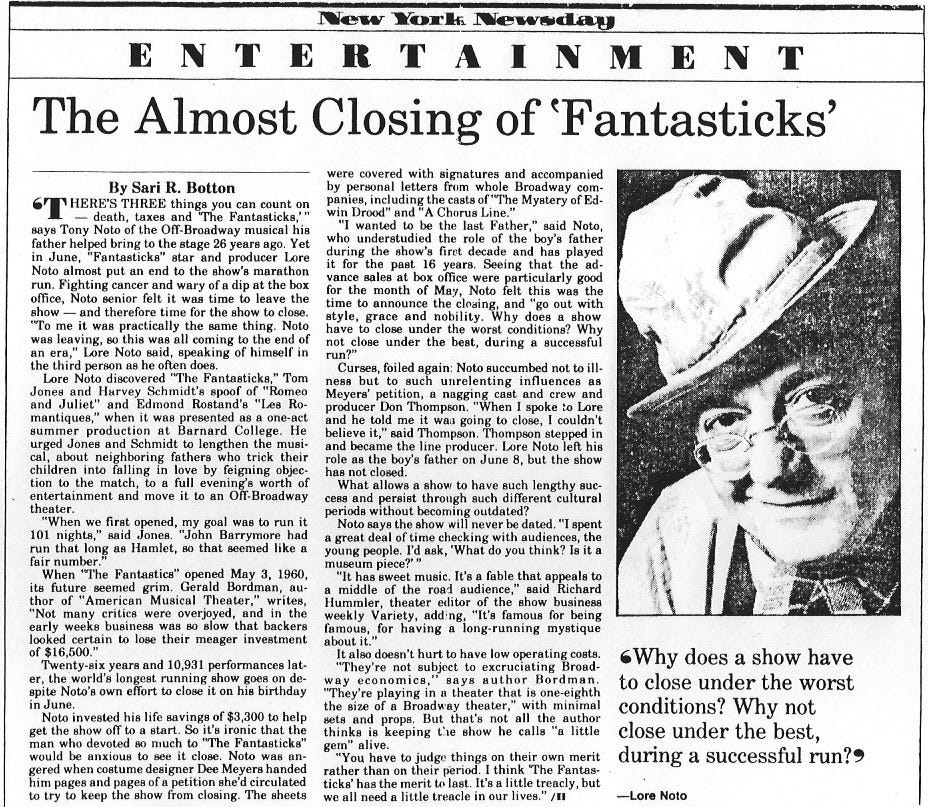
As part of my reporting, I got to see The Fantasticks—a sort of reverse Romeo and Juliet, in which feuding neighbors try to shut down a romance between one’s son and the other’s daugther by falsely encouraging their romance, hoping the kids will rebel against that encouragement by breaking up. I just loved the show. That’s when I learned that a song I knew, “Try to Remember,” (which is kind of Oldster-coded) came from it.
The Fantasticks didn’t close in the summer of ‘86 after all. In fact, it remained at The Sullivan Street Theater until 2002, the same year Lore Noto died at 79. Then a revival was staged at The Theater Center (also off-Broadway) from 2006 until 2017. There have been countless productions elsewhere.
Maybe that 1986 article prepared me for a more recent interview with a guy who has mixed feelings about retiring:

Check out the rest of this series here. P.S. Typos happen. Please forgive me if you find any!
Hipping myself to hip replacement...
For a solid year now I’ve avoided dealing with the chronic pain in my right hip. I just go about my life experiencing a consistent, just tolerable level of agony, occasionally popping Meloxicam to take the edge off.
I’ve written before about my steadily worsening arthritis, and my struggle to find the best way to treat it. It’s not only arthritis—I’ve got multiple additional diagnoses for that one joint, and it’s not entirely clear how much of the problem is my genetics, my age (and related dearth of estrogen), and my having been hit by a car as a pedestrian, landing hard on that hip.
Don’t tell my orthopedist, but one of the reasons I’ve steered clear of his office for more than twelve months is that the last time I was there, he said eventually I might need a hip replacement—a combination of words that terrifies me. I’m a big, squeamish baby when it comes to medicine involving sharp instruments, hospitalization, anesthesia, and insurance claims. There’s also my internalized ageism (we all have it) telling me joint replacements are only for “old people.”
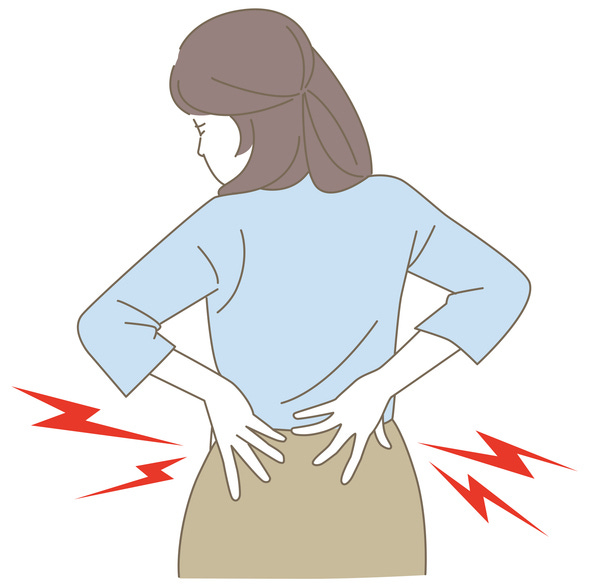
But lately a number of people I know in my age group and younger (and also older) have undergone hip replacements, and they all rave about how much those state-of-the art surgeries have improved their lives. After an operation and some physical therapy, they find they’re no longer in pain. Suddenly they can move in ways they were restricted from before. Some report having whole new leases on life.
What’s more, I now know these interventions aren’t only for elders. According to an article published by UCLA Health earlier this week: “Total hip arthroplasty (THA) is expected to grow 60% in the 45-64 age group, and about 45% in those younger than 45, in the years 2030 to 2040.”
But first those patients need to get past that misconception I held. Per the article:
“They might avoid meeting with a surgeon because they think a hip replacement is only for older patients,” says Adam Sassoon, MD, MS, an orthopedic surgeon in the adult reconstruction division at UCLA Health, and a professor of orthopedic surgery at the David Geffen School of Medicine at UCLA. “It isn’t about their numerical age but rather the status of their joint and the quality of their lives.”
I was fully disabused of my ageist notions Sunday night when I watched 43-year-old Misty Copeland—former primary dancer with the American Ballet Theater—come out of retirement post-hip-replacement to perform flawlessly at the Oscars. Here’s a clip of her dancing to “I Lied to You,” a song from Ryan Coogler’s Sinners, which received many awards that night:
Copeland’s trumphant performance was also a welcome slap in the face to actor Timothée Chalamet, who shortly before the Oscars had disparaged both ballet and opera. Good on him, though, for giving her a standing ovation.
Have you had hip replacement surgery? What has your experience with it been like?
Remember when we had to check our answering machines to find our friends?
Nostalgia for the ‘90s continues apace, thanks to Love Story on FX/Hulu. People have been talking a lot about feeling nostalgic for life before distracting smartphones, which constantly zap us with notifications.
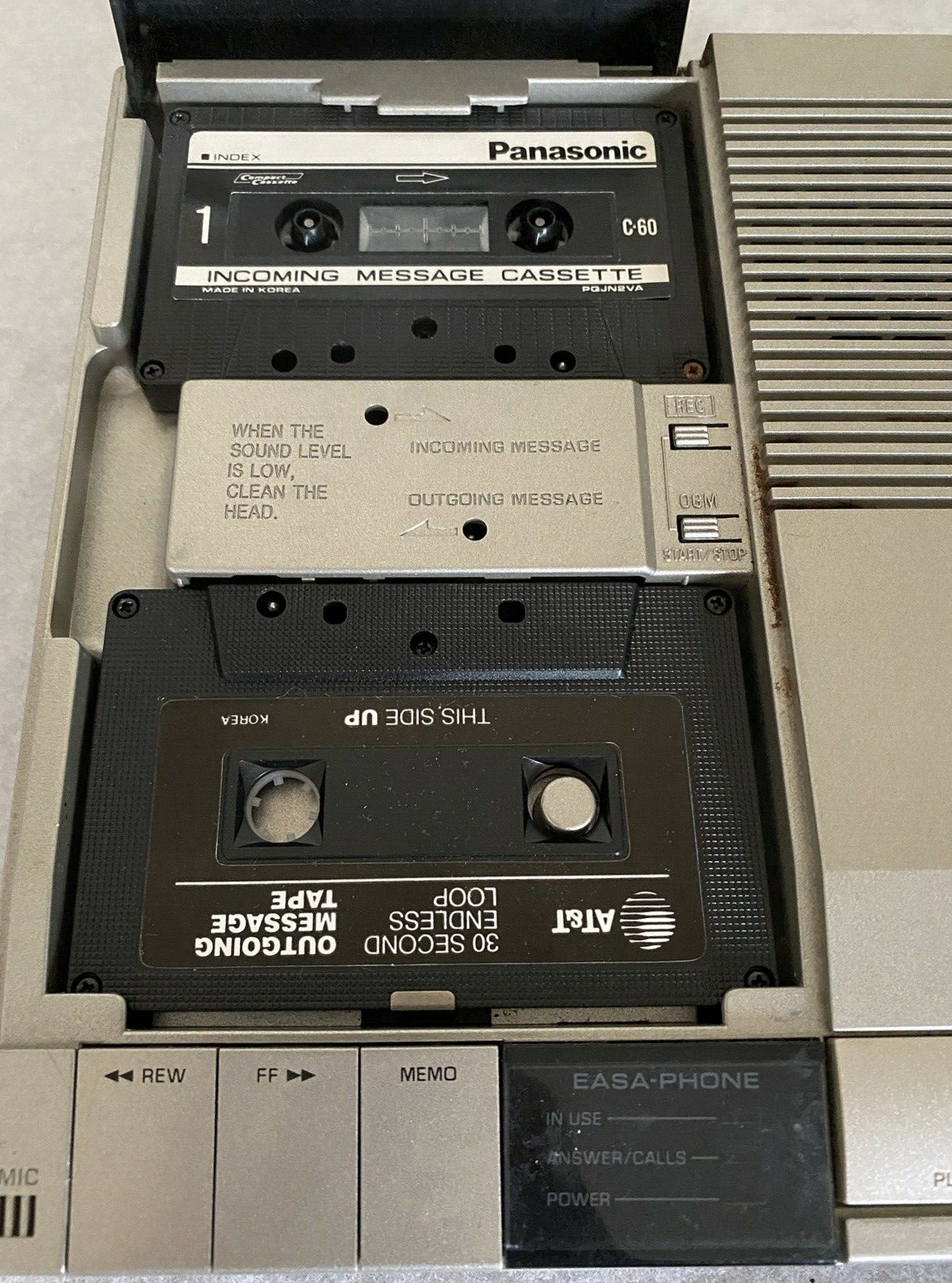

It’s led me to reflect on what it used to be like to meet up with my friends, when you couldn’t “drop a pin” to your location on an iPhone, or simply text someone, “I’m running five minutes late.” I lived in New York’s East Village in those days, and I recall having to check my “machine” from corner pay phones to learn whether my friends were delayed or had changed their plans.
Recently a friend from those days digitized all the tapes from his old answering machine. He sent me this one of me in 1997, trying to coordinate with him for a suprprise party we were to attend that night:
Hearing this message really transported me back to the mid-90s. It was wild being reminded of my life 29 years ago—roughly half my life ago!—and to hear how much higher my voice was back then.
Okay, that’s all for today. Thanks as always for reading, and for all your support. 🙏💝 I’ll be back tomorrow with a big Friday Link Roundup.
-Sari
I loved, “a slap in the fact” and think it was so brilliant I still wonder if it was a typo. -Dwight Lee Wolter.
Speaking from experience 😁
I have had both hips replaced. The right in December 2019(age 63) and the left in January 2025(age 68). Two different surgeons with their own procedures, so both surgeries had their similarities and differences. Unequivocally I would do both again in a heartbeat without a second thought. The freedom from pain and the return to mobility is worth everything, but honestly, the pain and discomfort from each surgery was nothing compared to what I was experiencing beforehand. I’m also sure the knowledge that the surgical/recovery pain was temporary and had every expectation of making me whole again had a lot of positive psychological impact.
The second surgery was done in a surgical center. I was admitted at 8am and sent home at 2pm. The physical therapist had me up and walking as soon as the anesthesia wore off, and I had an exercise routine to complete twice a day starting immediately. I believe that such an exercise program is key to a successful, healthy recovery. My surgery was January 10th, and I was out to dinner with my family using a cane (barely) on January 31st, walking 3 miles and biking 5 miles by the middle of March.
I would encourage you and anyone else to go for it! It’s made such a difference for me.