


Readers (no pun intended),
Today we have a post about aging-related eye issues, and eye care as we get older. It includes a video interview, above ⬆️ with Katie Mack, vice President of Marketing for Eyebobs, an eyewear company that carries a wide variety of cool and fashionable frames that I love.

Katie and I talk about how often to get our vision checked; how to choose the best frames for the shape of your face and style (they have a style quiz to help you figure it out); owning multiple pairs to go with different moods, colors, and styles of clothes; the latest in eyewear lens technology; adding blue light to lenses to ease computer-related eye strain; sun protection; and more. (I also confess to some eyewear-related blunders!) Check out our fun conversation above. ⬆️
“Be as playful with your glasses as you are with the rest of your wardrobe, your hairstyle, and everything else. There are glasses for everyone, and glasses that fit every mood. And if you decide you’re going from coloring your hair to going gray, there’ll be glasses that will make you feel better in each mood and transition and stage of life. Have fun and allow your glasses to be like a self-expression.” - Katie Mack, VP Marketing, Eyebobs
PLUS, we have a text interview below ⬇️ with my uncle, ophthalmic surgeon Dr. Samuel Masket (whom readers have met here before) about various eye-related issues that arise as we age, and the best ways to treat and manage them.
This is also a Friday Open Thread, which means that I’ll toss out a related prompt for you to respond to in the comments, if you’d like. Here it is: In the comments please tell us…
How old are you? Have you encountered any aging-related eye health issues, such as: Presbyopia? Cataracts? Glaucoma? Macular degeneration? Dry eye? Blepharatis? Big shifts in your lens prescription? Vision loss? Occular rosacea? (← I just learned about this issue from Valerie Monroe’s newsletter, How Not to F*ck Up Your Face.) Do you have difficulty with night driving? Do you wear bifocals? Progressive lenses? Blue light? How many pairs of glasses do you own? Do you have multiple pairs for different functions—readers, distance, etc.? What eye-care interventions have worked for you? What interventions haven’t? Answer as many or as few of these questions as you’d like! (If you’re commenting, please also do me the favor of hitting the heart button ❤️ for algorithmic purposes. Thank you!)
Me, I’m 60 (what?!), I wear corrective lenses full-time to deal with a nearsightedness/farsightedness/presbyopia combo platter, plus astigmatism. In the spring I had five styes in five weeks, after not having a single stye since my early 20s. Apparently this happened because at my age, my eyelids and the decreasing number of oil glands therein are losing elasticity, which can lead to clogging. (Gross!)
I hate driving at night, but not as much as I did before I upgraded my prescription in January after waiting too long, aka six years between eye checkups. (I have a good excuse: as you’ll see me say in my conversation with Katie Mack ⬆️, the pandemic warped my sense of time.) I own (gulp) six pairs of glasses in my current prescription, including these two pairs of Eyebobs:


Eyebobs is generously offering 20% off to Oldster Magazine’s subscribers.
Full disclosure: Eyebobs sponsored this post. But I wouldn’t have agreed to it if I didn’t love their looks and believe in the quality of their frames. I’ve long been a fan! (And I’ve turned down several other brands’ offers for sponsorship.)
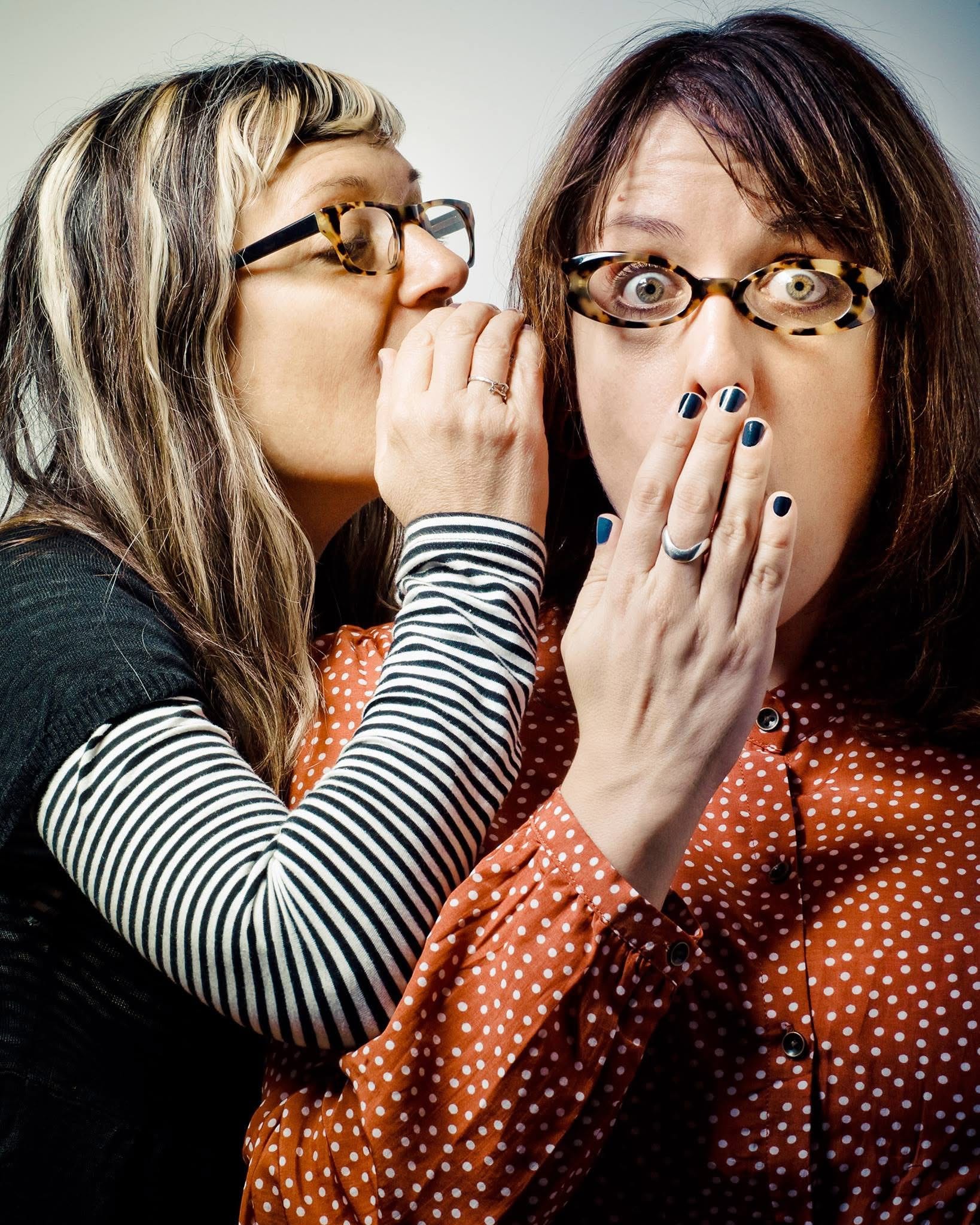
I first became aware of Eyebobs thirteen years ago when they sponsored the 2012 edition of Martha Frankel’s Woodstock Bookfest, where Eva Tenuto and I led a TMI Project true storytelling workshop. They had us model some frames for the festival’s ads and guidebook. Here we are:
And now for some important aging-related eye health information from my uncle, Dr. Samuel Masket:

What are some eye conditions that arise with age? Cataracts and glaucoma come to mind. At what ages, typically, do conditions like those tend to present?
Cataract, a clouding of the lens inside the eye, is extremely common; by age 70 roughly half of all people will have some degree of cataract. At present there are no proven preventable measures and cataract surgery, a highly successful outpatient procedure, can restore sight and even reduce the need for eyeglasses. Surgery is only necessary if vision is significantly compromised. About 3.5 million cataract surgeries are performed annually in the US. While most cataracts are age related, some medical conditions, diabetes as an example, increase the risk for developing cataracts.
Similar to cataract, the risk for glaucoma, a disease that impacts the main nerve of vision (optic nerve), increases with age. Glaucoma most typically is a painless condition that can steal one’s sight gradually, initially from the peripheral portions of vision. Family history of glaucoma is an important risk factor. In general, glaucoma is treated by reducing the pressure in the eye either with eyedrops, laser therapy, or surgery, varying with the stage of the condition. Because glaucoma may go unnoticed in its early stages, patients should have periodic screening exams as they age.
Another and very important eye condition that increases with age is Macular Degeneration. The macula is the very central part of the retina (the light-sensitive part of the eye and an extension of the brain). With aging, the macula can gradually lose function and impact vision, causing a loss of reading ability, etc. The condition cannot be prevented, but helped by use of vitamin and mineral supplements like AREDS. Some cases, with a more aggressive form of the disease, are treated with periodic injections into the eye. As the retina is an extension of the human brain, anything that benefits brain- (and heart-) health is also good for the eye. They include a Mediterranean diet, foods high in antioxidants, absence of smoking, exercise, etc. Family history is also an important risk factor for developing Macular Degeneration.
[My husband] Brian will soon have laser surgery to deal with his loss of vision, thanks to glaucoma. Are there advances in this type of treatment that are making it more effective, less risky, etc?
Laser therapy for glaucoma is an effective and very low risk treatment to reduce eye pressure in cases of glaucoma. It is rapidly replacing eye drop therapy as the first line of treatment. There is a very new method for delivery of the laser to the eye that should make it more accessible for patients. Unfortunately, laser can only reduce the eye pressure a certain amount, limiting its benefit in patients with more advanced forms of the disease.
We know that it’s advised we get our vision checked by an optometrist annually. Do we need to have our eyes dilated, and to get that test with the air blown into our eyes, annually, too? What do those tests help to determine?
For adults with no prior history of eye disease and a negative family history, routine comprehensive examinations need be performed on a 5-year basis. However, with aging, exams should be more frequent, perhaps every two years, assuming that the patient is free of vision symptoms and that no risk factors were noted in prior exams. The “air puff” that you note is a means for measuring eye pressure, to screen for glaucoma. However, that device is used less commonly as it is uncomfortable and has been replaced by newer technology.
When, or under what circumstances, is it appropriate to see an ophthalmologist?
Both Optometrists and Ophthalmologists perform basic eye exams; however, some people prefer to see the latter group, as they are MD physicians and surgeons. Optometrists do not perform eye surgery and refer to an Ophthalmologist when serious disease is discovered or surgery is considered.
Let’s talk about dry-eye as we age, and issues it can lead to. I say that as someone who recently had five styes in five weeks, after having zero styes since my early 20s. The ophthalmologist I saw said it is related to aging and dryness and loss of elasticity in the oil glands in my eyelids.
Dry eye disease (DED) is a very common disorder, even more so in women. The most common cause is reduction in the number of oil producing glands in the eyelids. This may lead to chronic eyelid inflammation, a condition referred to as blepharitis that may cause red and irritated lids. Occasionally an oil gland may become blocked and swell and develop a chalazion that can be treated with hot compresses, medication, and potentially minor surgery. DED is treated with a number of topical medications and procedures to aid the health of the oil glands.
Tell us about The Samuel and Barbara Masket Foundation, what it offers, and what led you to found it?
The Foundation provides pro bono eye surgery for underserved or underinsured patients. We also provide a Fellowship to train recent Ophthalmology graduates in advanced eye surgical techniques. It is a very rewarding endeavor that has enabled me to “pass the baton” to younger eye surgeons while benefitting patients at the same time.
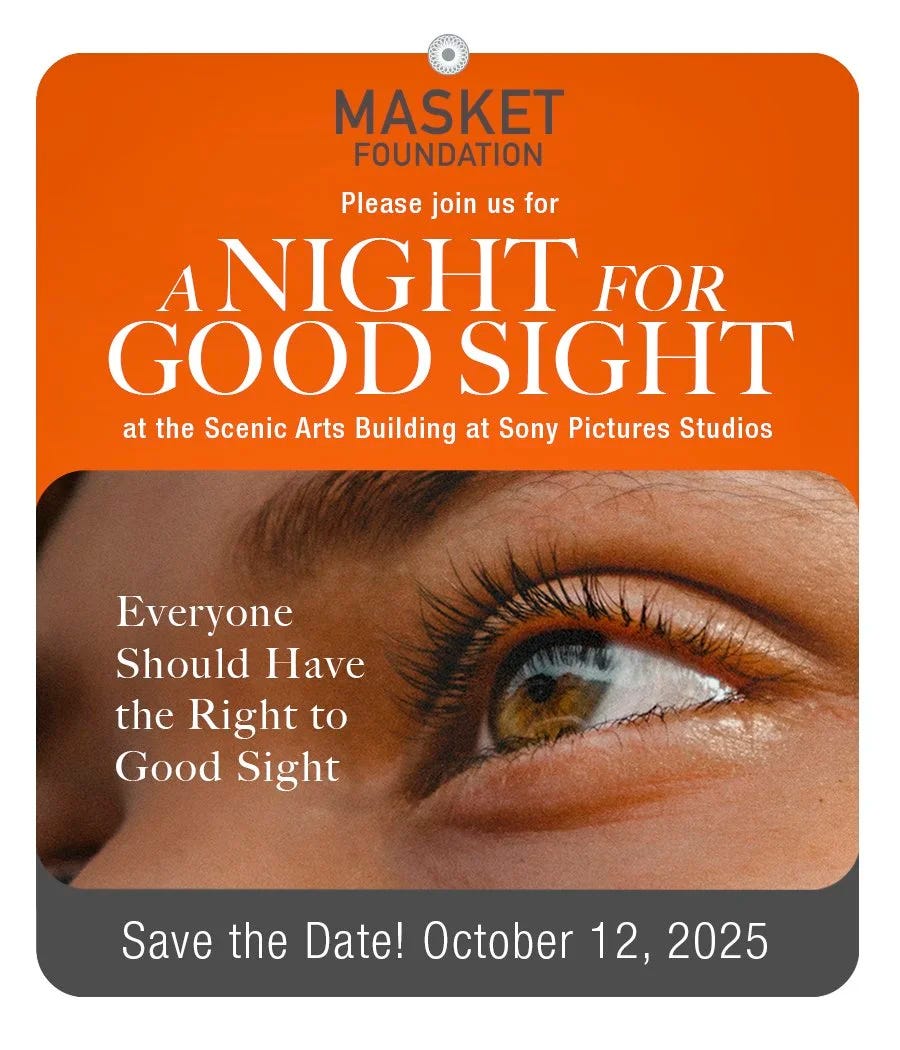
Eyebobs has also generously donated $500 in gift cards and a lens cleaning kit to the silent auction for The Masket Foundation’s “A Night for Good Sight,” their annual gala, which will take place this Sunday, October 12th in Los Angeles—and which will feature a performance by Jack Schneider, a talented singer-songwriter I got to hear in Nashville last spring. It’s a great organization worthy of support. (Martin Short, Jack Black, and Mandy Patinkin agree.)
Now let’s hear from you. In the comments please tell us:
How old are you? Have you encountered any aging-related eye health issues, such as: Presbyopia? Cataracts? Glaucoma? Macular degeneration? Dry eye? Blepharatis? Big shifts in your lens prescription? Vision loss? Occular rosacea? (← I just learned about this issue from Valerie Monroe’s newsletter, How Not to F*ck Up Your Face.) Do you have difficulty with night driving? Do you wear bifocals? Progressive lenses? Blue light? How many pairs of glasses do you own? Do you have multiple pairs for different functions—readers, distance, etc.? What eye-care interventions have worked for you? What interventions haven’t? Answer as many or as few of these questions as you’d like! (If you’re commenting, please also do me the favor of hitting the heart button ❤️ for algorithmic purposes. Thank you!)
Big thanks to Katie Mack from Eyebobs for chatting with me, sponsoring this post, and offering Oldster readers a 20% discount on frames. (Everybody go get your eyes checked, then grab some cool new frames.)
And big thanks to my uncle, Dr. Samuel Masket, for dropping important eye health knowledge on us. In case you missed it, here’s a popular interview I did with Sam in June about his struggle to fully retire from his career as an ophthalmic surgeon:

And thanks to all of you, for reading, supporting my work here, and for chiming in with your experiences. I’m glad to have all 70K (!!!) of you here. I couldn’t do this without you. 🙏💝


