

Raising Mom
Melanie Chartoff recalls when she and her sister reversed roles with their mother.


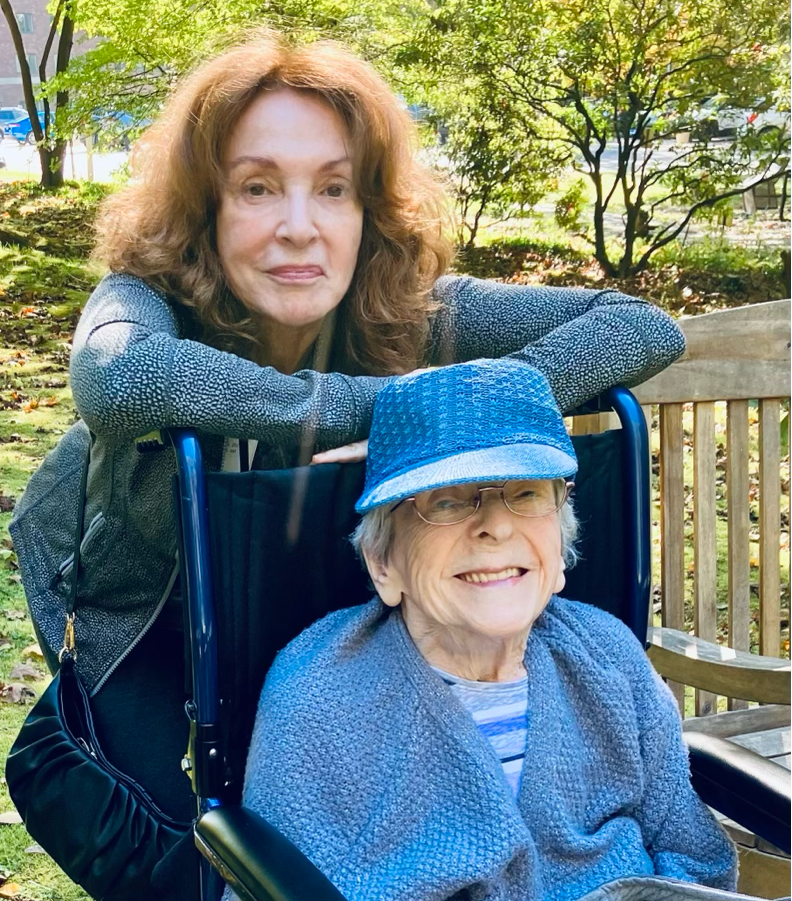
My mother had a very happy childhood—carefree, indulged, secure—starting at age 81.
That’s when my sister and I enrolled her in an assisted living facility in Hamden, Connecticut, just outside the New Haven area, our birthplace. Norma and her husband, Chip, found Whitney Center, and I split the funding of her brand-new life in a one-bedroom apartment with a lovely view there. It wasn’t cheap, but Mom deserved better than she’d had.
As we moved her into this private school for continuing education and decorated her dorm room, she thrived. She joined the choir, and her rich soprano performed solos with other seniors who shared her love of music. She found her voice there. Frances Chartoff also wrote for the W.C. newspaper—poetry and essays. We got her a used Jetta with our inheritance from our father, and she drove to psychotherapy and Hatha Yoga.
When I’d visit, Mom and I would attend lectures by some of the other denizens, many of whom were retired educators from Yale University and the University of Southern Connecticut, where Mom had worked for many years. One octogenarian professor had studied a commune in rural China for several years while living in it, and his films and slides were illuminating. For an hour he convinced us how well communism worked for the people of Henan Province, with everyone on the massive farm assigned a purpose. The 4-year olds fed the babies and helped cook the foods, the elders taught and babysat. There was no depression on the commune, he said.
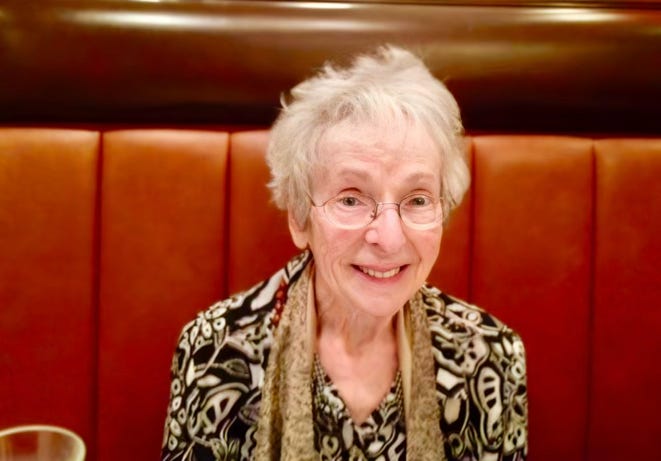
At Whitney Center it was inspiring to witness seniors discovering a new sense of purpose in their latter years.
Dr. Hesung Koh loved it there. She told us of being raised in poverty in North Korea and defecting to South Korea as a child. Well-educated, she married the American Ambassador to South Korea and they had many children and grandchildren, one of whom had worked in Obama’s administration, one who headed the Yale Medical School. She, too, taught at Yale, and was still in demand as a speaker and leader. She would hold court in the assisted living conference room and visitors would come from all over the world. She purchased a double apartment at Whitney and furnished it with Korean art. Being invited for tea was a great escape to her world.
We watched our mother mature—into her own woman rather than our abusive father’s beleaguered wife. She went through many phases—beginning with attending Co-Dependents Anonymous meetings, which helped her immeasurably. Her anxiety disorder lessened. We noticed her voice changing and lowering as she moved through a new kind of puberty.
With such a diverse population, the level of conversation was heady at Whitney. Schoolgirl-like gossip gangs were profuse, and there were communities with varied interests and passions that met in the library full of the donated books and art collections of the deceased. The renowned Yale “Whiffenpoofs,” an a capella group whose various iterations began performing in New Haven in 1909, would rehearse and sing there for a grateful crowd, as would string quartets and local pop singers.
Never a dull moment. There were countless activities, two dining halls, a fully-equipped gym, a heated swimming pool, and beautiful grounds on a lake in woods with wild turkeys free-ranging around the campus. We loved to go to the garden, tended by other residents who planted plots of vegetables and flowers and composted.
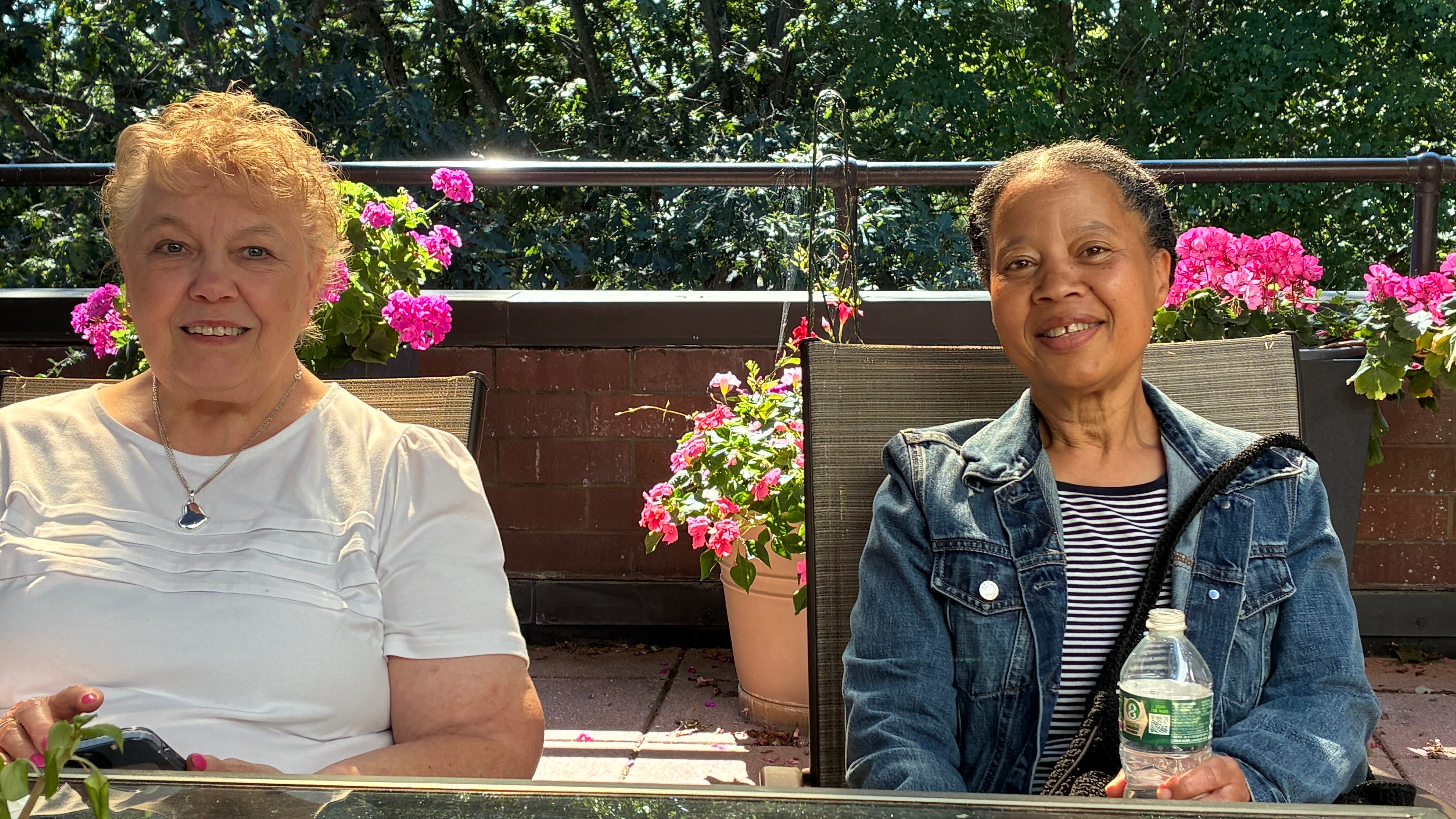
Our mother made a few dear friends there, but, as they began to graduate to the next level, she preferred hanging with the younger staff, and they adored her. Management at Whitney encouraged kindness and good spirits prevailed. We should all be so lucky as to matriculate at a Whitney Center when we grow up.
We watched our mother mature—into her own woman rather than our abusive father’s beleaguered wife. She went through many phases—beginning with attending Co-Dependents Anonymous meetings, which helped her immeasurably. Her anxiety disorder lessened. We noticed her voice changing and lowering as she moved through a new kind of puberty. My sister Norma and her husband Chip, who live in Brooklyn, far nearer than I in Los Angeles, told me Mom was losing her “baby teeth.” They drove her to many dentists as I paid for graduating sets of grownup teeth. I owed it to her, as I’d based my role as television’s Rugrats’ cartoon mother on her voice. She soon had a very expensive, bright grin and, as if we’d just removed her braces, she smiled more than she ever had.
She read avidly, especially biographies of comedians—Mel Brooks, Sid Caesar, Mike Nichols, and loved the Mike Nichols and Elaine May comedy YouTubes I sent her. She needed laughter to counter memories of the Great Depression and her own. She’d been a huge Eddie Cantor fan, and his autographed photos and notes adorned the wall. My brother-in-law got her a computer and taught her to use it. I loved receiving her newsy emails. My sister got her an iPad and taught her how to play games on it. She immersed herself in jigsaw puzzles, classical music and old movies. She would revel in her favorites showing up over and over again.
I took my Social Security early to help her as prices went up, and she outlived her savings. She felt bad, but we told her not to worry, we’d take care of her, as she did us for our first twenty years, and we did for longer than we ever thought possible, with childfree Norma and Chip reparenting her, babying her. She was the daughter they always wanted. They’d buy her playthings and classy, comfy clothes, and she never dressed better than for the many birthday parties they threw her.
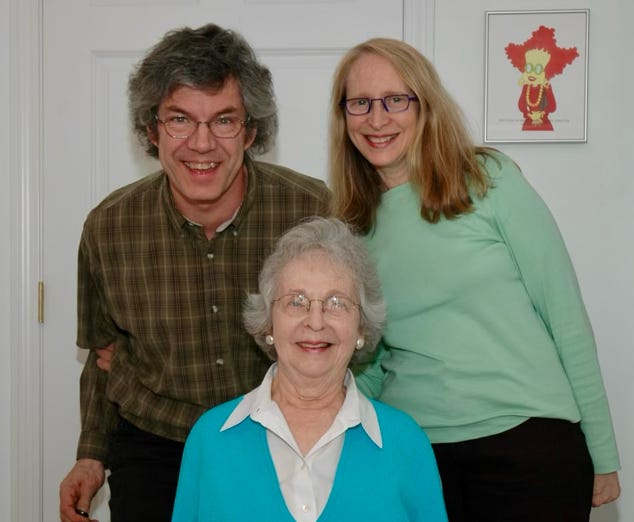
As she shrank, she became childlike and spoiled. My sister and brother-in-law deserve the Nobel Prize for patience. They were hands-on and drove in often. I visited when I could and once stayed a couple of months at the Health Center with her when she had surgery and was scared. She hated hospitals, refusing to go when she fell and hit her head. She wanted to die in her apartment, she said, even fantasized about the scene, the light, the sounds, the songs.
Beginning at age 91, whenever my husband and I would leave her, she’d say, “This is the last time I’ll see you.” But she was wrong—for a full ten years. The last time I visited, in early August, she told me, “I actually died three months ago, but am acting alive for other people.” She said she felt she was already dead, just dreaming her day-to-day life, with one of her aides, Betty or Pauline, with her 24-7. She was so glad to have their company, to no longer be alone.
She romanticized her funeral, what she’d wear and what I’d wear, so glad she wouldn’t ever have to put on brassieres or dentures again. She longed for it, as her failing hearing and eyesight was making it difficult for her to read or watch television, and she was beyond bored with life. She managed to arrange it, somehow catching Covid from my cautious sister and her husband, who barely removed their masks to eat. She went on oxygen, then on hospice, then forty-eight hours later, at 101, she slept her way off this plane. We were relieved for her.
She was buried in September within sight of the University of Southern Connecticut, where she was much adored by students, one of whom spoke at her ceremony on a beautiful day.
It was a happy ending to a happy childhood—as she, and we, had so wanted.
Previously Melanie Chartoff wrote “Know Your Nonagenarians,” “Putting My Outdated Underthings Out to Pasture,” “For Better and For Worse #4: My Love, My Executioner,” and “Growth Spurts in Reverse” for Oldster.
 | A guest post by
|
This was a lovely essay to read first thing in the morning. I can only wish as much love, support, and community for my own mother in her final years. Frances was lucky to have two wonderful daughters (and a wonderful son-in-law) and it’s speaks to the kind of mother and human-being that she must have been. That, and, I want to live at The Whitney Center! ❤️
So many of us aging baby boomers are caring for and/or otherwise helping aging parents. When I feel weary or stressed, I think of the sisterhood of daughters and feel encouraged.