


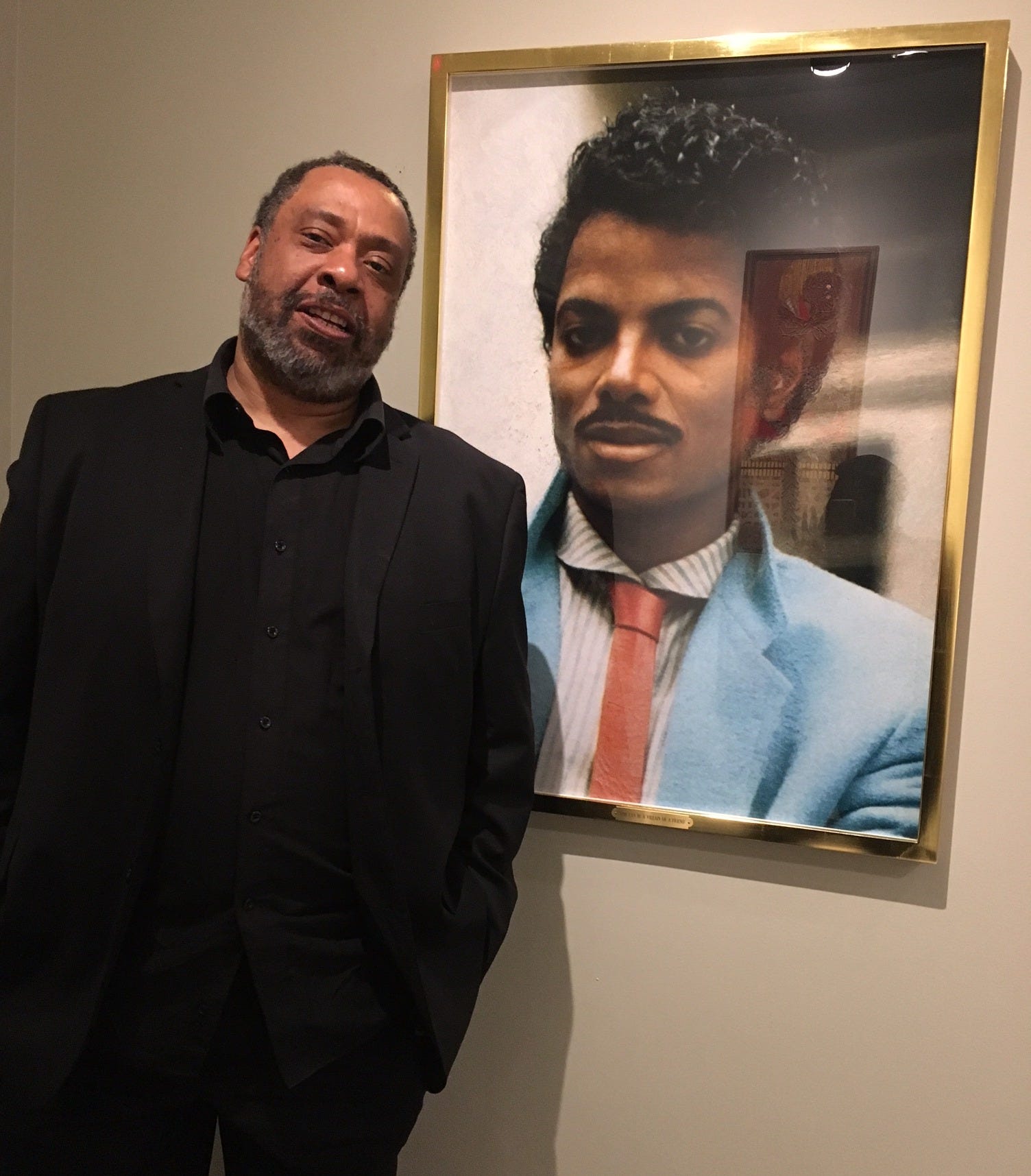
“Music has the power to revive memories, sometimes so intensely it hurts.” - Haruki Murakami
One recent afternoon I was sitting in the living room when the sound of the Jackson 5’s “I Want You Back,” playing on the neighbor’s radio, drifted through the apartment wall. Released in 1969 when I was 7, it was the group’s first single, the world’s introduction to Michael’s stunning then 11-year-old voice, a beautiful instrument and the centerpiece of songs that comprised the soundtrack of our young lives that lingered well into adulthood.
As a single man over 60 with no kids, I often have too much time on my hands to simply think. My mind drifts through time, conjuring places and faces I haven’t seen in decades. Whenever I hear songs from my youth being played, through thin walls, or on one of my own devices, all kinds of spirits are stirred and flashes of memory emerge like ghosts tired of being trapped in a haunted house. After my girlfriend Lesley died in 1999 I would get drunk and blare M.J.’s jam “Remember the Time” on repeat before crawling into bed.
Sometimes these songs inspire short stories or essays, but they mostly provide a momentary release from the real (often depressing) world. That day, closing my eyes as the mid-tempo track splashed like tiny waves against my brain, “I Want You Back” took me on a trip to the summer of 1972, when I was 9 and first stayed with Aunt Ricky in Pittsburgh. My aunt, who I later referred to as my “summer mother,” lived with her daughter Denise in an old but still sturdy and stunning house in a quiet residential neighborhood in Pittsburgh.
Three years older than me, Denise was popular and had more than a few friends on the block. The novelty of having a male relative visiting from New York City was just another reason for the girls to flock to her house daily. Some days we played in the abandoned car in the backyard, on others we played tag or hide-n-seek for hours.
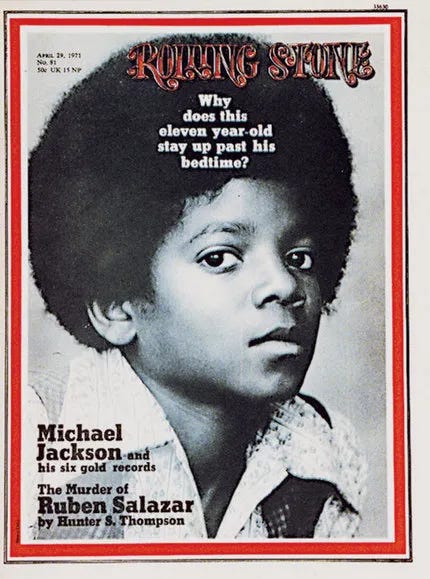
There were a few girls in attendance, but the only one who made an impression on me was a pretty, brown-skinned one with hot-combed straight hair, blue jeans, and white button-down shirt. Her name was Helen and from the moment we met, my first schoolboy crush was ignited. Unfortunately the only Michael she was interested in was Jackson.
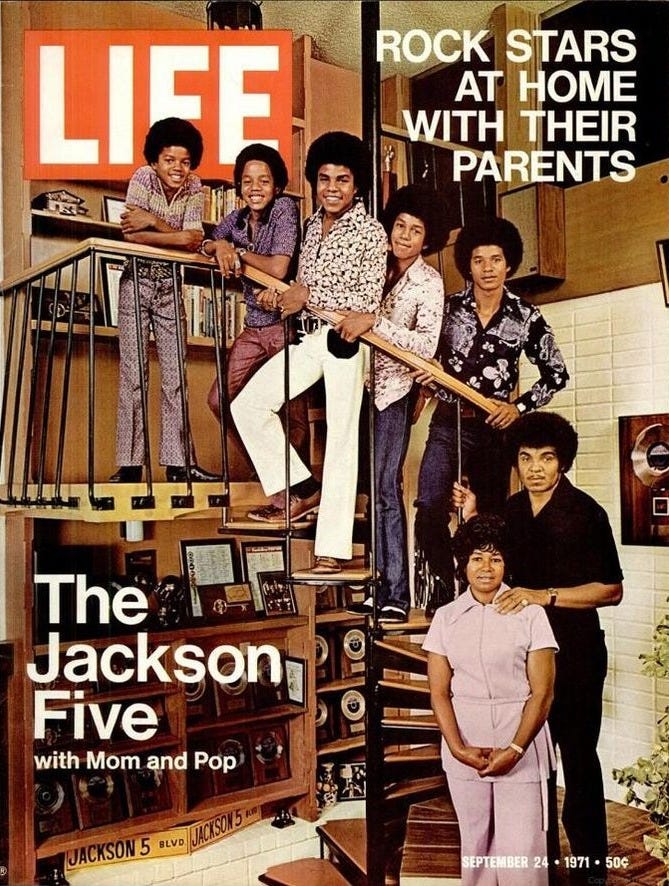
“Her bedroom is a shrine to Michael Jackson,” Denise told me. A few days later I convinced Helen to show me herself, and along with Denise and a few of the other girls, I paid a visit to her family’s home down the block. My eyes bulged when I saw the many glossy pin-up posters from the pages of Right On!, Ebony and Jet. There was a Life magazine cover of the Jackson family standing on the stairs, along with a picture of Mike posing on his motorized mini-bike, another in the studio with Motown Records’ big boss Berry Gordy hovering over his bony shoulder, and one of all the brothers playing basketball.
Whenever I hear songs from my youth being played, through thin walls, or on one of my own devices, all kinds of spirits are stirred and flashes of memory emerge like ghosts tired of being trapped in a haunted house. Sometimes these songs inspire short stories or essays, but they mostly provide a momentary release from the real (often depressing) world.
From floor to ceiling, every surface of Helen’s room was covered. “Isn’t he just so cute?” she swooned, releasing a girlish giggle that reminded me of multicolored bubbles floating towards the white ceiling. “One day I’m going to marry him.” Not having any sisters, I’d never witnessed that level of fandom or devotion to a pop star. Of course I’d watched footage on TV of young white girls losing their minds over The Beatles, but seeing Black girls go nuts in a similar fashion was something new.
Years later I realized that prior to the Jackson 5, most of our stars, be it James Brown or Gladys Knight, were grown ass folks our parents’ age. Then we got Michael and his brothers (older bro Jermaine was the other sensation in the group), who was one of us. The Jackson 5 may have been celebrities, but they, too, were kids, as adorable as the cute boy in church or on the other side of the classroom that most of girls were too meek to even talk to.
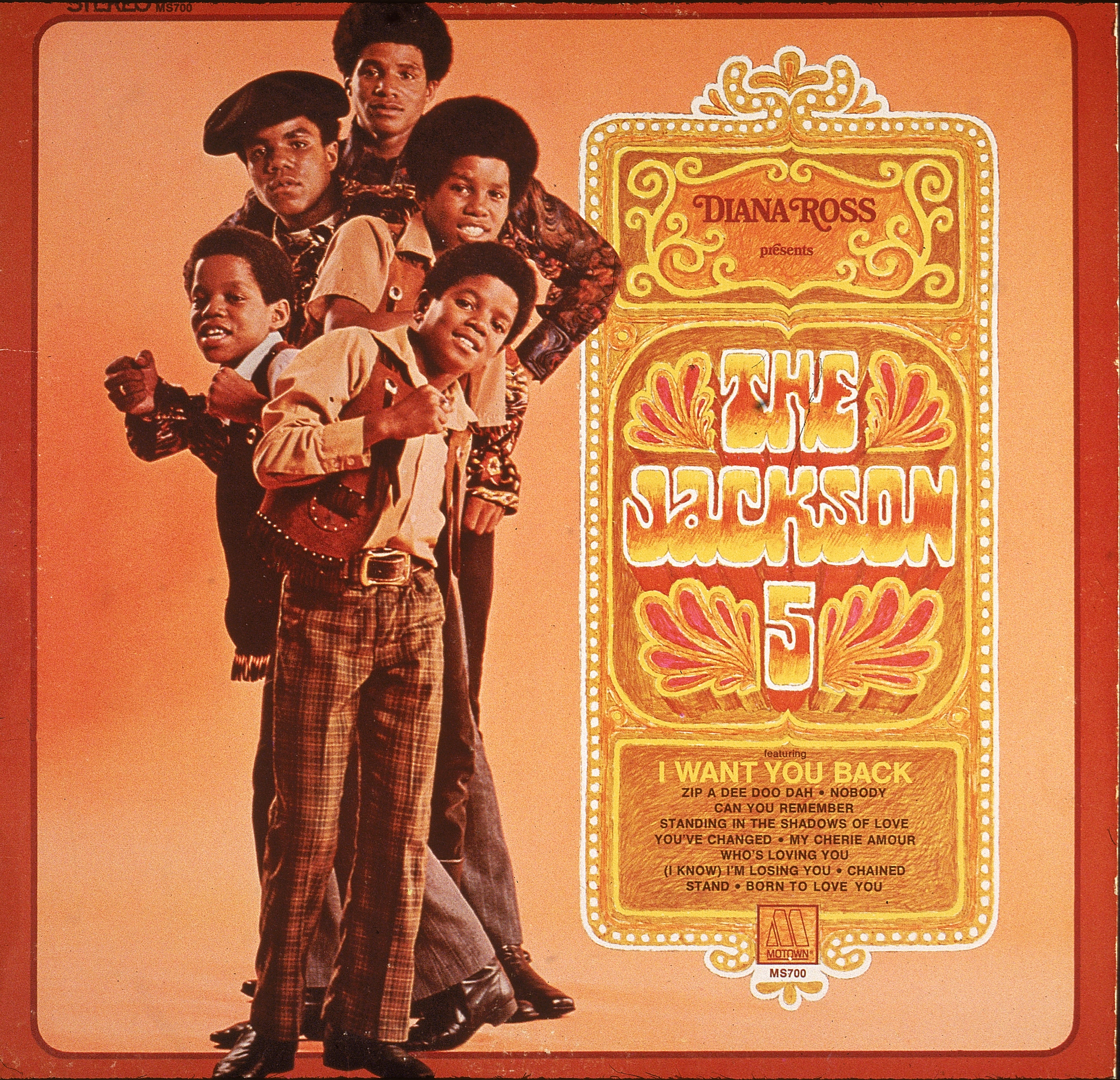
After we all returned to Aunt Ricky’s house from Helen’s, we raided the freezer for fudge pops and the five girls and I piled into the living-room where the huge turntable console was located. Made of wood, it looked like a piece of fancy furniture, but was actually just a record player. On top of the pile was Diana Ross Presents the Jackson 5, the group’s first album featuring “I Want You Back.”
Looking at Helen, I spotted a gleam in her eyes and a smile on her lips as Denise slid the album from its cover and placed the disc on the turntable. Placing the needle on the groove of the third track, she quickly rejoined her friends, and they began the show. As the music swooped out of the speakers like a soulful tsunami washing away their shyness, the girls took their positions, with Helen in front ready to assume the Michael Jackson part. Their fudge pop sticks became microphones.
Three years older than me, my cousin Denise was popular and had more than a few friends on the block. The novelty of having a male relative visiting from New York City was just another reason for the girls to flock to her house daily. The only one who made an impression on me was a pretty, brown-skinned one with hot-combed straight hair, blue jeans, and white button-down shirt. Her name was Helen and from the moment we met, my first schoolboy crush was ignited. Unfortunately the only Michael she was interested in was Jackson.
“When I had you to myself, I didn’t want you around,” Helen squealed, sounding nothing like Michael, but still capturing him perfectly. She, Denise and the other girls had obviously practiced this routine many times before, performing it for their parents, friends in the school lunchroom, or at the Mount Hope talent show. Mount Hope was the Baptist church many in the community flocked to on Sunday mornings.
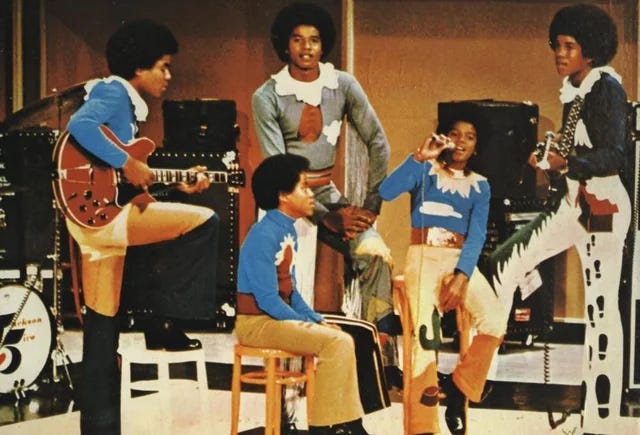
Making myself comfortable on the plastic-slip-covered couch, I watched as they sang loudly, performing the same dance steps the Jackson boys did on The Ed Sullivan Show two years prior. (This was years before every household had a VCR for recording favorite programs.) Helen must’ve memorized their choreography and taught it to the others.
I’ll never forget watching the brothers perform on Sullivan’s show, all of them dressed like psychedelic pimps, and Michael sporting a purple brimmed hat that wouldn’t have been out of place at the playa Harlem bar the Shalimar. “Look at that boy go!” Grandma yelled, “He’s like a mini James Brown.” Grandma rarely listened to popular music, but that night she was tuned in to The Jackson 5’s television performance. Those boys were generating so much joy from Sullivan’s stage and all that Black love was radiating into the homes of millions.
A few years before, folks had stared blankly at news footage of bombs being dropped on Vietnam, uprisings in the streets of Newark and Watts, leaders being slain in Dallas, Memphis and Harlem while cops released German Shepherds on peaceful protesters down south. But, that spring night in 1969 the brothers paused the mayhem and brought the bliss. Years later I’d imagine Helen sitting on the floor in her parent’s house that night, fixedly glaring at the screen and memorizing their every move.
Three minutes later the song was over and I clapped for the girls as though the real brothers had just left the stage. “Do it again,” I screamed as they laughed and we all jumped up and down. In the excitement of the moment Helen gave me a sweet hug. It was a brief one, but her touch and smell, like wildflowers mixed with frozen fudge, stayed with me.
“When I had you to myself, I didn’t want you around,” Helen squealed, sounding nothing like Michael, but still capturing him perfectly. She, Denise and the other girls had obviously practiced this routine many times before, performing it for their parents, friends in the school lunchroom, or at the Mount Hope Baptist church talent show. Making myself comfortable on the plastic-slip-covered couch, I watched as they sang loudly, performing the same dance steps the Jackson boys did on The Ed Sullivan Show two years prior.
Days later I sat next to Denise at New Hope Baptist sneaking peeks at Helen, who sat with her mom on the other side of the church. With Aunt Ricky in the choir, there was no one paying attention as I stole glances at Helen and imagined her holding me close again while I inhaled the bouquet of her flowery fragrance.
Raised Catholic, I wasn’t used to the long Baptist service that went on for hours, but admiring Helen made the time tolerable. Moments after the preacher’s last words, as the congregation filed out of the door, I heard a collective gasp. When I looked down the short staircase that led to the sidewalk, there was Helen lying on the ground. At first it looked as though she had fainted, but her body was quivering as though cold. “Run downstairs and get a spoon,” someone screamed. Seconds later her mother gingerly inserted the spoon in Helen’s mouth, and about 15-minutes later the sideshow was over.
Having no idea what had happened, I felt tears well in my eyes. On the car ride home, with Aunt Ricky behind the wheel, Denise explained that Helen had a disease called epilepsy. “She has these seizures that cause her to pass out.”
“What was the spoon for?”
“Her mother works it into her mouth to keep her from swallowing her tongue.” None of what she said made sense to my 9-year-old ears: How could a person swallow their tongue? What kind of disease caused a person to lose consciousness? It all sounded like something an evil villain in a Jack Kirby-drawn comic book might inflict on the Fantastic Four.
***
Two weeks later I was back in New York City, home with mom and Grandma, as I prepared to enter the 4th grade at St. Catherine of Genoa. After an exciting summer that included my first unrequited love, I thought of Helen often, especially when I encountered something Jackson 5-related—be it their Saturday morning cartoon, television specials, commercials for Alpha-Bits cereal, or the many variety shows (Sonny & Cher, Merv Griffin) that I watched with eagle eyes knowing that somewhere in Pittsburgh my girl Helen was surely focused on her set.
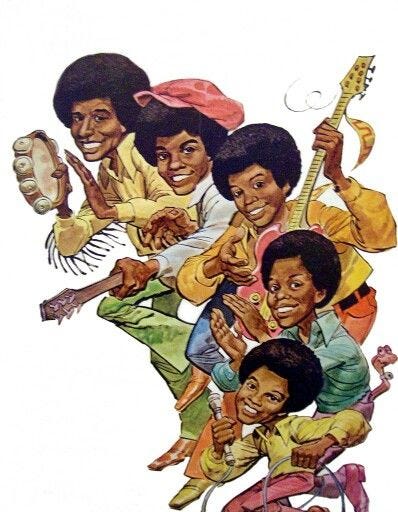
I, too, loved the group’s music. But knowing they were the object of my crush’s obsession made me want to emulate them. Perhaps the worst headache I ever had in my life was after wearing my mother's hard pink curlers overnight so I too could have a "curly afro" like the ones the Jackson bros styled while performing "Dancing Machine" on The Carol Burnett Show. Occasionally Denise called and put Helen on the phone. I stuttered and stammered through our short conversations, which always led back to the Jackson 5.
Two years after I met Helen, Aunt Ricky moved to the suburbs. During my next summer visit, though I didn’t see Helen daily, I could always find her at church. She was developing into a beautiful young lady, and it made me jealous when the boys crowded around her after services. Still, she always made time for me, and we’d go to the candy store two blocks away and stock up on jawbreakers, Charm Pops, and Mary Janes, Helen’s favorites.
Back in New York City in the winter of 1975, somehow Mom scored Jackson 5 tickets at Radio City Music Hall for February 12th, which was also Ash Wednesday. Their last big single on Motown was the hypnotic “Dancing Machine,” the song that introduced the Robot dance to the nation. The day of the concert Mother Nature wasn’t really checkin’ for my plans since she dumped 6.3 inches of snow on the town.
Moments after the preacher’s last words, as the congregation filed out of the door, I heard a collective gasp. When I looked down the short staircase that led to the sidewalk, there was Helen lying on the ground. At first it looked as though she had fainted, but her body was quivering as though cold. “Run downstairs and get a spoon,” someone screamed. Seconds later her mother gingerly inserted the spoon in Helen’s mouth, and about 15-minutes later the sideshow was over.
When Mom got home from work, she said, “I don’t think we’re going to be able to go to see the Jackson 5.” I instantly melted down into tears and shrieks of anguish, which changed her mind. After dressing me in so many layers of snow gear that I looked like a little Michelin Man, Mom and I took the #1 subway line downtown and dined at our favorite chain restaurant Beefsteak Charlie’s.
Two long blocks away Radio City Music Hall was filled with rowdy children and their long-suffering parents. As we walked towards our seats in the lower orchestra section, a crowd of screaming kids came running down the aisle with autograph books and cameras. After enduring the three opening acts—The Hues Corporation ("Rock the Boat"), Blue Magic ("Side Show") and The Floaters (“Float On”) – the clamorous kids could barely contain their excitement.
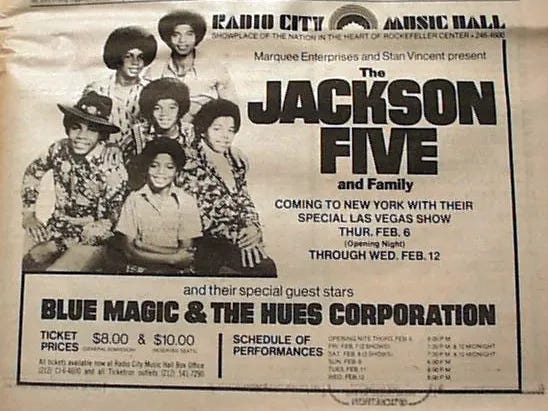
For weeks they had danced in their bedrooms while spinning Jackson jewels like “I’ll Be There,” “Never Can Say Goodbye,” “Ben,” and my favorite, “Maria,” on their stereos, adjusting their denim applejack hats (like the one M.J. wore on the cover of Got to Be There) in the mirror while deciding which color marshmallow shoes went best with their bellbottom jeans.
Although it might have been just another show for The Jackson 5, for us it was the most special day of our young lives. When it was finally time for the headliners, everyone scrambled to their seats as the house lights dimmed. A loud explosion erupted from the stage and the Jackson 5 emerged from the shadows wearing their glittering, Las Vegas-styled costumes and dancing with wild abandon.
With their calculated innocence, complex choreography, and fierce flashes of electrifying elegance, the Jackson 5 performed with a ferocity that hinted that tomorrow wasn't promised. As they soulfully sang their most popular singles, we were transported to a wondrous wonderland of boogie down delights. “It was the older hits, ‘I Want You Back’ and ‘I'll Be There,’ which drew the greatest response from the capacity audience,” journalist David Nathan reported in Blues & Soul.
Although the Radio City performance might have been just another show for The Jackson 5, for us it was the most special day of our young lives. When it was finally time for the headliners, everyone scrambled to their seats as the house lights dimmed. A loud explosion erupted from the stage and the Jackson 5 emerged from the shadows wearing their glittering, Las Vegas-styled costumes and dancing with wild abandon.
On the way home I told Mom, “I can’t wait to tell Helen about the show.” Trouble was I didn’t have her number, so I had to call Denise first. I had no idea I was about to have the harshest conversation of my young life.
“Michael, I don’t know how to tell you this, but Helen died.” Denise and I were both quiet for a few seconds and then I cleared my throat.
“What are you talking about?”
“She had a seizure and never recovered.”
“For real?”
“I wouldn’t joke about something like this. I loved that girl like a sister.”
“When did this happen?”
“A month ago; she was standing on her lawn and passed out.”
“Jesus.”
Though I was only 12, I had already dealt with a few deaths, but those who’d passed were elders, not someone a just few years older than me. I flashed back to that afternoon I’d seen her passed out after church and imagined her in that position, lying on the grass a few feet from her family’s red mailbox. “Thanks for finally telling me.”
“Don’t be like that,” Denise said.
On the way home I told Mom, “I can’t wait to tell Helen about the show.” Trouble was I didn’t have her number, so I had to call Denise first. I had no idea I was about to have the harshest conversation of my young life.
I hung up before she said another word. For the next week Helen’s spirit must’ve been visiting, because I thought I saw her everywhere: boarding the crosstown bus, buying Mary Janes at the candy store, in between the shelves at the Hamilton Grange Library, and eating in the McDonald’s on 145th and Broadway. Then one day I didn’t see her anymore, but still thought about her constantly.
The haunting MJ solo song “Maria” (You Were the Only One”) was the track I played most frequently because I felt as though he was singing an ode to a dead crush’s spirit. The following year the Jackson 5 left Motown and signed with Epic/Philadelphia International Records. Big Boss Berry Gordy wouldn’t let them keep their name, so they changed it to The Jacksons.
Though Michael had put out a few solo albums in the 1970s (Ben, Music in Me) on Motown, it wasn’t until 1979 when he released the Quincy Jones-produced Off the Wall that he set in motion his goal to become the biggest artist of the next decade. After every Mike Milestone, be it grand or terrible—from the success of Thriller, to the crazy Jheri-curl hair fire while filming a Pepsi commercial, to winning eight Grammys, to allegedly wanting to buy the Elephant Man’s, bones to the sexual abuse allegations—I thought about Helen and wondered if the dead might have a portal through which they were able to check out the happenings on Earth.
Last February marked the 50th anniversary of Helen’s untimely passing, and the snowy night I sat a hundred feet away from the soul boy who grew-up to be the King of Pop. Though I do believe in ghosts who drift through open windows, specters who sneak into our dreams, and spirits who ride piggyback, I never had any more visitations from 15-year-old Helen, who would remain that age forever.
Michael A. Gonzales is a regular contributor to Oldster Magazine. Check out all his work for the magazine here. June is Back Music Month.
 | A guest post by
|
Wow, you capture so much in this piece. Thanks for sharing a bit of your life with us and the power of music to stir memories. You are a talented storyteller.
Oh, this one broke my heart.