

The Orcapause
How learning about “the Grandmother Hypothesis” helped Leslie Schwartz to find meaning in cronehood.


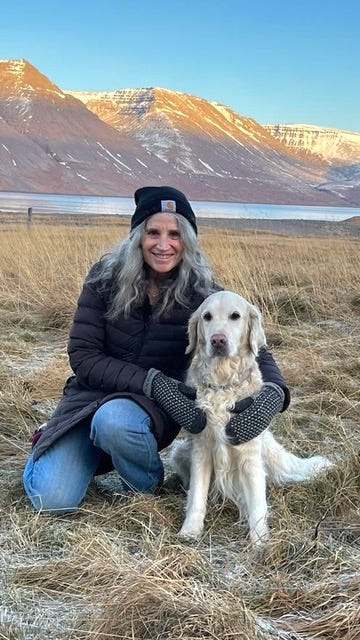
My regular dentist, Viður, saw his patients in a small dark office at the back of the medical center in the town of Ísafjördur, Iceland an hour’s drive from the farm where my husband and I, L.A. transplants, lived. A taciturn old man with a big belly, he resembled Santa Claus and sang along to Icelandic ballads on the radio while he worked on my mouth. As Christmas grew close, I made him some sugar-free chocolate chip cookies and after a particularly brutal appointment, he hugged me and gave me his home number.
“Call me during the holiday if things go bad,” he said.
It seemed like an omen. I was 60 and I’d already lost two molars. They simply fell out, like they’d grown tired of living in my mouth. I appreciated his proactiveness. It wasn’t if the next tooth would fall but when.
Viður was fishing in the spring when the third molar fell out so I had to see Margrét, the other dentist. As I waited for her in the dental chair, I thought about what it would look like if all my teeth fell out and what I would do if that happened. Panic consumed me. I started to cry.
Margrét explained that my teeth were deteriorating and falling out because of menopause, or more precisely, a lack of estrogen which, in some women, caused dry mouth, (officially called xerostomia) which in turn caused those teeth, all of them previous root canals, to decay and topple like the remaining trees in a burned out forest.
I looked at Margrét and, in all seriousness, said, “Why am I even still alive?”
Her Icelandic detachment would not allow her to engage with such a question.
***
Estrogen, or rather, the absence of that nectar of my youth, had become the root of all my problems. A mighty hormone, it once kept my body young and wet and smooth and sexy and horny and thin and toned and pain-free. I was better at telling jokes and remembering names when I was flush with E. I could beat my husband at arm wrestling and do pull-ups. I was relatively sane. Now, none of those things were true about me.
It seemed like an omen. I was 60 and I’d already lost two molars. They simply fell out, like they’d grown tired of living in my mouth. I appreciated his proactiveness. It wasn’t if the next tooth would fall but when.
But why did women not die as menopause set in? What good were we with our fuck-all attitudes and our dry vaginas and visceral inner tube fat around our bellies? From a purely evolutionary perspective it made no sense, since evolution favored fertility to perpetuate the human species.
Yet I and countless other women could no longer procreate and do our evolutionary job. I just knew that soon I’d be eating soft, blended foods, crushed Wellbutrin in coffee with lactose-free creamer, and a side of HRT. I farted constantly. Sometimes, an unanticipated sneeze made me dribble pee on my underpants.
So, what was the point of life? I was useless, toothless, un-sexy.
***
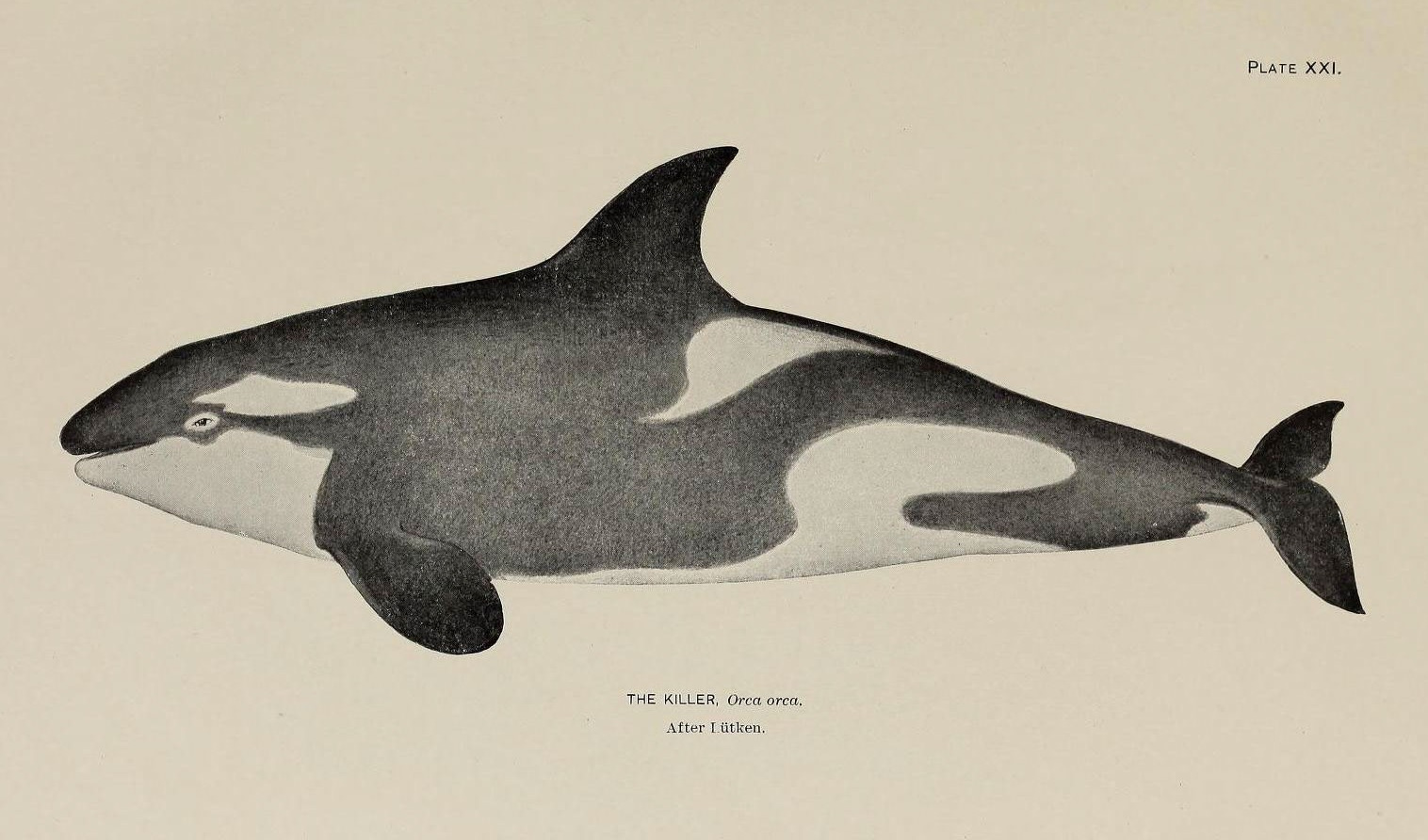
My husband and I and our aging golden retriever live on a remote fjord in the Westfjords of Iceland. One day in late fall, Greg and I were walking along what we called “The Spit,” a narrow, rocky beach that disappeared at high tide, when we both came to a sudden stop. The dog was sniffing around at a seal head, a pup. Its torso was gone. We could tell by the neatly cleaved body that it had been captured by an Orca, the head left behind to rot on the beach. In cases like this, I had to remind myself that nature could be brutal. We gently returned the body to the sea.
Then winter came and the only way through it was to stop arguing, to accept. I understood how to hunker down, to love the wind and snow, to face my own mortality in astonishing ways and accept my aging, my vanished youth. In winter, I could Be Menopause when the crisis in my mind and body was not so sorely tested by the joy of sunlight, the green mountains, and the endless supply of beckoning adventures.
I began to read about the Orca and what I learned changed everything. It turns out that of the more than 6,700 mammals all over the world, I, and by default, all human women, were not the only ones who went through menopause. Among them were Orcas who like us stopped reproducing at a midway point in their lives, yet continued to live on for decades afterward in active and purposeful ways.
Orcas are matriarchal, which means all the offspring remain with the mother’s family. After menopause, Orca females can live into their 80s and their role is vital to keeping the family alive. That’s because the grandmother is the most knowledgeable hunter. While her offspring give birth and nurture their young, Grandma, who’s had a lifetime of learning where the best cache of salmon can be found, teach their offspring and their offspring’s offspring not only how to hunt, but where to find the juiciest fish.
Grandmothers, it turns out, explain why we don’t need to die after menopause. Our roles as menses-less dowagers improves the survival and fertility of our offspring and, most importantly, their children, perpetuating our species indefinitely. How formidable is that?
Why menopause is not a drag on the survival of their species is a powerful, elegant testament to the magic of aging. While the younger, fertile females do their evolutionary duty of reproducing, it’s really the older, menopausal females that are instrumental in furthering the family’s genes by feeding them. And this made me think how, at least in Orcas, menopause is an adaptation for survival. Not death.
*
“The Grandmother Hypothesis” was developed by University of Utah anthropologist Kristen Hawkes. After years observing the Hadza, a hunter-gatherer ethnic group indigenous to Northern Tanzania, Hawkes realized that the help provided by grandmothers in foraging and providing food, along with childcare, allows their own daughters to have more children sooner, which increases the survival rate of grandchildren.
Grandmothers, it turns out, explain why we don’t need to die after menopause. Our roles as menses-less dowagers improves the survival and fertility of our offspring and, most importantly, their children, perpetuating our species indefinitely. How formidable is that?
*
But while the female Orca lifecycle and The Grandmother Hypothesis give meaning to menopause, the idea of them both also makes me mad. Why is it that as a female, my entire life is about caring for and feeding other people? What if I don’t want to feed and care for other people until I die? What if the thought of spending my dying years tending to others is exhausting and depressing? What if I just want to take care of me? I don’t have grandchildren…yet…and who knows if my offspring will have children before I die. But what would be the point of menopause without grandchildren under the Grandmother Hypothesis?
I’ve had much time in dental chairs to puzzle this out and the truth is, in menopause I’ve grown patient, sensible, and confident. My emotional and social intelligence are at peak levels. These are qualities that young people lack. I know this because I was young once, and I have young adult children who are still living lives populated by anxiety, fear, imprudence and recklessness while they battle their hard way to maturity.
What I can offer them and others who ask for my attention—like my students, my friends, my writing clients, even my dog—is wisdom. And a deep well of love that, since I stopped bleeding in my 50s, has somehow simultaneously sprung from the empathy and emotion menopause has granted me.
.jpg)
I offer talent. I’m a gifted writer and I have transferred that gift onto my children by way of mentoring and teaching them how to write. It might be questionable whether my genetic predisposition for understanding how beautiful language is, or my patience explaining how to craft a novel, are evolutionarily indispensable tools to pass on. But I would argue that in today’s world, crafting words is a rare and important skill, for certain kinds of jobs that allow people—my daughter for one—to garner a paycheck and feed her own damn self.
Age has shown me how vibrant and strong I am. How important, in small ways, my life is to the natural order of things. How finely tuned my humor and intelligence have grown. The Orca grandmother inspires awe. She also gives me a sense of real-world purpose.
Have I given my daughter an evolutionary advantage because she knows how to write? I think maybe, yes. And other gifts as well. I know how to make amends, I know how to love tirelessly and patiently. I set this example for my children. I have an ever deepening well of insight as age teaches me wisdom. These are important traits. They are my gifts to my children and others around me.
***
Almost daily, I look out the window toward “The Spit” and I remember that bodiless seal pup head. I consider its haunted eyes and the terror it faced at the end of its short life. But I think, too, about the Orca who must also survive. Of the grandmother Orca, of her menopausal role of hunter, provider, teacher. How vital, how irreplaceable she is in keeping her family alive through the ages.
Menopause has made me cry relentlessly because the world is so awful. But it has also given me a grand canyon of compassion and empathy, which makes me cry because the world is also sublime and beautiful. I am both relentlessly heartbroken and hopeful. Orca menopause reminds me that I am a woman capable of finding purpose, but more than that, of believing I have purpose, even while my teeth tumble, my sex drive nose dives, and I smell things that aren’t there; mostly cigarettes—a menopausal phenomenon called phantosmia, caused by fluctuating levels of estrogen that affect the olfactory nerves.
But age has shown me how vibrant and strong I am. How important, in small ways, my life is to the natural order of things. How finely tuned my humor and intelligence have grown. The Orca grandmother inspires awe. She also gives me a sense of real-world purpose.
That the baby seal gave up its life so the Orca could eat is also an important part of this story. In the natural world, death makes sense. And while my evolutionary role is questionable as a woman who no longer bleeds, menopause, through the lens of the menopausal Orca, has vitally and irrevocably given me the gift of knowing my own power, and teaching it to others during what I hope are the long sunset years of my life.
Leslie Schwartz is the author of two novels and one memoir. She is co-founder of List og Land (Art & Land) artists and writers residency in the Westfjörds of Iceland, and founder of L&L Editing, Writing and Coaching Services. In addition to hosting artists and writers from around the world, she teaches writing workshops every May at her 4200 acre farm. A California native, she now lives in Iceland with her husband, Greg.
 |
|
"I am both relentlessly heartbroken and hopeful. " Exactly this.
I crashed into menopause at 40, after losing my ovaries and uterus (and various other organs) to peritonitis (caused by an IUD). I was told my bones would get brittle, my teeth would fall out, I'd get various cancers. But I'm 87 and none of those things happened. What did happen was - I found freedom. My body dried out, my mind cleared, my depression drifted off after more interesting prey. Like Schwartz, I found my own kind of peace, and have been writing my life ever since. My more-than-half my life. I'm proud of my scars. They are my roadmap.