



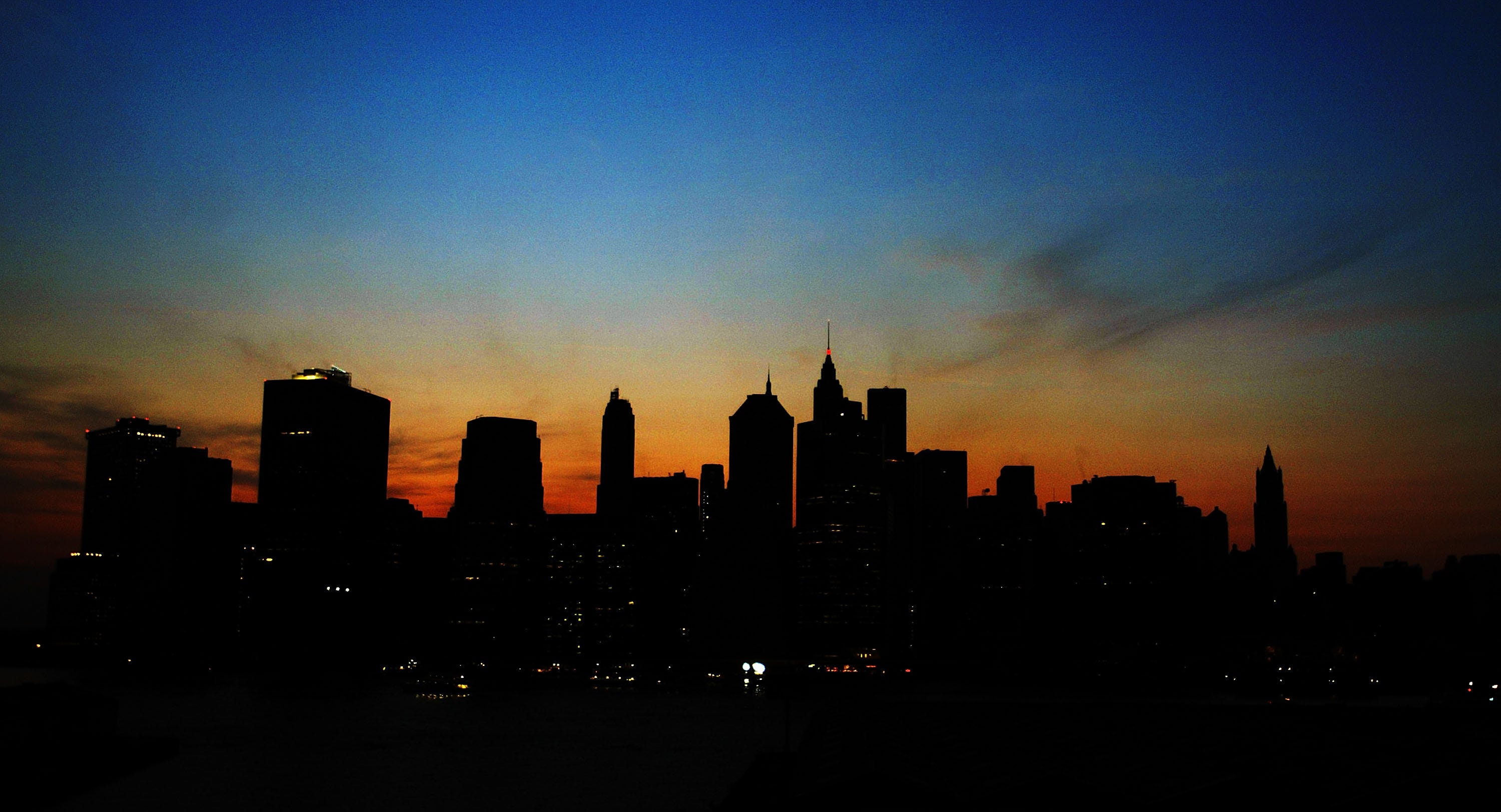
When the power went out, we all held our breath. It was August 14th, 2003, one month before the second anniversary of the September 11 attacks, and many of us in New York City were still feeling shaky. You couldn’t blame those who assumed terrorism. It was on all our minds.
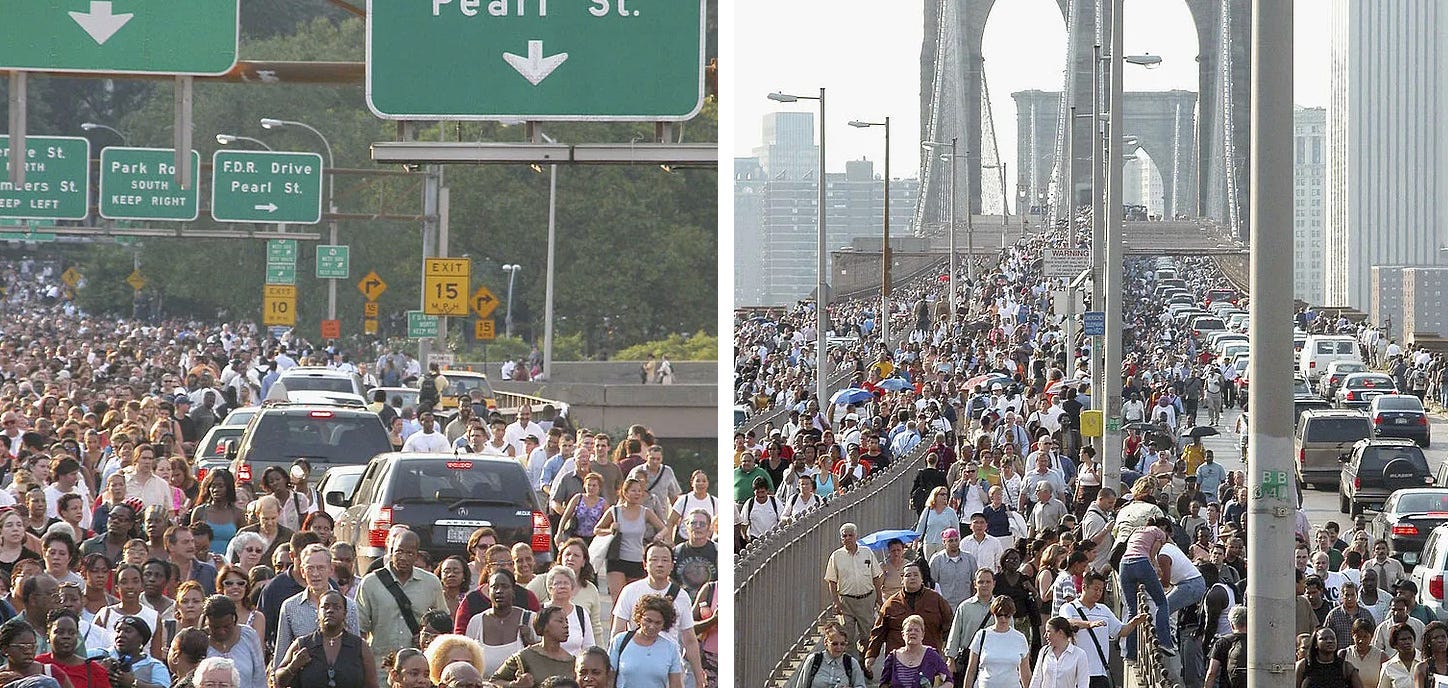
The blackout was an ordeal for most. Trains were stuck in tunnels. Traffic was at a stand-still. Thousands of people flooded the streets. Elevators were stuck between floors. Refrigerators and freezers throughout the city were off. Food perished from the heat. Hospitals operated on emergency power, waiting for doctors who’d never arrive.
But it quickly became one of those New York City catastrophes that unifies everyone. Spontaneous parties erupted in parks, in the streets, and on rooftops. Strangers hooked up with each other in hot, dark bedrooms and alleyways. Couples engaged in disaster sex. (How many of today’s 22-year-olds were conceived that night, and born the next spring?)
For me, though, the blackout of 2003 was an insane work emergency. In those days I was a freelance audio engineer and tech at WNYC Radio. Most days I could be found maintaining studios, preparing rooms for John Schaefer’s Soundcheck or The Brian Lehrer Show. Or maybe I was investigating a buzzing sound in the Radiolab studio.
The blackout was an ordeal for most. Trains were stuck in tunnels. Traffic was at a stand-still. Thousands of people flooded the streets. Elevators were stuck between floors. Refrigerators and freezers throughout the city were off. Food perished from the heat. Hospitals operated on emergency power, waiting for doctors who’d never arrive.
At the time, WNYC was located in the Municipal Building at 1 Centre Street, across the street from City Hall. (It’s now called “The David N. Dinkins Manhattan Municipal Building.”)
The Manhattan Marriage Bureau was also located there. Often, on my way to the elevators, I’d have to skirt long lines of New Yorkers queuing up to elope—or shotgun- or green-card marry. Although it was inconvenient for me, I was charmed, and thought, Looks like fun. Maybe someday... It was often a party on that line to the chapel. Some even came in costume: Zombies; King Kong and Fay Wray.
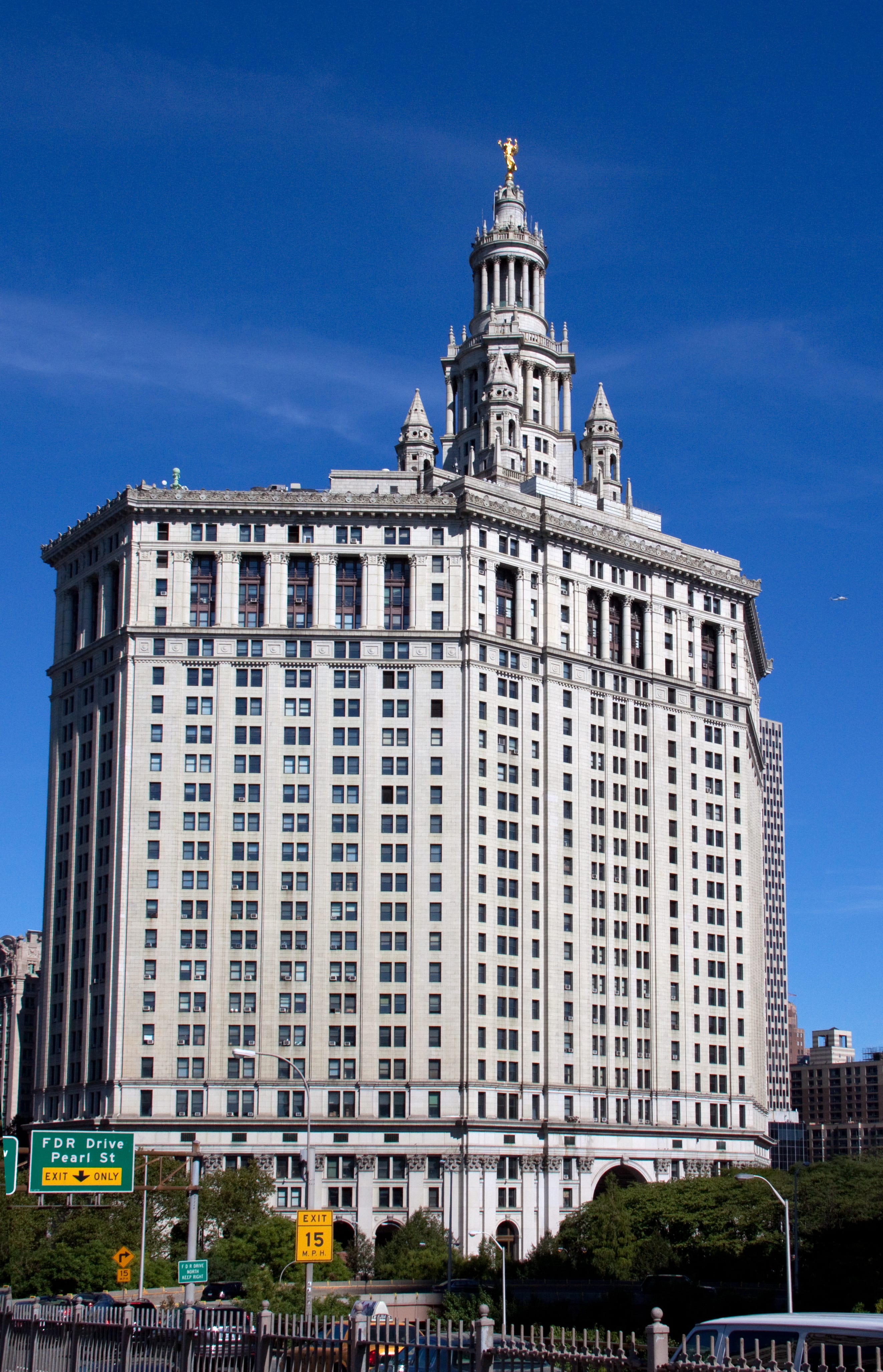
The WNYC studios were on the 25th floor, and the views, even from the bathrooms were stunning. It was always a thrill to catch glimpses of the Courts, the Brooklyn Bridge, the Verrazano Bridge, and much of Lower Manhattan. Only two years before the blackout, you could see the Twin Towers, now conspicuously, tragically gone.
***
WNYC is a public utility. No matter the circumstances, it needs to stay on the air and report the news. The station had a full floor of backup batteries, but only a few hours of power remaining. What were we going to do? We all scrambled.
Soon a crew was assembled to transport reporters, producers, engineers, and gear to a backup facility in Midtown. I was enlisted as part of that crew.
We had to travel with dollies filled with equipment from lower Manhattan to midtown in a city-wide blackout. With the subways down, it was decided we’d take the station’s van. But there were throngs of people moving through the streets. Throughout lower Manhattan, no vehicles were moving. We had to abandon the van, and hoof it with all the gear in tow.
It quickly became one of those New York City catastrophes that unifies everyone. Spontaneous parties erupted in parks, in the streets, and on rooftops. Strangers hooked up with each other in hot, dark bedrooms and alleyways. Couples engaged in disaster sex. (How many of todays 22-year-olds were conceived that night, and born the next spring?)
We needed to get to midtown before the live feed died. Step by sweaty, harried step, we made our way up through Chinatown, Little Italy, the Village, up 6th Avenue, through the Flower District, past Herald Square, to our final destination: 48th and 6th.
By some miracle, we made it in just in time. We got the skeleton production crew settled in, and kept WNYC on the air when it was needed most. I often find myself looking back and wondering how we managed to do this.
***
At around 8pm, I was finally able to leave. Now I had to walk all the way home to the East Village, alone in the deepening dark.
The sun was setting, the city’s shadows lengthening. The streets were becoming canyons of light against a blackout skyline. In the near absence of artificial light, the once familiar cityscape was rendered foreign and surreal.
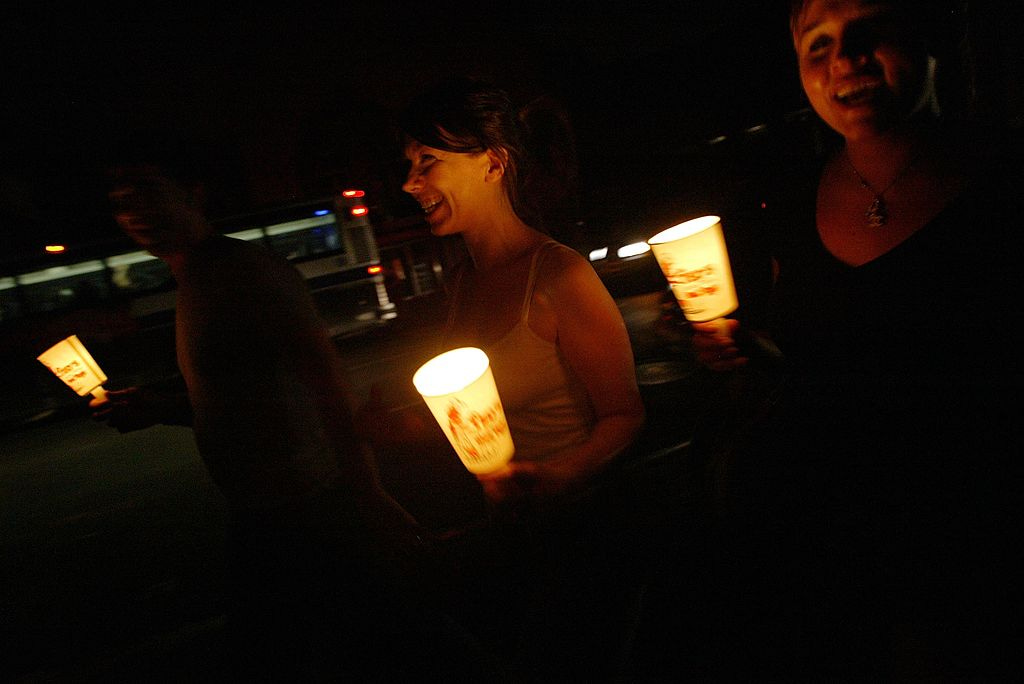
I continued downtown in the fading light. As the street numbers descended, so did a darkness that hadn’t been this total in a very long time. I began to lose my way and resorted to using my new Motorola flip-phone as a flashlight, to help me read the street signs. It was surprisingly harrowing. After more than a decade living there, I thought I knew the city like the back of my hand.
When I finally hit 14th Street, I was relieved. I walked, by memory, toward 8th Street and Avenue B, where I lived. On my way, I saw a ball of light coming from the middle of Tompkins Square Park and was drawn to it. As I got closer, I saw it was a huge bonfire.
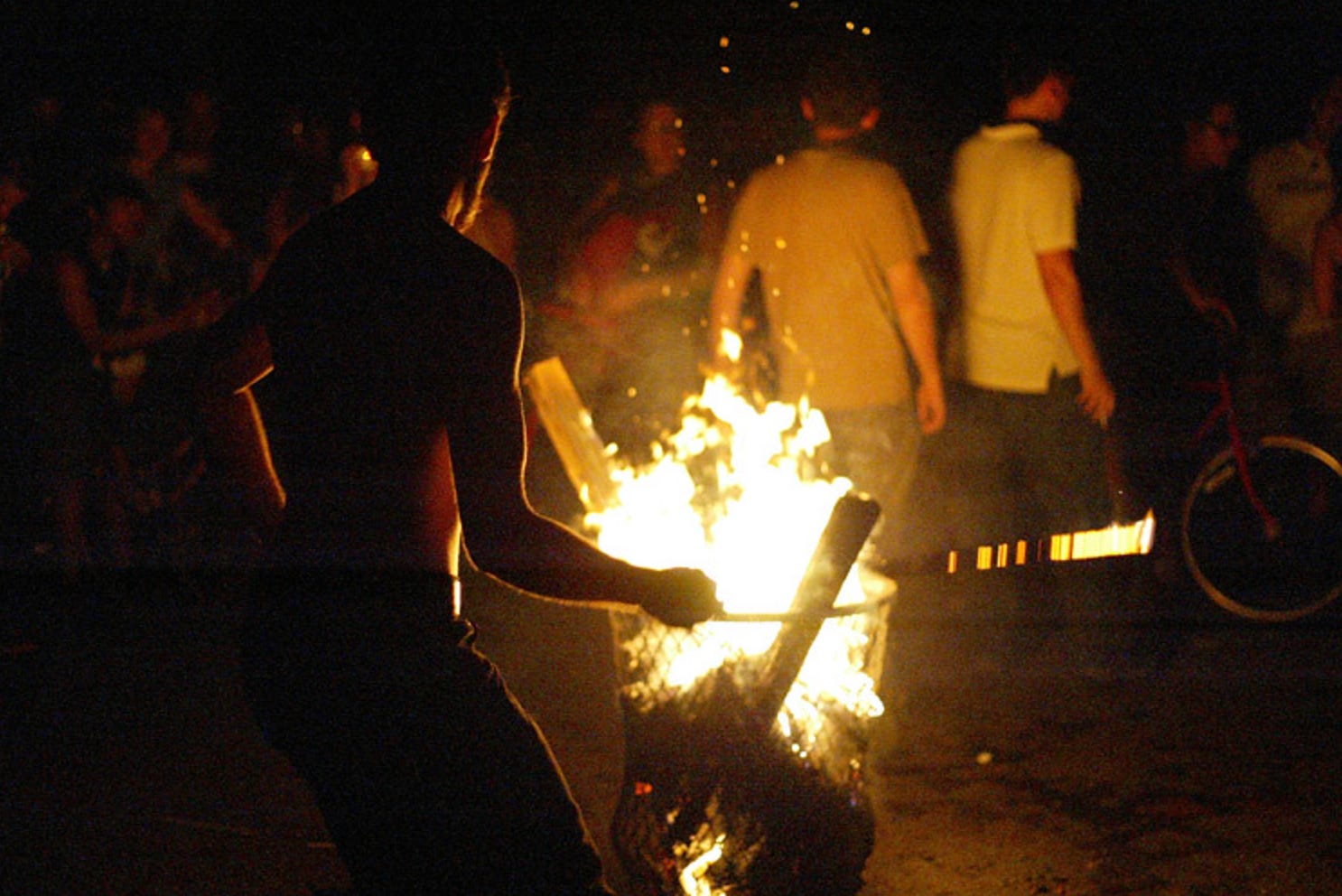
It was like a tribal expression. There was music and partying. People let loose in the relief of learning the blackout wasn’t another instance of terrorism, just an overloaded grid that failed and took out practically the whole goddamned eastern seaboard. It was strange, and special. If only I had someone to share it with.
At the bonfire, I searched the crowd for anyone I knew. So many friends had moved away—some because of the terrorist attacks on 9/11. I still knew some people in New York, in my neighborhood, but their numbers had dwindled. People around the bonfire were singing and dancing and sharing food that bodegas and pizza shops had given away. There was joy in the otherworldly darkness, and I was lonely for someone to experience it with.
***
I sat by the fire, consumed by feeling alone—not knowing that at that very moment, the woman who would two years later become my wife was sitting at that very same bonfire, on the other side of it, feeling the same loneliness.
…Not knowing that two months later, we would meet by chance, fall in love, and make a life together. That in 2005 we’d marry—at the marriage bureau in the Municipal Building at 1 Centre Street—then make a champagne toast in the middle of the Brooklyn Bridge.
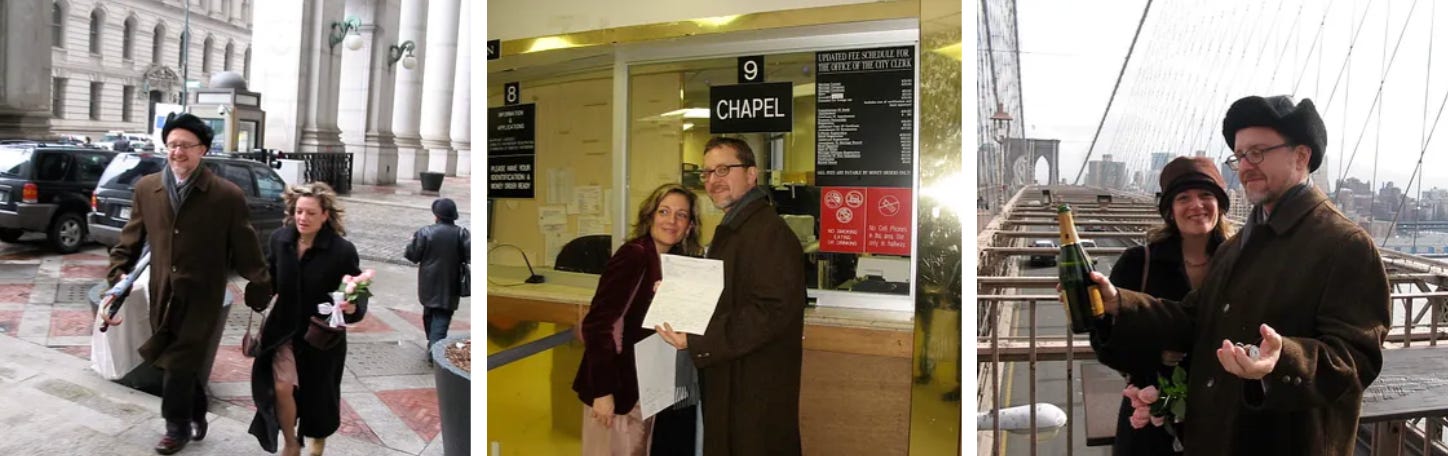
…Not knowing that shortly after that, we’d find ourselves in one of those stately courts you could see from the WNYC bathrooms, fighting for our right to stay in our apartment.
***
After a year in housing court, we received the bad news: Despite winning what turned out to be a landmark case, we, and all the other tenants of our building, were losing our leases. This news brought with it a different kind of darkness. It marked the end of our time in the city we loved, the place where we’d met.
We no longer had New York. But New York had given us each other. And that brought with it a kind of enduring light, the kind that even a faulty grid can’t extinguish.
Do you recall the blackout of August 2003? Or another major blackout? What are your memories of it?
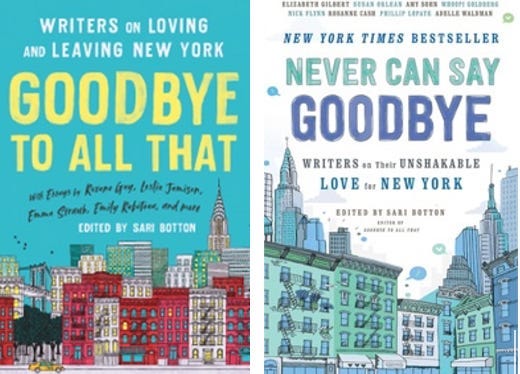
Brian Macaluso is a musician, audio engineer, and former I.T. professional who was recently named executive producer of the forthcoming Oldster Radio Hour. He has an essay in one of his wife, Sari Botton’s NYC essay anthologies, Never Can Say Goodbye: Writers on Their Unshakable Love for NY. A version of this essay originally appeared in Memoir Land last year.
 |
|
Really good essay! On the day of the blackout, I found out I had preeclampsia and had to go on bedrest.
I was a million pound pregnant woman walking up 9 flights of stairs sobbing and then i got into my hot, dark apartment and had to pee in a gallon jar all night (but it was mostly on my hand.) My baby was born 3 lbs very early, very sick. But just now he texted me from Chicago asking me to venmo him $35, so I guess it worked out!
In 2003, after a very difficult divorce, I found myself with little support from my friends and family. I was lucky enough to land a volunteer role in the NYC office of my Chappaqua neighbor, then-Senator Hillary Clinton. Although we had never met, her office was the only place I found respite.
One summer day, Hillary came in to the office to meet with the interns. I was invited to sit in on her presentation. We were in the middle of discussing the search for weapons of mass destruction in Iraq when the lights in our conference room went out. It was the blackout of 2003. Trains were stalled all through Westchester, and there would be no Metro North service for the foreseeable future. How would I get home?
I summoned my courage and approached Huma Abedin, Hillary’s right hand.
“Is there any way I could get a lift to Chappaqua in the Senator’s van?” I asked.
Before I knew it, Hillary was welcoming me onboard. She cleared off the seat next to her to make room. As we drove north, I listened to her dialing in to a few radio shows to take interviews about the blackout. While she talked, the two of us shared her pack of gum. When the calls ended, Hillary turned to me, looked me in the eye, and asked what was going on in my life. She put all her attention on me. I opened up to her, telling her about my divorce. We chatted all the way up to Westchester.
A year later, she attended my daughter’s bat mitzvah.