

Indian Lake
Driving through Ohio on a trip following the path of Johnny Appleseed, Isaac Fitzgerald stops into a bar where a crowd at least twenty years his senior drops some knowledge on him.


Dear Oldster Reader,
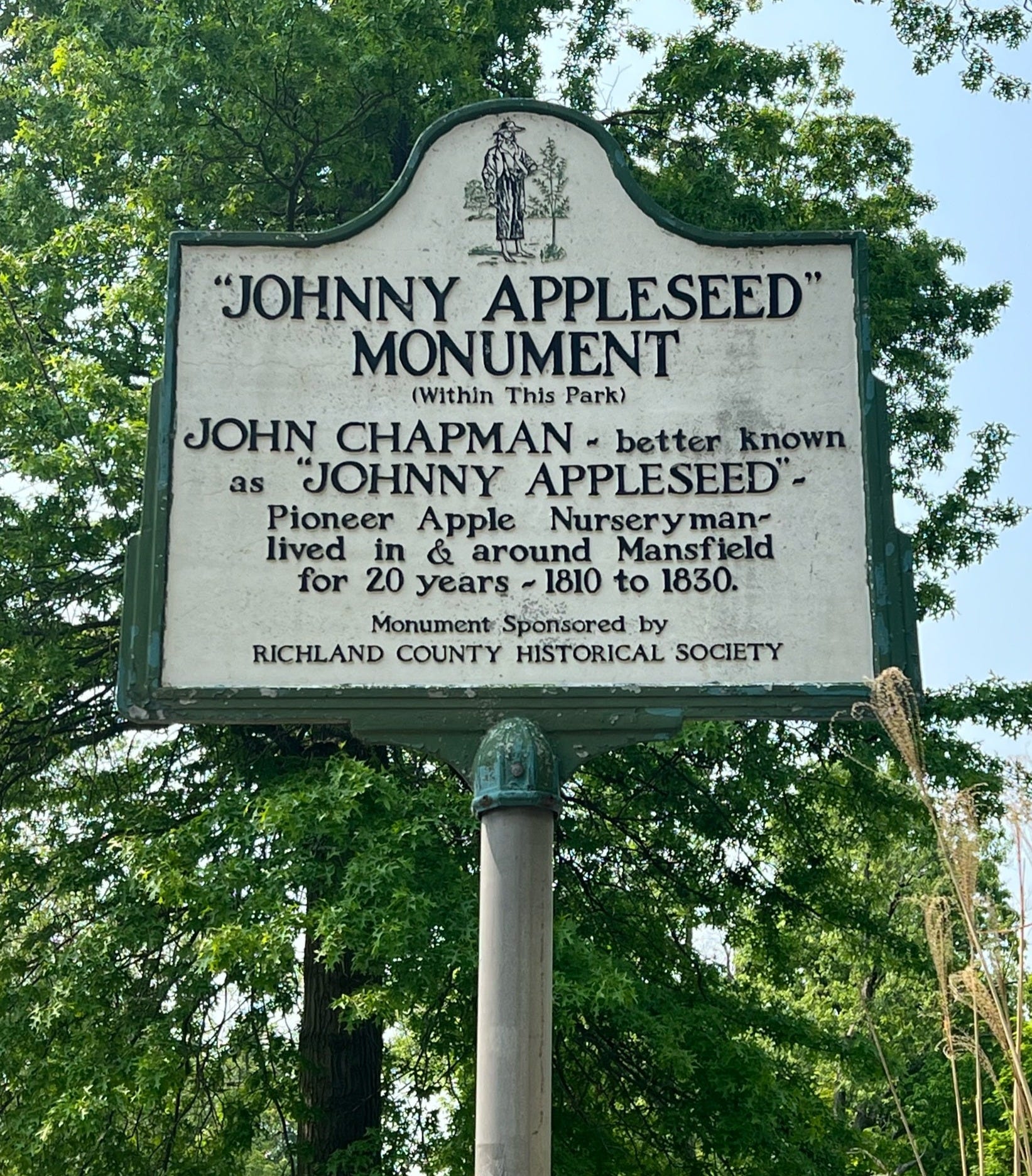
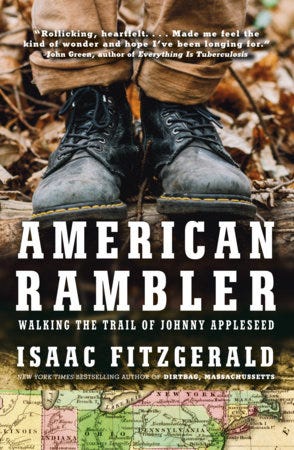
What follows is an excerpt from American Rambler, my new book in which I follow the path of Johnny Appleseed—a real-life wanderer named John Chapman, born around the time of the Revolutionary War—and go see the country at eye level. In this scene, I’m traveling back east from Indiana, across Ohio, when I stop in a bar full of weathered regulars and a casual conversation takes a turn toward history, memory, and the names we give the places around us.
Here’s to not dying on barroom floors. <3 Isaac Fitzgerald
***Click here to get more out of this post by reading it online instead of in your email.
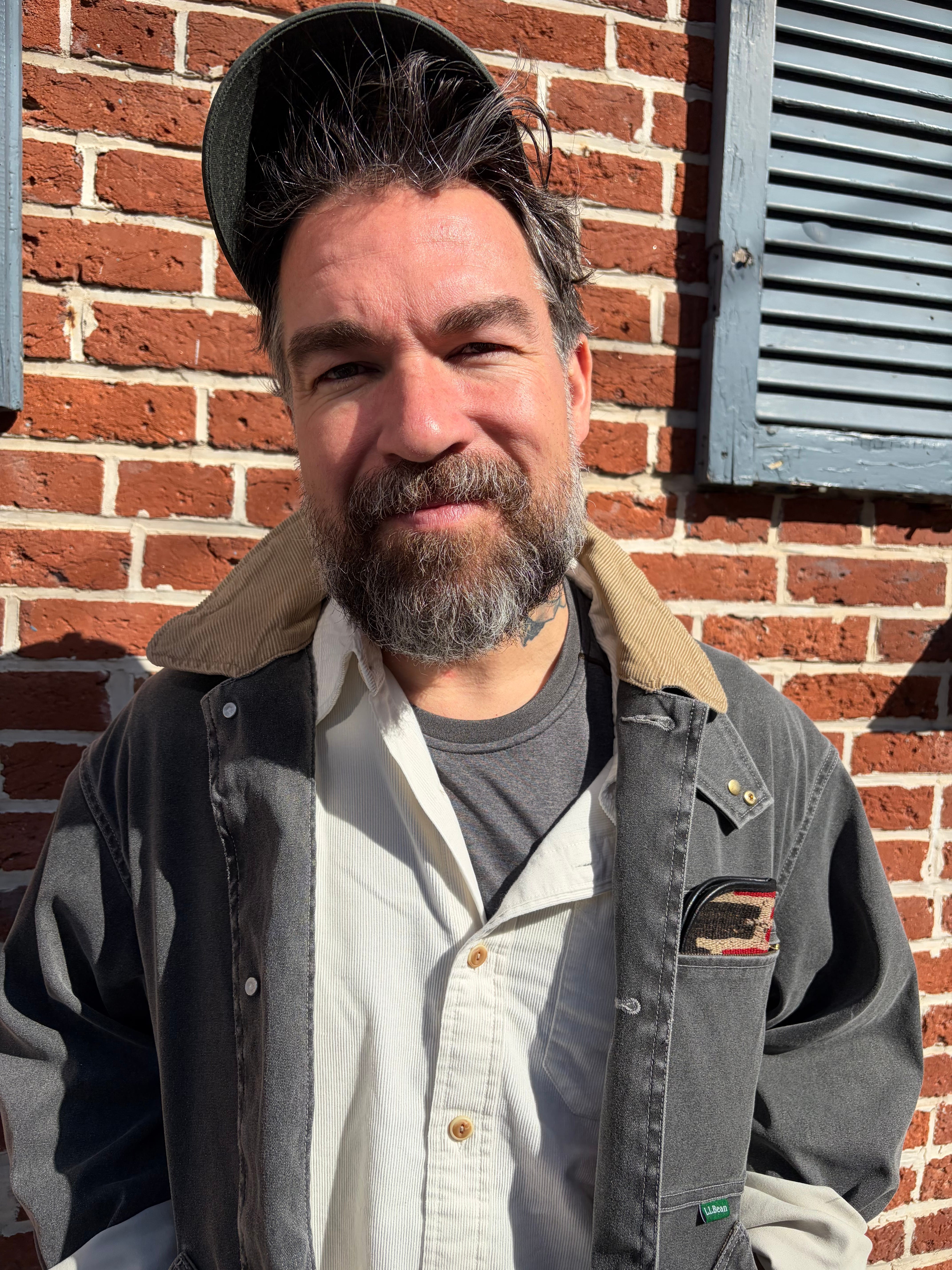
Isaac Fitzgerald is the New York Times bestselling author of Dirtbag, Massachusetts (winner of a New England Book Award and the New Atlantic Independent Booksellers Association Book of the Year Award). He appears frequently on The Today Show and is also the author of the bestselling children’s book How to Be a Pirate as well as the co-author of Pen & Ink: Tattoos and the Stories Behind Them and Knives & Ink: Chefs and the Stories Behind Their Tattoos (winner of an IACP Award). His writing has appeared in The New York Times, The Atlantic, Esquire, GQ, The Guardian, The Best American Nonrequired Reading, and numerous other publications. He lives with his wife, Kelly Farber, and their two dogs on the North Fork of Long Island. His latest book is American Rambler, published this month by Knopf.
***
Somewhere in Ohio, but not as far from the Indiana border as I want to be, I see a giant green sign that reads “Indian Lake.” At first I have no intention of stopping. It’s not that I have anywhere to be, particularly, but when driving across a good hunk of the country, it’s nice to get into rhythm, and then not to disturb that rhythm—stops for gas or an occasional bite to eat being part of the trancelike dance.
When you’re walking, you’re moving through the world at a human pace. You slow down. You pay attention. Driving is the opposite—it’s the speed itself that makes you pay attention. Hurtling across the horizon, traveling faster than any of our ancestors could have imagined. Yet it feels casual. A little Outlaw Country on the radio, your seat conforming to your body as the hours march on. But still, keep your eyes on the road—bouncing from signs to traffic to the skyline—constantly moving. Constantly alert.
The meditation comes from knowing that you’re driving a giant metal death machine, but the end result is the same. My busy mind grows quiet. As if my brain needs something—anything—to chew on. To gnaw on. To bite and tear and consume. Reading, another favorite activity, does the same.
But every once in a while the rhythm gets interrupted.
Like the time I was driving in Western Pennsylvania and a burst of torrential rainfall fell from the sky, seemingly out of nowhere, on an up-until-that-very-moment sunny day. I instinctively slowed Rabbit down, which is when a Saab convertible drove by—the top still down in spite of the rain. A white-haired man in an expensive-looking shirt looked over at me—his wife or girlfriend screaming in the seat next to him. The man was still wearing his sunglasses, but I swear we made eye contact. The man was laughing hysterically, he then shrugged, turned his eyes back to the road, and disappeared into the sheets of precipitation.
When you spend a lot of time out on the road, you have dozens of these little encounters. Like the time I was stuck in traffic, assholes ripping down the breakdown lane—further delaying all of us as they cut back into traffic just before reaching the accident that had caused the backup in the first place. All of a sudden, a semi trailer truck put half its ass in the breakdown lane, immediately backing up all the jerks barreling down it. People rolled down their windows, myself included, to shout thanks at the truck driver, who pulled the cord on his airhorn, letting out a blast, and saluted us all.
It’s worth mentioning that in all my time driving this year, I’ve come to see truckers as the unheralded knights of the road. Someone broken down on the side of the highway? Usually it’s an eighteen-wheeler that has pulled over to see if they can help—setting out flares for safety if the sun has gone down.
It’s these little moments of distraction that can pop you out of the meditative calmness that comes with driving. A man in a convertible in the rain, a heroic truck driver, an Amish teenager in a racing buggy, a giant green sign—almost begging you to stop—that reads “Indian Lake.”
I rip Rabbit into a hard right and hit the exit.
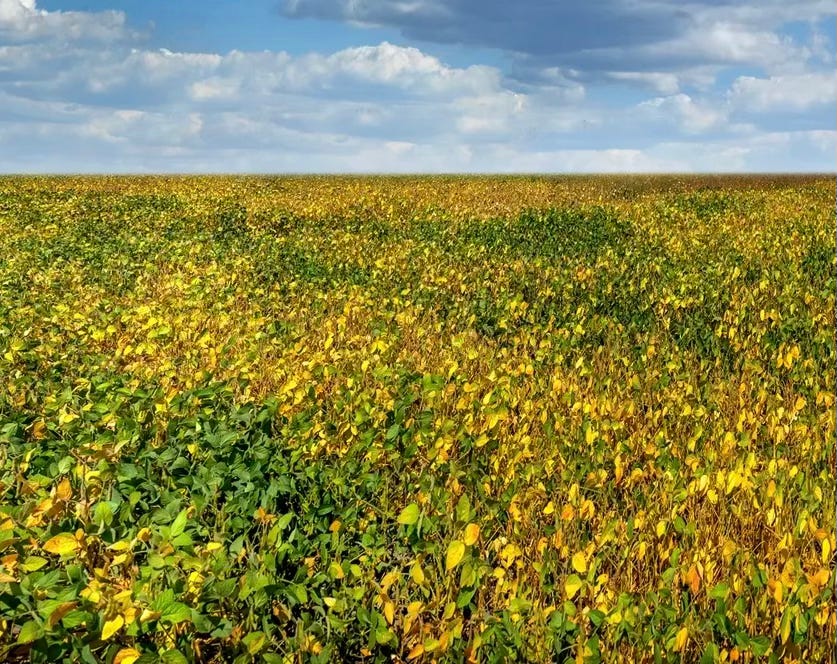
After driving through yellow soybean fields I get to the lake. The first thing I notice is the majesty of the water. The flat, undisturbed lake stretching out—pushing into the horizon. A reservoir so big that it momentarily makes me miss the ocean.
The next thing I notice are the street names. Blackhawk Drive, Cherokee Drive, Chinook Drive, Mohawk Drive. You get the idea. This is out on an island—accessible by a small bridge—called Semi-nole Island, which is next to Tecumseh Island.
Indian Lake indeed.
Across the water I see what looks to be some semblance of a downtown. I head there, hoping to find a place to rest for a bit.
“You’re not from around here, are you?”
Here we go again. “Stick out that bad, huh?”
I’m younger than the bartender by two decades at least. But she is beautiful. Surely more beautiful than me, or anyone else at the bar. The rest of us—myself included, with my unkempt graying beard and long hair, tattered Hawaiian shirt, running shorts, and flip-flops—look like the pallbearers at Jimmy Buffett’s funeral. She looks like an angel, one who has perhaps lived a little rough, but has been heaven-sent to escort the famously laid-back crooner to the great big Cheese-burger in Paradise in the sky.
She notices me noticing her and gives the slightest little smirk. “It was more your New York license plate.”
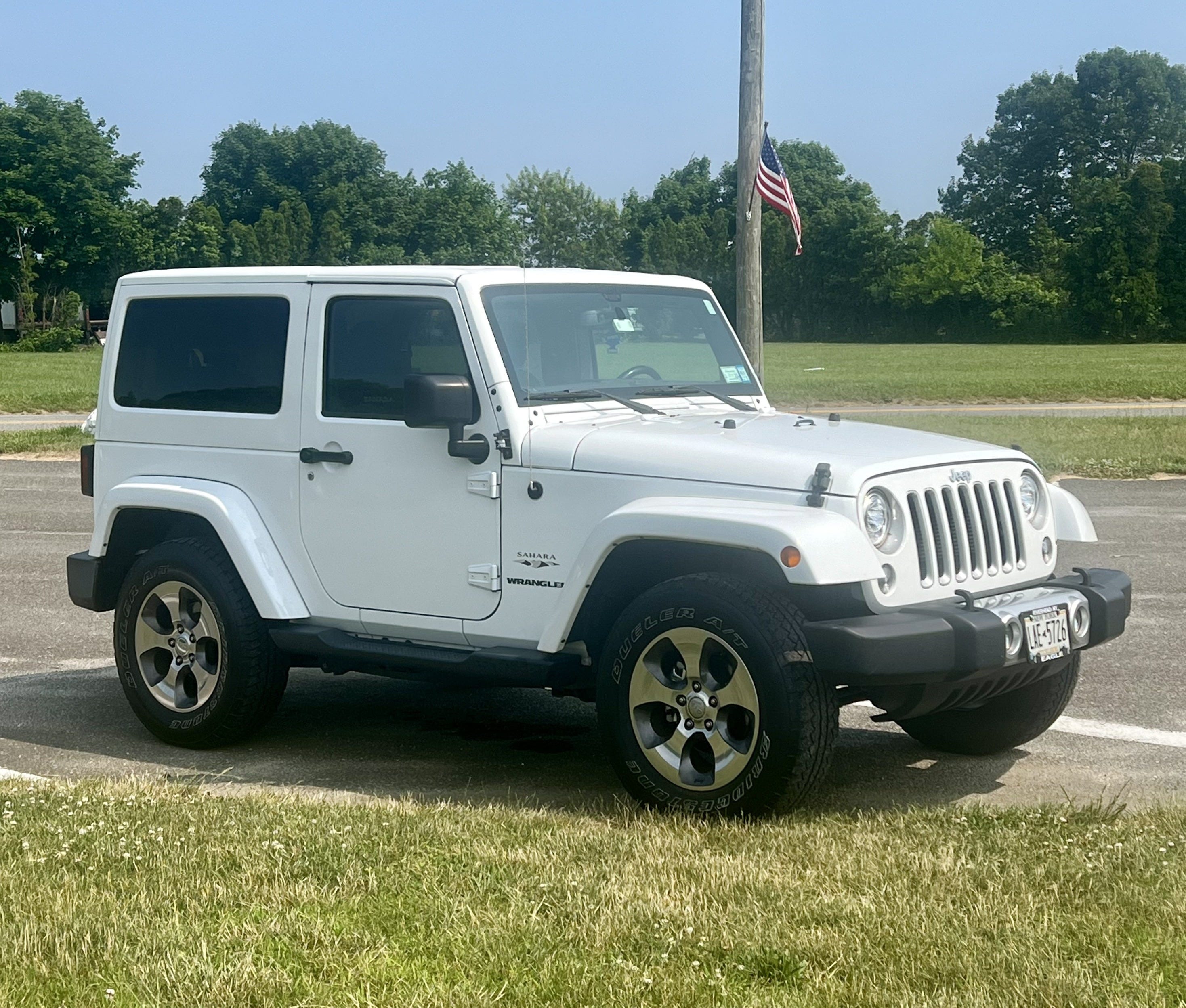
She nods at Rabbit, just visible through a skinny window that allows a cut of afternoon light into the otherwise dim bar. As if the jukebox can read my thoughts, Jimmy Buffett starts playing.
The bartender doesn’t ask me who I am or why I am here. Hell, maybe she already knows—the answer being, “You know, that really big green sign out on the highway.”
She serves me a cold bottle of Bud and I just sit there, falling into that same meditative state as when I’m walking, as when I’m driving, as when I’m sitting in a dimly lit church—or in a bar—taking a li’l communion. Until the third beer, that is, when she tosses me a wooden chip promising me a fourth, on the house. Looks like I won’t be getting back to the highway until tomorrow, so I order a shot and offer to buy one for the bartender, too.
We clink glasses and toss the whiskey down.
My lips loosen, I ask about life on the lake—it used to be a real summer draw, she tells me. There was an amusement park and a dance hall, advertised as the “Midwest’s Million Dollar Playground,” but that all closed down in the 1980s. Still, the lake did bring in tourists, and as the land became more developed people started living here year round. Mostly retirees, like the folks currently populating the bar.
After another shot, I finally ask: What the fuck was with the street names.
“How do you mean?”
“Look, it’s Indian Lake. I get that. I’m just now coming from Indiana.”
“Uh huh.”
“But every street around here—Pocahontas Path, Big Bear Path—have y’all ever thought about . . .”
“Changing them?” “Yeah.”
“To shit like Lakeview Drive and Atwater, and Pirate’s Cove? Sun-set Lane?”
“To exactly shit like that.”
“Oh, New York, and to think I was starting to like you,” she says, pouring me another shot. “It’ll only be well whiskey for you if you keep this bullshit up.”
“What’d the kid say?” shouts one of my fellow Jimmy Buffett music video extras from down the bar.
“He asked if we ever considered changing the street names around here.”


A long, grumbling murmur covers the far end of the bar. I’m not absolutely sure, but the word “dickhead” seems to barely reach my ears more than once. Looks like I’ve been downgraded from “kid.”
The bartender pours herself a shot.
“Let’s start here, New York. Why don’t you change the name of Manhattan?”
I pause. “Fair point.”
“You’re from the East Coast—you want to change the name of Connecticut? How about Massachusetts?”
Now seems like a bad time to mention that Massachusetts is my home state. I think of the large body of water near where I grew up: the Quabbin Reservoir. She goes on. “If we change the name of our streets, we should probably change the name of Ohio itself, right? Drink your shot.”
I drink my shot.
“Why not change the name of Alabama, Alaska, Arizona, Arkan-sas? That’s just the A-states, mind you.”
She pours another shot after taking her own—pointedly no lon-ger drinking with me.
“The Cleveland Indians are now the Guardians. Does that make you feel more comfortable?” She doesn’t give me time to respond. The dark murmuring at the end of the bar has turned into grumbling encouragement, almost low-volume cheering.
“What about Washington’s football team—the Commanders?” I manage.
“What about ’em?” “I mean—”
“That was different. That was a slur.”
I almost point out that the Cleveland Indians’ mascot wasn’t exactly inoffensive, but as I mull it over, a clear sentence finds its way out of the Greek chorus at the end of the bar.
“She’s Native, kid.”
I look at the bartender.
“My mother’s side. Shawnee. Take your shot.” I wince as it goes down.
“History is violent, cruel, and often stupid. But ignoring it so people feel slightly more at ease in their day-to-day life? That’s stupid, too. You want to change the street names? How about doing a little land acknowledgment while you’re at it? Another way for white people to say, ‘Sorry for all the murder, and land stealing, the Trail of Tears, and forced subjugation.’ But that shit is relieving your guilt. Doesn’t help me, or my ancestors one bit. But sure, change a sports team name, so you don’t even have to spend a moment thinking about the past and how shitty and complicated it is. Change the street names—hell, try and make a perfect society where nobody gets offended and there’s no mention of anything uncomfortable from the past, ever. Let me know how that works out for you.”
I nod, quietly, but she wants more.
“End up naming every damn street in the country Jesus Christ Street, is that what you want?”
Not exactly what I was trying to say, but I shake my head no. “We done here?”
“Yes.”
“Good, now let’s get back to flirting, I liked that better.” “Is now a bad time to mention I have a girlfriend?”
The gallery at the end of the bar lets out a collective laugh.


“Slow down, New York. I said I liked flirting with you. You’re not getting any.”
We go back to talking, and I put money in the jukebox, my song selection of more Jimmy Buffett winning back the gaggle of men at the other end of the bar. Eventually, they ask me if I want to go smoke a joint with them out on the porch, so I do.
All of the men are easily twenty years my senior—probably more—and they go back to calling me kid as we pass the well-rolled joint around, introducing ourselves. At my urging, the men tell me stories about their childhoods spent on the lake. Soon the bartender, who never offers her name, joins us—smoking a cigarette—and I am entrusted with going behind the bar and getting folks fresh beers, carefully marking the sheet of paper that keeps track of their tabs.
I have an armful of Buds and Coors Lights when I hear a crash on the porch.
The noise is quickly followed by “Oh, fuck,” and shouts of “Oscar!” I abandon the bottles on the bar and run back to the porch. A rather large man with rakish long white hair and a prominent goatee has hit the deck. The bartender is at his side—a bottle of water in her hand, which she pours into his mouth.
“Oscar, wake up!” A man—supposedly Oscar’s friend—bends over and gives Oscar’s potato-sack body a firm shake before slapping him across the face.
“Should I call 911?” I ask, not knowing what to do.
“No!” Comes the quick, unanimous response from almost every-one, the bartender’s voice loudest.
The man slaps Oscar again, hard—and Oscar comes to. I say a quick “Thank God” under my breath.
“Oscar, you went out there for a second.” The bartender hands him what’s left of the water bottle.
“What the fuck am I doing down here?”
“You fell pretty hard, O. You break anything?”
Oscar squeezes parts of his body while slowly getting up, cau-tiously putting weight on one foot, then the next.
“I’ve got pills in my jacket, grab those for me?” Oscar is asking his buddy, who then looks at me. I go back into the bar and see a light-weight windbreaker hanging off the back of his chair. Sure enough, a prescription bottle is in the jacket’s front pocket. I bring the pills over to Oscar, who thanks me before cracking open the bottle and popping a handful into his mouth, chasing it with a last sip from the water bottle.
“Damn, that was some strong dope.”
We laugh at his attempt at humor, but we don’t really mean it.
Everyone is a little shaken, including Oscar.
“Jokes aside—that could be my ticker. Who’s coming with me to the hospital?” Oscar’s friend helps him into the parking lot, where they get into a truck and drive off.
“Well, that was a boner killer. Who needs to settle their tabs?”
I pay the bartender, who doesn’t ask if I need a place to stay, nor does she tell me to drive safe. She just says, “Be sure to visit again next time you’re passing through. Maybe there won’t be a minor heart attack, and we can pick up where we left off.”
But before I leave I ask, “Why not call 911?”
“Nobody needs the world’s most expensive taxi on top of a hos-pital bill. Hell, bowing out here might be the best option for some of these guys.”
One of Isaac Fitzgerald’s segments on The Today Show:
I walk around the empty downtown stoned, trying to sober up. There was a time in my life when that would have been what I wanted: simply to party, to have a good time, and then to drop dead on a bar-room floor—like Chapman, in a way. That’s changing now, as I get older. I value life more, having less of it.
I call my ma, still up in north central Massachusetts with her sister, taking care of their mother. She doesn’t pick up. I call Kelly, and she does.
“Sounds like you’ve been drinking,” she says right away. “Might have been.”
“No drinking and driving. You promised.” “I know.”
We catch up as I walk past Rabbit, stopping only to grab my sleep-ing bag. Dusk is turning into night. I don’t tell her about the man collapsing—why give her something else to worry about? She’s already been so understanding, of all of this. She asks after my ma, and how things are going up there. I tell her the truth, which is that I don’t know.
We chat until we both start sounding tired. “Okay, I have to get ready for bed,” she concludes.
“Me too,” I say, though I am just staring out at a soybean field.
“I love you.”
“I love you, too.”
I put my phone into my pocket and lay out my sleeping bag. The sky above me begins to fill with stars. The next morning I’ll wake at daybreak in a bright yellow field, walk back down East Lake Drive, climb into Rabbit, and head out from Indian Lake.
From American Rambler © 2026 by Isaac Fitzgerald. Excerpted by permission of Alfred A. Knopf, a division of Penguin Random House LLC. All rights reserved. No part of this excerpt may be reproduced or reprinted without permission in writing from the publisher.
 | A guest post by
|
Indian Lake was severely damaged in a March tornado a couple years ago, and there were several deaths because of it. It really took a long time to come back from that. And the land acknowledgement is accurate, and there are different ways of doing it. I have never seen a state do it as well as Minnesota and most of Canada as well. The area I am in in Ohio is like one long Indian trail up and down the rivers. Thanks for sharing.
Today, I stopped , clicked on your email, and immediately was caught up in your world of words and couldn't stop until I finished. WOW! Sharing this with my adult daughters' and anyone else who loves a good story which is most of my friends. Thanks, Issac!