



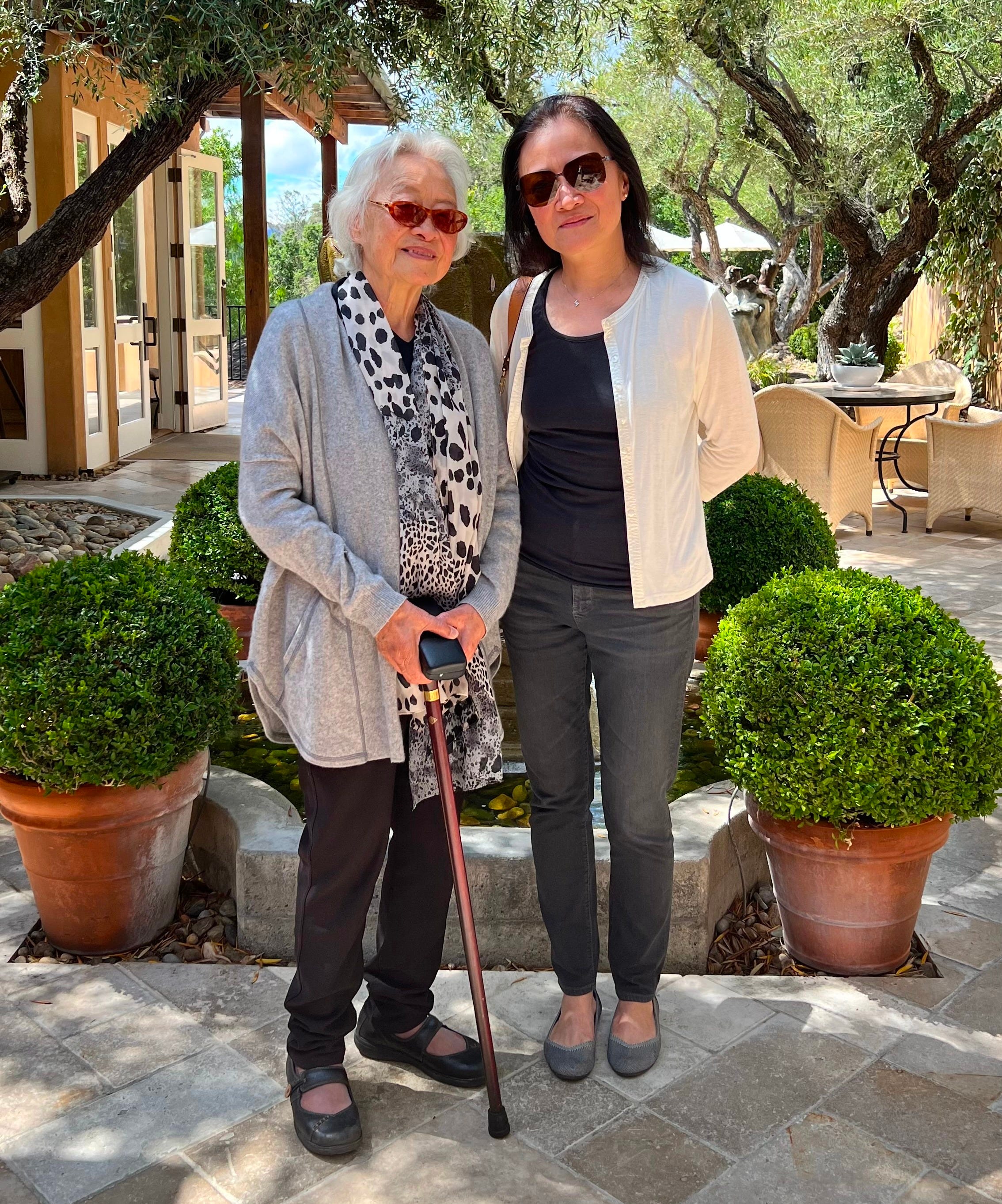
I could hear Mom’s breathing in the cramped room, shallow and raspy. She was recovering from the short walk between the waiting area and the exam room. It was not a good day for her—there had been days when she could tend the garden and play piano for a couple of hours. Not today. Good days were few and far between now.
A soft knock on the door and a petite young woman in a white coat entered.
“Hello, I am Dr. Kou!” the doctor had a soft voice. “Ni jin tian hao ma (How are you doing today)?” She extended her hand to Mom.
I expected Dr. Kou to be taller and older, someone projecting more authority and experience.
Mom was diagnosed with Mitral Valve Stenosis ten years ago when she was 80, and the only effective treatment to repair the defective valve would be open-heart surgery. Mom refused surgery. “I don’t want to be opened up and die on the table!” she insisted. She was adamant about no invasive treatment, no “cutting my chest open,” a decision she later came to regret, especially in the prior two years, when her heart condition had been steadily deteriorating, taking her quality of her life with it.
A few weeks earlier we’d moved Mom to be closer to my son Howie, her only grandson. That day was Mom’s first visit with Dr. Kou. Although she didn’t state it explicitly, I knew Mom was hoping a new doctor might offer a new treatment option for her worsening condition—something her previous doctors hadn’t been able to offer.
“Ni hao! (Hello!)” Mom was surprised to hear the Chinese greeting; her eyes brightened. Without looking to me for help as she would usually do, she started listing her usual complaints in Chinese: lack of energy, poor appetite, and loss of taste. There was still exhaustion in her voice, but the familiar language seemed to have encouraged her.
Dr. Kou turned to me, her eyes asking for help—the greeting was probably the only Chinese she could manage. I proceeded with translation for the rest of the visit.
“Okay, let’s have a listen to your heart,” she said, putting on her stethoscope. Mom took several deep breaths, quietly obeying the doctor’s instructions.
I noticed a pink heart-shaped button clipped on Dr. Kou’s stethoscope. It triggered a memory from many years ago and my mind suddenly saw a tiny elephant, with fuzzy grey fur and a pink tongue sticking out, also clipped to a stethoscope.
***
That was Dr. Bleicher’s stethoscope, in a spacious exam room decorated with animal print wallpaper and glittering stars. Baby Howie lay on the examination table lined with a plastic floral pad. He had only his diaper on. Mom sat next to me, shifting in her seat. “Why does this doctor have to take off all the clothes?” she whispered to me in Chinese. “He’s going to catch a cold!”
I ignored Mom’s question and concentrated on Dr. Bleicher’s next move, the main reason we were here: to get the baby’s first vaccine—a cocktail of vaccines to be exact. Howie was oblivious to what was about to happen, his hand reaching towards the elephant on the stethoscope.
“You are such a sweet and happy baby!” Dr. Bleicher cooed as she arranged multiple baby-sized syringes with tiny needles. While holding down the baby’s plump legs she delivered a quick jab. Startled, Howie’s hand stopped in the air for a second before grabbing the tiny elephant.
“Good job! You have quick and strong hands!” Dr. Bleicher cheered before the second jab. Mom was startled in her seat. Stunned, the baby opened his mouth, ready to issue a cry.
“Look at you, what a brave boy!” Dr. Bleicher tickled Howie’s bare chest, and without losing any time, there went a third jab. which elicited a loud wail. “We are almost done! Just one more.” She delivered the fourth shot before finishing the sentence. By then, I wasn’t sure who was more upset — Howie or Mom.
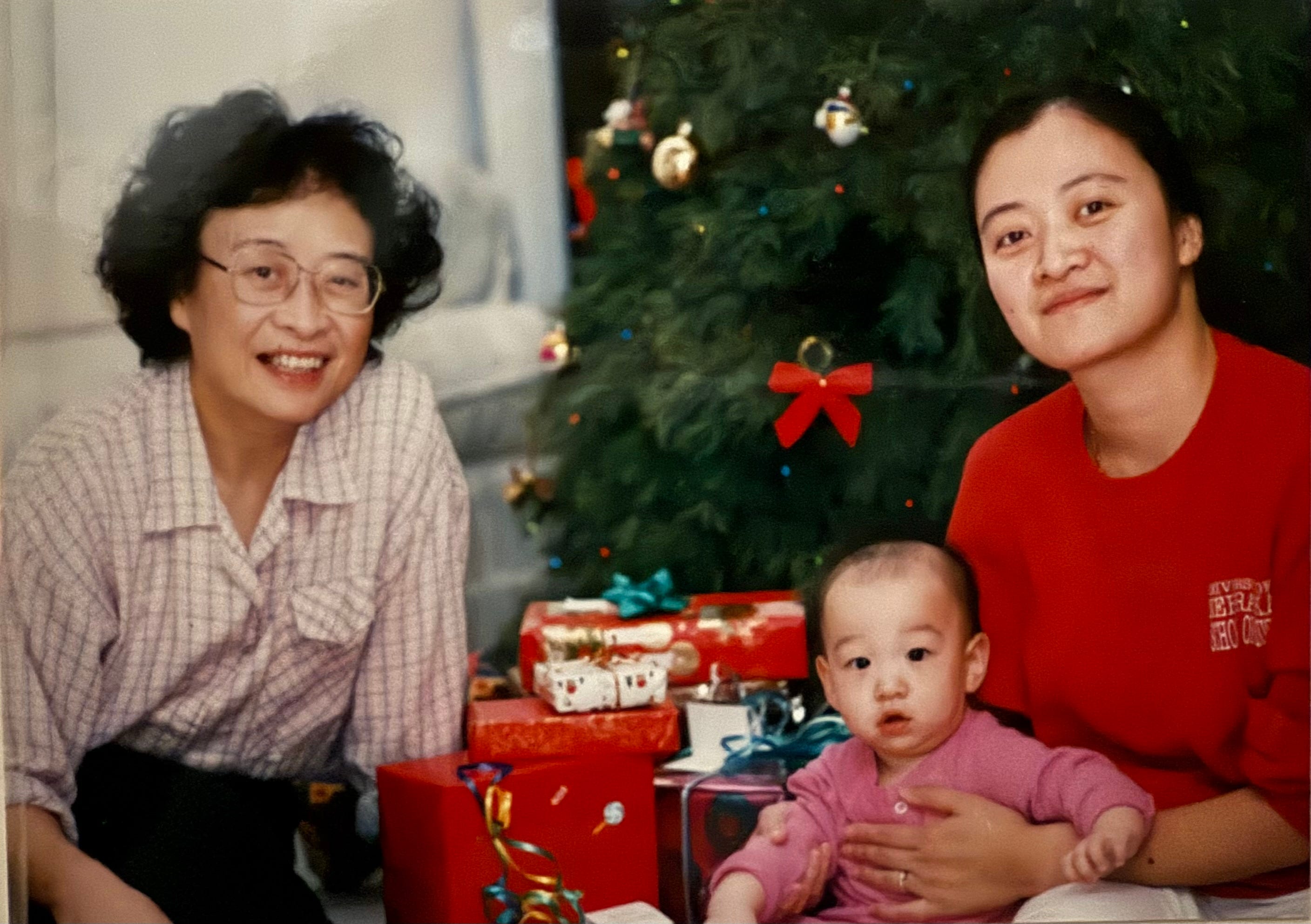
“Are you planning on sending Howie to a daycare?” Dr. Bleicher didn’t seem to sense Mom’s disapproval; she smiled at us while applying four Snoopy bandages.
The wailing continued. Mom stood and picked Howie up. Balancing the baby in her arms, she started to put clothes back on him. She was done with this visit, whether the doctor agreed or not.
“Eh, no, my mom is going to take care of him while I finish school,” I explained, returning the smile, hoping to make up for my mom’s apparent dissatisfaction.
I noticed a pink heart-shaped button clipped on Dr. Kou’s stethoscope. It triggered a memory from many years ago and my mind suddenly saw a tiny elephant, with fuzzy grey fur and a pink tongue sticking out, also clipped to a stethoscope.
Minutes later, as I trailed after Mom in the parking lot, she couldn’t wait to enter the car to announce her opinion. “I don’t like this doctor, and I don’t like how baby care is done here!” Her voice grew louder, “How could she administer so many vaccines to such a small baby in one session?!”
“Shh!” I looked around and made sure no one was paying attention to her outburst. “That’s how things are done here; it’s perfectly normal!”
“Well, it’s barbaric!” she said, putting on her seatbelt after helping me buckle in the car seat. She turned her face to look out of the window, too upset to continue this conversation.
***
“Do you have a care plan in place for your mom?” Dr. Kou’s voice startled me.
“Yes, we do. We have caregivers visiting every day to help with all the chores she can’t do herself.”
“Have you discussed end-of-life care?”
The words hung in the air. Mom’s labored breathing suddenly seemed louder in the small room. I shot her a quick look. She was pressing her fingers on her knee as if to flatten the invisible wrinkles on her pants. Was she following this conversation? I shifted in my seat, the vinyl floor squeaking under my chair.
“Of course, not now, but for later,” Dr. Kou added, briefly pausing her typing on the computer, and softening her voice.
“She has signed a DNR, if that’s what you mean.” The words came out clipped. I was done for this visit.
Walking out of the small exam room, I was thankful that the doctor’s Chinese vocabulary ended at Ni Hao.
***
We were waiting for the elevator, and I reminded Mom that she still needed to get her blood drawn for her regular anticoagulant blood test before we could go home.
“Again? No, I don’t want to!” she protested. “Last time the nurse had to poke several times before she could find the vein. Look, the bruise is still here!” She pulled up her sleeve, and sure enough, her arm was littered with different sizes and shades of bruises. I searched for comforting words in vain.
“Okay, maybe we will get a more skilled nurse today,” I coaxed.
Hearing my own voice, I had a flashback with Mom’s voice, saying these words to me, in a crowded urgent care room in Shanghai.
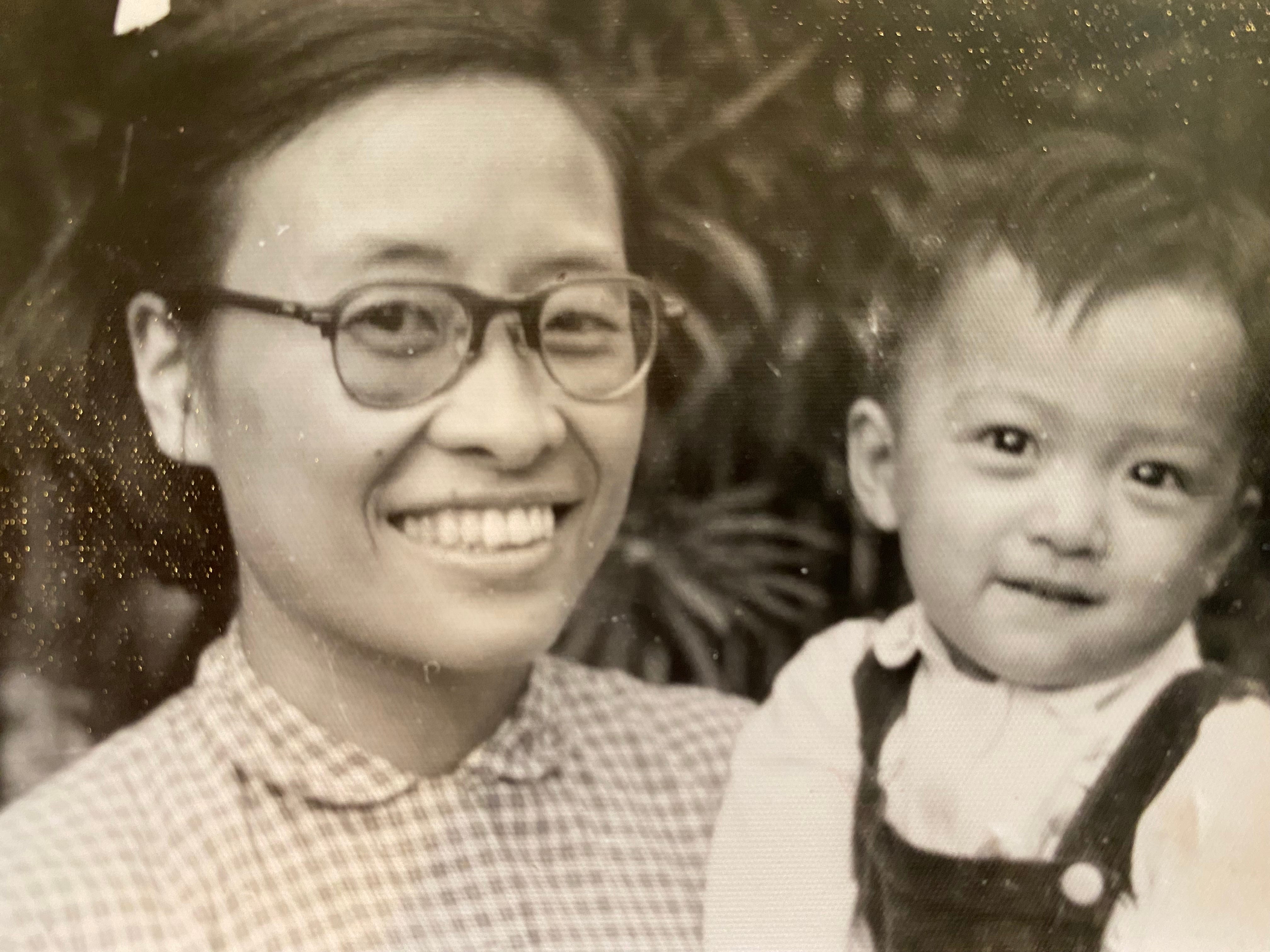
I was not much older than 3 or 4 years. A case of food poisoning from potato sprouts sent our entire family to the emergency room. Mom and I shared the same hospital bed, and the doctor had ordered IV fluids for all of us. But the veins on my arms were too tiny. After several failed attempts, the nurse was frantically looking for veins in my leg.
With one of her hands hooked to an IV, Mom held mine with her other hand, and assured me softly, “It’s going to be alright; this nice lady is going to get it done and your tummy won’t hurt anymore!” Her body against mine, I watched the nurse finish with the needle—no tears, no wailing.
Five decades later, I looked at Mom’s frail figure and pleading eyes. I thought, Fuck the test! I guided Mom to a bench at the building’s entrance, “We won’t do the blood test today. You rest here and I will get the car.”
On the drive home, Mom’s spirits lifted. She commented about the flowers on the trees and how she wanted to learn my way of steaming eggs. Her breathing was smooth and voice louder. I looked at her from my peripheral vision and remembered her confidence when I was hurting, her opinion about Dr. Bleicher when her baby grandson was hurting, and wondered if she even cared to have an opinion about Dr. Kou now.
I reached out, held her hand in mine, and returned her chatter with a smile.
***
That was the last time Mom and I held hands.
Six months later, at my home in Washington, I stood on the phone with the San Jose paramedics.
“There is no pulse, Ma’am,” one of them said.
I told them about the DNR form taped to the refrigerator, right next to the steamed egg recipe I had written for her.

Yi, I thought of this piece when I spent the night in my mom's hospital room last week, "sleeping" on a recliner next to her bed, holding her hand much of the time. <3
Hand-holding is a beautiful thing in all its permutations. Far more intimate and loving than “firmly” shaking hands.
Now a widower with no wife or “girl friend” or grandchildren with whom to have a hand to hold, I’m much more aware of it when I see it. And miss it.
Seeing pre-schoolers spontaneously holding hands on the way to the park and the play they have ahead is so much fun. Seeing a father and his young daughter holding hands in rapt conversation brings back memories of me and mine. Seeing a father holding hands with his pre-teen son warrants respect for both. Seeing a teenage couple tenderly holding hands gives me hope. Seeing a middle-aged couple holding hands after the theater surprises and touches me. Seeing and elderly couple holding hands crossing the street warms my heart and saddens me a bit. I used to have that. Seeing an elderly parent holding hands with a younger son or daughter comforts me. Seeing a home-health aide affectionately hold the hand of a patient relieves me. The patient is not alone in that moment.
I envy cultures where adult friends of either sex can hold hands without notice.
Holding hands is a wondrous thing. It doesn’t cost a penny. It says so much.