

Baby Girls
An excerpt of Bridgett M. Davis’s “Love, Rita: An American Story of Sisterhood, Joy, Loss and Legacy”


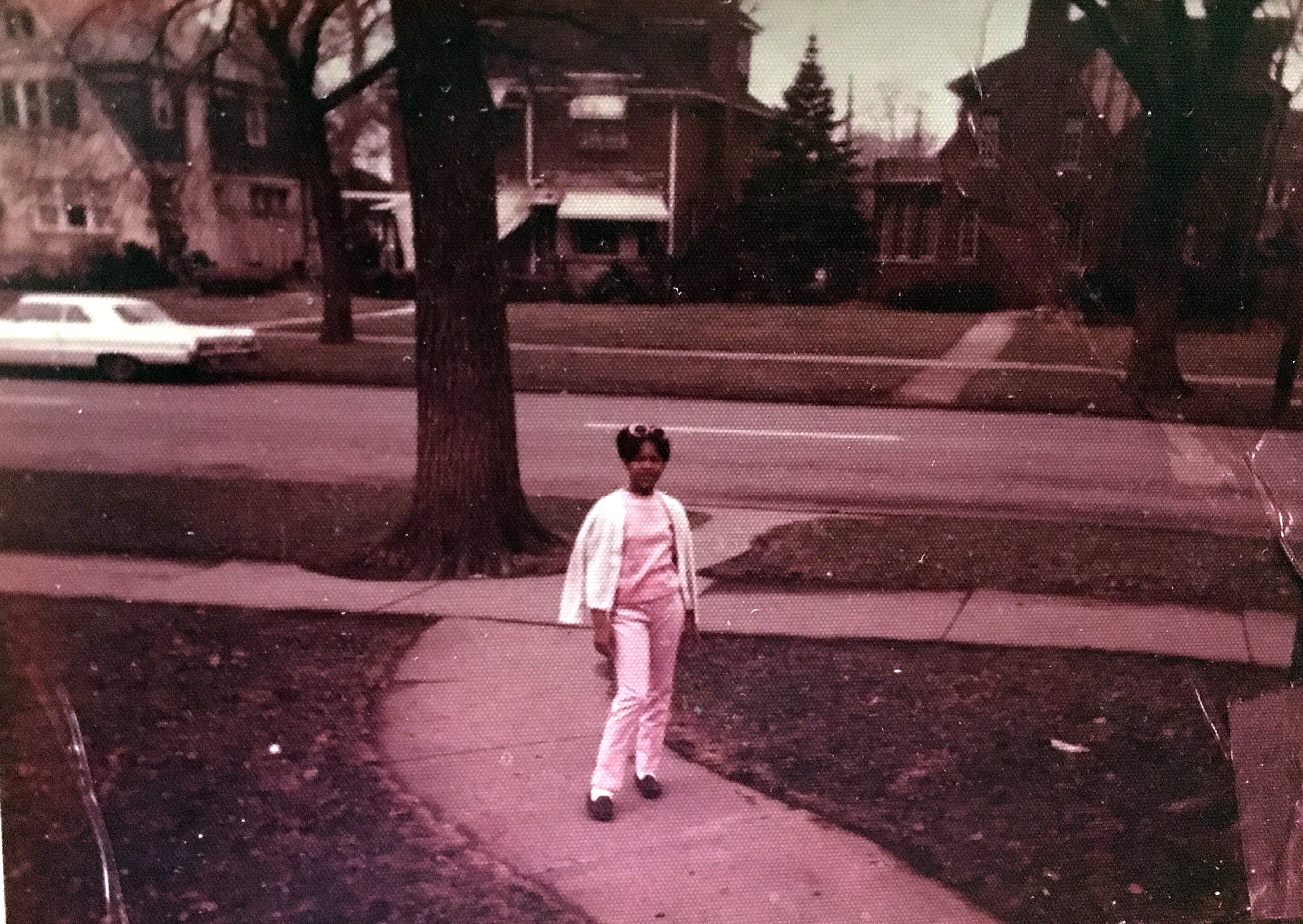
Our relationship as sisters began this way: As I lay in my French Provincial baby bed, crying my newborn cry, four-year-old Rita came into the room, looked down on me and said, “Shut your damn mouth!”
Just then, our mother stepped out of the closet, shocking Rita so badly, she ran out of the room. Mama liked telling this story in a bemused way, as an apt example of how jealous Rita was of me, from the start. And how terrified my sister was of having gotten caught saying “damn” in earshot of our no-nonsense mother. Of course, she’d been usurped as the baby and of course Rita didn’t like that. Our mother certainly wasn’t surprised by Rita’s jealousy, but I can’t imagine she had much tolerance for it. She would say she “did for” all her children equally, so it was uncalled for. Besides, Rita never owned up to any jealousy. By the time she was well into her teens, after hearing Mama tell the story yet again to a new listener, Rita found the language to give her account of that early encounter with me. She said: “Obviously my emotional needs weren’t being met.”
I used to shake my head and lightly chuckle when she said that. What emotional needs? She was four! But she was serious. Now I look at that moment as a freeze-frame, and what was going on outside the frame, and I suspect Rita was onto something. Mama might’ve been showering me with extra attention, beyond the fact of my newborn status. There are reasons for that. Rita was born when our parents, Fannie and John T, were struggling so bad, the only place they could afford to live was on a street called Delaware, in a cold-water flat within an over-crowded ramshackle tenement on Detroit’s dangerous side of town, with rats and roaches everywhere, fire a constant danger, and coals to heat the furnace a rare luxury. It was bad. And it went on for two years. Rita had no memory of life on Delaware Street, but her body likely remembered it, the stress of poverty.
By the time I came along the family’s fortunes had improved. Our mother had launched a small, underground Numbers business two years before, in 1958, where she took in customers’ bets on three-digit numbers, paid out their winnings when they hit, collected their wagered money when they didn’t, and profited from the difference. The enterprise was now bringing in steady, modest profits, and being a businesswoman likely did distract our mother from focusing on her four-year-old. Rita, her baby girl, was also likely the source of Fannie’s motivation—to figure out how to make a way out of no way. Success allowed our mother to, when I came along, bring a child into the world the way she’d always wanted.
Yet, here’s a fact: even though our mother never drank nor smoked nor used drugs—she lived right, as they say—I was born two months premature. And while four-eleven happens to be a lucky number in the mythology of the Numbers, my being only four pounds, 11 ounces is also a low birth weight. Long after our mother went home, I spent weeks in Henry Ford Hospital inside an incubator, keeping warm as my lungs developed. Newborn intensive care units, or NICU’s, hadn’t yet been invented. Was I showered with such affection upon my birth because I made it, because I managed to live, did not die from being born too soon?
Rita was born when our parents were struggling so bad, the only place they could afford to live was on a street called Delaware, in a cold-water flat within an over-crowded ramshackle tenement on Detroit’s dangerous side of town, with rats and roaches everywhere, fire a constant danger, and coals to heat the furnace a rare luxury. It was bad.
This is important to note because Mama had a baby girl that didn’t make it; Rita and I had a sister we didn’t know we had, and that we’d lost. I stumbled upon her death certificate on Ancestry.com. She was born at the segregated Riverside Sanitarium and Hospital in Nashville, Tennessee on February 19, 1955. She lived for one hour and fifteen minutes. Cremated that day, at the same hospital, she was unnamed. The cause of death was prematurity.
Soon after, my parents, migrated north with their daughter Deborah and son Anthony. (Their 6-year-old daughter Selena Dianne stayed in Nashville with my mother’s sister). Fourteen months after losing that baby girl, our parents had Rita. She was their first child born in Detroit, the harsh place they now called home, and our mother was just shy of 28 years old, now caring for three children between the ages of newborn and eight; she had little time to process her grief, her loss; I can only imagine the stress on her body.
The fact of our sister’s brief life is right there on Rita’s birth certificate, and mine, where the question reads: “How many other children were born alive but are now dead?” And the answer inside the little box is “1”. Not stillborn (there’s a separate box for that) but born alive, now dead.
Mama never talked about the baby she lost. Our older sisters, who were eight and six when their little sister died (our brother was 2 1/2) never talked about the loss either, about what that felt like knowing their mother was having another baby, and then seeing her come home without one. Did they feel something had been taken from them too?
More revealing is that Rita and I never talked about the lost baby girl who lived and died on the same day back in February 1955.
We didn’t know, or didn’t want to know, or chose not to acknowledge what we knew: Rita was conceived and born in the shadow of another child, in the aftermath of loss. As it were, she almost didn’t make it either.
Fannie was newly pregnant when two white men in Mississippi tortured and murdered 14-year-old Emmett Till, his battered and deformed face put on view by his mother for the world to see. “I almost had a miscarriage when I saw that photo,” Mama told us, about the image published in Jet Magazine, shock and grief overcoming her as the new fetus was barely taking hold. Did she open to that page in Jet, see the image of Mamie Till looking down on her child’s brutalized face as he lay in the casket, and instantly have sharp abdominal pains? Some bleeding? Did she rush to the county hospital to get checked out? Was she treated well there, or her symptoms dismissed because she was a poor Negro woman? Was Mama beside herself, terrified of losing another baby, so soon? What was that pregnancy like for our young mother, far from her large Nashville clan, in this cold city up north where a better life might not ever work out?
After Mama saw that terrorizing image in Jet, I suspect genetic changes to her DNA began right then and there, as scientists now believe happens after a person experiences trauma. I believe she passed along those genetic markers to her unborn child. And I believe our mother’s own grandfather’s traumatic life of childhood slavery was passed down in his cells to his daughter, her mother, born in the nineteenth century and listed in the US census as a “mulatto” girl, with all the implications of violence upon the body that brings.
I imagine what got passed along in our ancestor’s eggs. And sperm. Our father experienced his own harrowing tragedy as a young man, losing two younger brothers who were drowned. Surely, he brought that early trauma to the conception.
After Mama saw that terrorizing image in Jet, I suspect genetic changes to her DNA began right then and there, as scientists now believe happens after a person experiences trauma. I believe she passed along those genetic markers to her unborn child. And I believe our mother’s own grandfather’s traumatic life of childhood slavery was passed down in his cells to his daughter, her mother, born in the nineteenth century and listed in the US census as a “mulatto” girl, with all the implications of violence upon the body that brings.
As Dutch biologist Frans De Waal reminds us: We are bodies born of other bodies.
Delivered at Trumbull County Hospital, Rita came breech, buttocks first, a difficult birth. Mama said that one was the hardest of all her deliveries, and she half-joked that after Rita was born, she never did fully straighten out her back, never walked quite the same again. Breech deliveries are rare, only three to four percent of all births. In recent decades, the accepted medical wisdom is that when a baby is breech and unlikely to turn, a Caesarean is scheduled, because babies die from vaginal breech deliveries at a rate up to three-and-a-half times more frequently than those delivered via C-section. It’s a complicated, dangerous, and risky birth. Much can go wrong, including a compressed or twisted umbilical cord depriving the baby of oxygen or harming its limbs; if babies don’t die, they could end up with spinal cord injuries, broken bones, or seizures. The mother could die. Physicians now know that only those with experience and a clear understanding of vaginal breech births should even attempt to deliver babies this way.
Thanks to research, we also now know that Black babies delivered by white doctors are up to 58% more likely to die than those delivered by Black doctors. And that includes vaginal births. Thus, what’s delicately called “implicit bias” means a white doctor works less hard to save a Black baby’s life because said doctor believes that baby is inherently less human, less valuable than a white baby, and so when the infant dies said doctor’s first thought is, “Too bad”, rather than, “Oh God, no!” Back in the 1950s, those white doctors just went for it while those Black mothers went through excruciating pain and fear, as they pushed for dear life, and hoped for the best.
Why do some babies never turn in their mother’s bellies? Why don’t they prepare to be born? No one knows exactly why. Yet research now suggests that third-trimester fetuses in the womb can learn and remember just as well as newborns, and part of what they learn, based on what their mothers go through during pregnancy, is whether the world outside the womb is safe and healthy or dangerous and toxic. Was Rita, with this knowledge already stored in her body, afraid to be born into a dangerous and toxic world? Is that why she never flipped over so she could make her determined way through the birth canal head-first? Was it a protective response to the wordless story of danger she’d already, in-vitro, been fed? Was trauma already stuck in her little body?
Mama would tell her, at a difficult moment in her life, “You can make it. You’re a fighter. Lord knows, you fought hard to get here.” I think about how hard Mama fought to get Rita here, so soon after losing a different baby girl, and how she herself survived, through such a harrowing delivery. Rita and Mama fought together to be here, which created its own special connection between them.
Scientists also believe if the fetus’s mom experiences trauma or earlier trauma causes a variety of stress hormones to get released in her body, the baby may begin life outside the womb with less of a sense of safety and coherence. I imagine baby Rita knowing intuitively that once she left her watery warm home, an unsafe and incoherent world awaited. I imagine she hesitated.
In the end, Rita pushed through.
Mama would tell her, at a difficult moment in her life, “You can make it. You’re a fighter. Lord knows, you fought hard to get here.” I think about how hard Mama fought to get Rita here, so soon after losing a different baby girl, and how she herself survived, through such a harrowing delivery. Rita and Mama fought together to be here, which created its own special connection between them.
And yet, more than once Rita said to me: “I didn’t ask to be born. I didn’t ask to come here.”
That comment takes on new meaning now that I know the exact conditions of her birth. Yes, she fought to be here, but not before she tried to stay in the safety of Mama’s womb; and once she was born, into an uncertain and possibly unsafe world with trauma already stuck in her little body, it’s like she was saying to our mother, I still need you so much. Tend to me. Tend to me. Tend to me.
Now I better understand what Rita brought into the room with her that day when she didn’t know our mother was in the room too, what she must’ve absorbed and understood as she looked down on me, the interloper. I imagine the worst-case scenario playing in her four-year-old mind before she ever opened her mouth to insist that I shut mine.
 | A guest post by
|
Beautiful writing, read straight thru with morning coffee. I can only speculate my mother's stress hormones, plus cigarettes, created something in me, the elder, and my sister, the younger by 3 years, such that after Dad left our ages 6 and 3, we never got along, ever. Allergic to each other's survival modes. In Utero research is the next leep!
Wow!