

The Elders Whose Wisdom Informs Our Intuition
Elizabeth Greenwood on elders' "rapid pattern recognition" and how we benefit from exposure to it. PLUS: an Open Thread on our own intuitive abilities, and the elders whose wisdom informed them.


Readers,
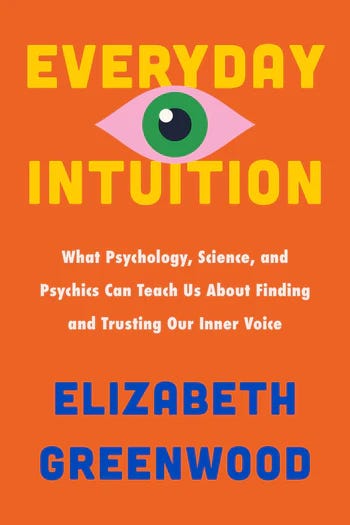
Today we have an essay by Elizabeth Greenwood, author of several books including the forthcoming Everyday Intuition: What Psychology, Science, and Psychics Can Teach Us About Finding and Trusting Our Inner Voice, to be published on Tuesday, May 6th.
In this piece, Greenwood touches on: distinguishing between anxiety and intuition; the “rapid pattern recognition”—developed through a lifetime of experience—that helps elders trust their guts; and how exposure to elders’ wisdom can inform our own intuition.
I’ve always had what I consider to be strong intuitive abilities. I often predict occurrences and outcomes without little information to go on. I’ve sensed these abilities weren’t “magic” per se, and wondered whether some kind of simple science might explain them. How about you? Do you ever feel as if you’re guided by intuition? Do you know where or who it comes from?
I thought it would be a good topic of discussion for a Friday Open Thread. In the comments please tell us…
How old are you? Have you ever been guided by your intuition? Give an example of an instance. Can you think of who among the elders in your life might have informed your intuition, via exposure to them and their wisdom? Tell us about that. Have you played the role of an elder to someone else, and helped them (directly or indirectly) develop their gut instincts? Tell us about that. (If you’re commenting, please also do me the favor of hitting the heart button ❤️ for algorithm purposes. Thank you!)
Elizabeth Greenwood is the author of EVERYDAY INTUITION: What Psychology, Science, and Psychics Can Teach Us About Finding and Trusting Our Inner Voice, LOVE IN THE TIME OF INCARCERATION: Five Stories of Dating, Sex, and Marriage In America’s Prisons (formerly published as LOVE LOCKDOWN), PLAYING DEAD: A Journey Through the World of Death Fraud. Her work has appeared in The New Yorker, The New York Times, GQ, The Atlantic and more. She lives in Brooklyn with her family, and can often be found supine on the couch watching Bravo.
The Elders Whose Wisdom Informs Our Intuition
Elizabeth Greenwood on elders' "rapid pattern recognition" and how we benefit from exposure to it.
by Elizabeth Greenwood
Is it anxiety or intuition? This is the lifelong question I set to untangle. I grew up with a single mom who imparted two things in equal measure to me and my sister: 1. We’re fucked (textbook anxiety born of precarity) and 2. Trust your gut. For most of my life these two have been at war within me. And yet, they feel quite similar. They are both urgent, they want to protect me, and the call is coming from inside the house. So which one wins?
When I present my conundrum to people, many women usually nod along in recognition. Others, often men, look at me with a placid blankness. They don’t know what I’m getting at. So the example I use to illustrate what I mean is: think of the urge to check on a sleeping newborn. Is that anxiety, or intuition?
My research led me to interview hundreds of experts of all stripes—from neuroscientists to psychologists to witches to somatic healers to hostage negotiators, all of whom study or use intuition in their practices—the key to this question, and to developing intuition generally, came from a surprising place: it is the wisdom of our elders.
I posed the issue of postpartum anxiety and mother’s intuition to Dr. Philippa Gordon, a pediatrician who practiced for 27 years and the founder of Allied Pediatrics. “If a grandmother is concerned,” she said, “this is someone who has been around a lot of children and has impressions I should listen to.” This notion reflected the neuroscientific definition of intuition I’d encountered: rapid pattern recognition based on expertise. What Dr. Gordon was telling me was that grandmothers, with their years of experience, are a vital source of information for understanding the wellness of a child.
Think of the urge to check on a sleeping newborn. Is that anxiety, or intuition? My research led me to interview hundreds of experts of all stripes—from neuroscientists to psychologists to witches to somatic healers to hostage negotiators, all of whom study or use intuition in their practices—the key to this question, and to developing intuition generally, came from a surprising place: it is the wisdom of our elders.
This wisdom is reflected in nature. Humans are one of only a handful of mammals, along with orcas, whales, and chimpanzees, to go through menopause. “The grandmother hypothesis” explains why: grandmothers possess such a wealth of acquired knowledge and skills for the group as a whole—how to raise young, how to care for mothers as they become mothers—that it is more evolutionarily advantageous for them to stop reproducing and instead pass on their knowledge.
Grandmothers, then, are a key to the survival of our species. As Sharon Blackie, the author of Hagitude: Reimagining the Second Half of Life, explains in an interview, “Back in the day, the wisdom of elder women was very important. Older women were mentors to the young. We had women who were truth tellers when the culture needed to hear some difficult truths about itself.” Elder women are critical to our survival and can teach us a lot about developing our intuition.
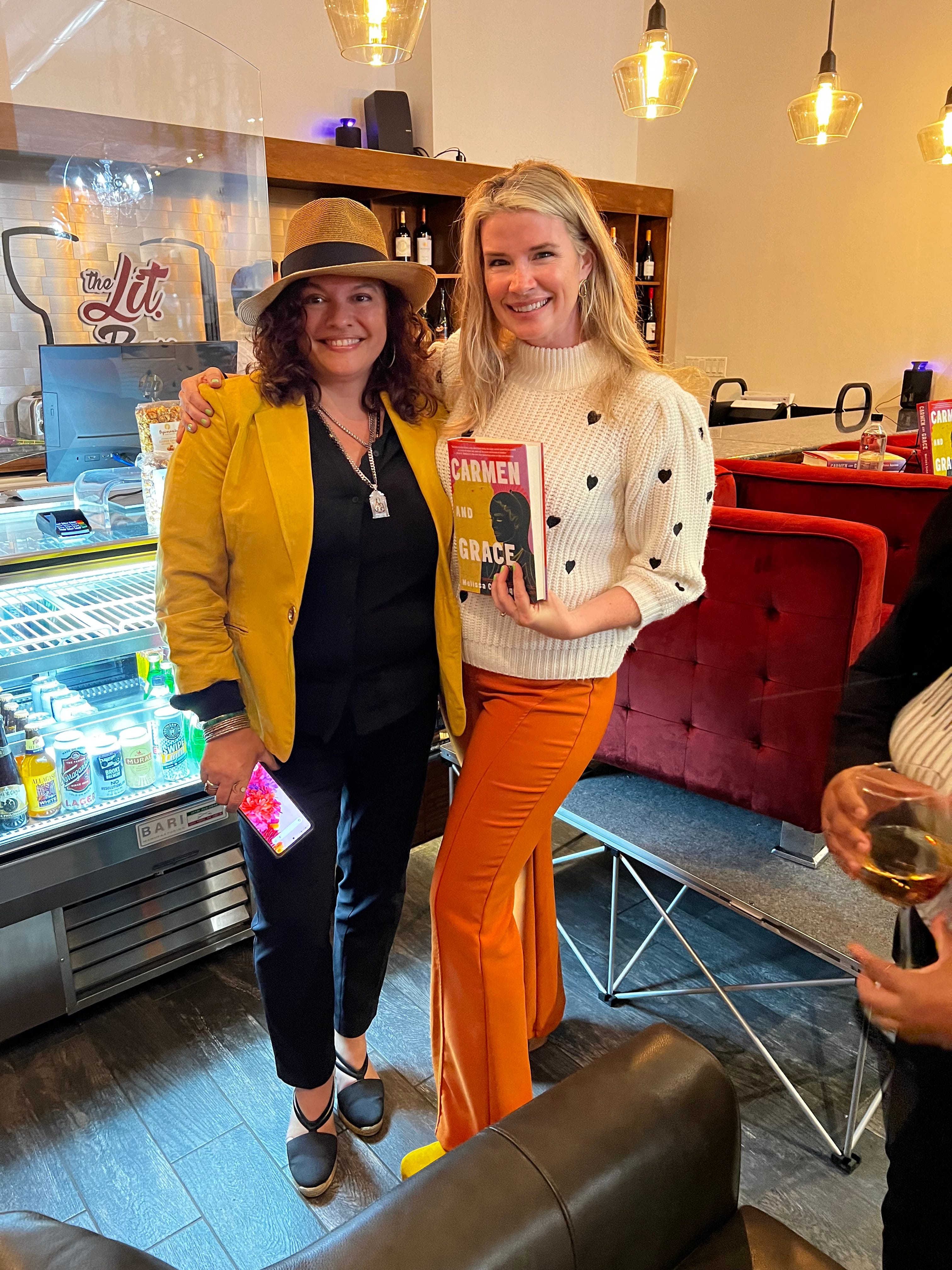
This played out for me in real life when I met my friend Melissa Coss Aquino, my muse for writing my new book, Everyday Intuition: What Psychology, Science, and Psychics Can Teach Us About Finding and Trusting Our Inner Voice. It makes a perfect kind of sense that the time and place I first encountered Melissa was steeped in magic. We met at an all-women writers’ residency on an island in Puget Sound. We’d go for long evening walks, watching otters flop around in the marsh, having the kind of meandering, luxuriant conversations that occur when you’re suspended from everyday responsibilities.
Grandmothers, then, are a key to the survival of our species. As Sharon Blackie, the author of Hagitude: Reimagining the Second Half of Life, explains in an interview, “Back in the day, the wisdom of elder women was very important. Older women were mentors to the young. We had women who were truth tellers when the culture needed to hear some difficult truths about itself.” Elder women are critical to our survival and can teach us a lot about developing our intuition.
Melissa, to me, seemed to have an otherworldly type of knowledge in the midst of harsh life circumstances. She told me about growing up in the Bronx in the ‘70s and ‘80s, her parents’ addictions, and the solace her grandmother provided. She mentioned feeling protected by something larger than herself, or something within herself. It seemed as if she had a force field around her. “There were times when I was a teenager and I was about to get into a car with a guy, and I would feel a hand on my chest, physically stopping me from getting inside,” she said. To feel that sensation is one thing. To actually heed its warning and not talk yourself out of it is quite another.
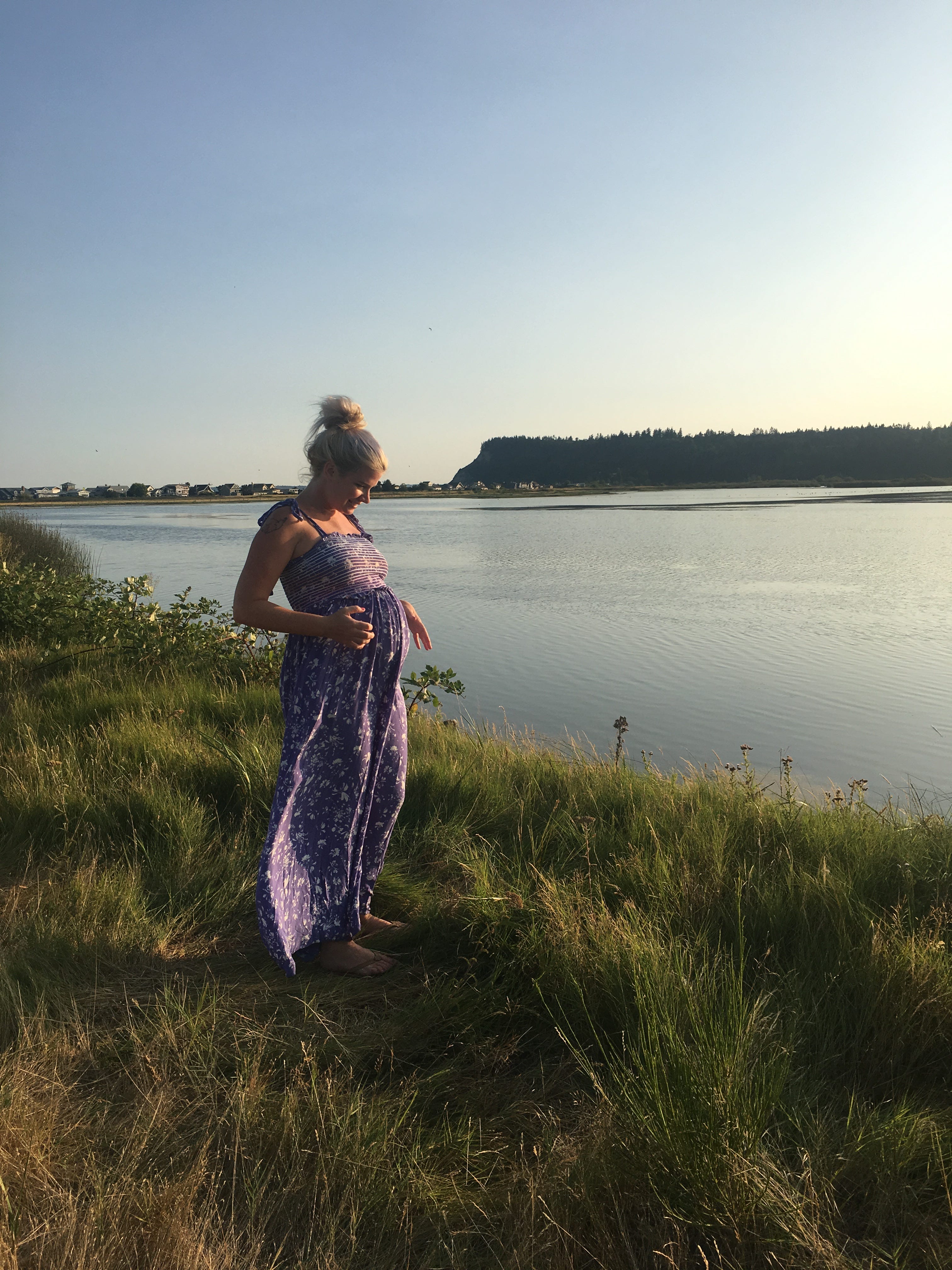
One night she took a picture of me, then six months pregnant, in the late summer light. On the brink of becoming a mother, I could feel myself moving into a new, visceral knowledge. You could call it hormonal, or evolutionary, but I know it was more than that. It was intuition, an impulse, and a knowledge that came from a place that was not my thinking brain. And here in my path was someone who seemed intimately familiar with it. I lapped up Melissa’s stories and attached myself to her like a barnacle, hoping to become her friend and learn her way of being in the world.
In her landmark ethnography Women Who Run with The Wolves, Dr. Clarissa Pinkola Estés writes about “You are born to one mother, but if you are lucky, you will have more than one. And among them you will find most of what you need.” That’s who Melissa has been to me. Toccarra Cash, an actress and activist, started her organization The Image Monster to help young women of color turn down the cacophony of messaging about how they are supposed to be. Sharing wisdom and insight between women is one of the most powerful elements for participants. Through other writing and creative exercises, young women dissect their experiences and connect with one another.
Leading these workshops has been incredibly healing for Cash: “There’s so much wisdom to be gained from elders, and it’s a feature of the African American community. While I’m not at an age that’s considered ‘an elder,’ I’m coming to embrace my role as a woman who is able to guide my younger sisters. It’s actually a little selfish, because I heal the childhood and adolescent parts of myself being able to be something like an elder for the younger women.”
Since we are always changing, our intuition is always changing too. Intuition is not a static quality that remains the same over the course of your life. When you have elders, they will infuse your perspectives with wisdom and fresh ideas. When you act as an elder, you distill your lessons into what you wish you had known. True mastery comes from being able to teach another.
Participants often remark that they wish they’d had the program when they were even younger—the college women wish they’d had it in high school, high school girls wish they’d had it in junior high. But the great thing about imparting wisdom is that you can do it at any age. Their desire to apply Cash’s tools shows that you can be an elder at any age. Women connecting with one another to hear themselves think is vital for intuition. It’s also an act of resistance. “I think because we live in such a capitalist society we’re never encouraged to get quiet and just stop and be still,” Cash says. When you’re not consuming, posting, working, you might be doing something different. Listening. Resting. Connecting. And from there? Who knows what is possible.
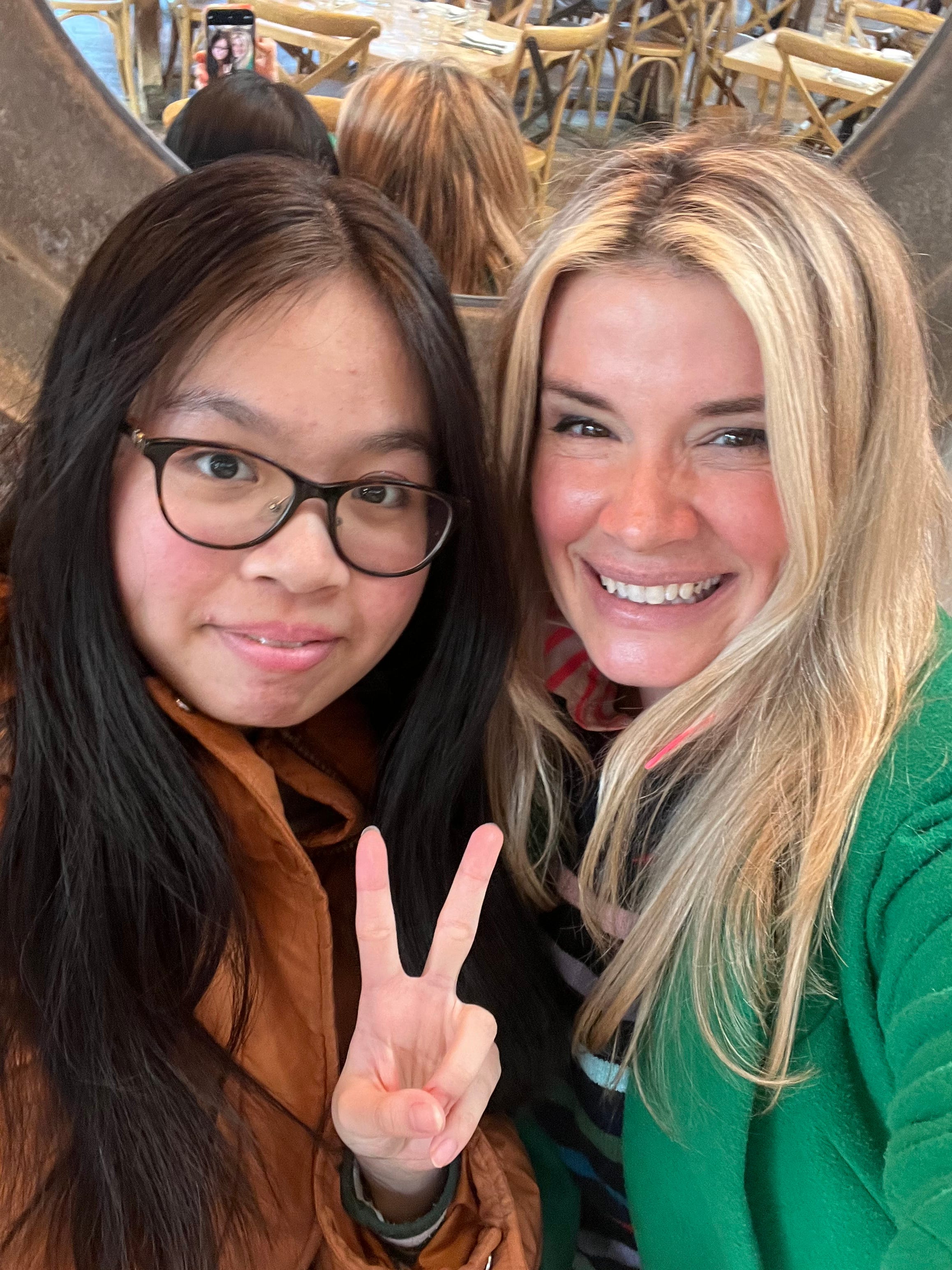
You can be an elder through professional mentoring organizations. I’ve been working with Mei Ting Xie, a sophomore at Hunter College, through Girls Write Now for three years now, and helping Mei with her writing and the other inevitable challenges of transitioning into young womanhood has been a joy of my life.
Since we are always changing, our intuition is always changing too. Intuition is not a static quality that remains the same over the course of your life. When you have elders, they will infuse your perspectives with wisdom and fresh ideas. When you act as an elder, you distill your lessons into what you wish you had known. True mastery comes from being able to teach another. We need to continually stretch our perspective, both forward into the people we are becoming and backward to the people we were. This dynamic flow of knowledge keeps our intuition fresh and alive.
Your turn…
How old are you? Have you ever been guided by your intuition? Give an example of an instance. Can you think of who among the elders in your life might have informed your intuition, via exposure to them and their wisdom? Tell us about that. Have you played the role of an elder to someone else, and helped them (directly or indirectly) develop their gut instincts? Tell us about that. (If you’re commenting, please also do me the favor of hitting the heart button ❤️ for algorithm purposes. Thank you!)
Thanks for reading, commenting thoughtfully and respectfully, and for all your support! 🙏💝
 | A guest post by
|
Since age 16, the only thing I "wanted to be" when I grew up was a newspaper reporter. I feel blessed to have enjoyed that career for four decades before retiring at the end of 2020 at 62.
I took myself by surprise. I had always plan to work until I was old, whatever that meant. I didn't think it meant at age 62.
My inspiration came from Betty, a reporter colleague and former Roxyette (the NYC dance troupe that became the Rockettes). Betty worked fulltime at our Indiana newspaper until she retired at age 78. Vibrant and still possessing the figure and fitness of an elite dancer, Betty only retired then, she told me, "while she was young enough to travel the world." She did just that, and passed at 100 after a brief illness.
So what was I doing retiring at 62? Still a pup in Betty years.
In August 2020 I announced plans to leave at year's end. Then I went about my business, trying to figure out how to return as a stringer! One foot in, one out, not convinced that I was making the right move, yet, another part of me said I must do this.
In November, my husband was tested for blood in the urine. In December, a few weeks before my last day working, he was formally diagnosed with bladder cancer. He would have a tough battle ahead, to include intensive chemo, and removal of his bladder and prostate.
I knew then that my purpose was clear: to care for him in every way possible. His first chemo was before Christmas, and that ramped up as the winter wore on, culminating with surgery in March, and months of recovery.
I believe that the timing of my unlikely retirement was more than intuition, that it was God's direction and perfect timing, that the table be set to help my beloved through his ordeal. I'll never be convinced otherwise.
I feel nothing but gratitude for this direction, and that I could be around to help my husband. I feel badly for those unable to make that choice due to finances or younger age, and who must care for loved ones balanced around a work schedule and additional obligations.
Since those bleak months, my husband is doing wonderful, and we've enjoyed each other and our marriage on a whole new level: through a lens of deep gratitude.
Hey Sari,
I’m 58 and I’ve had many, many moments of intuition (and anxiety for that matter). One such moment was on April 14, 2014, when I was deep and helpless in my alcohol addiction and I just knew, with blazing clarity, that I was going to die. I could viscerally feel the knowingness with such certainty and such intensity that it literally took my breath away.
I didn’t recognise it then, but I did later. There was a wisdom somewhere between my bones that awakened that day, I believe eons of ancestral voices from my field weaving a magical force. And although faint and feeble I could hear the words clearly.
That moment of intuition just over 11 years ago, that pause to listen and those words changed the entire trajectory of my life.
Many thanks for your wonderful stories and profiles. Each is a drop that helps fill my cup.
Warmest,
Annie