

“Read Kierkegaard. And Flush.”
Judith Hannah Weiss recalls her father’s last words, and her life as a child.


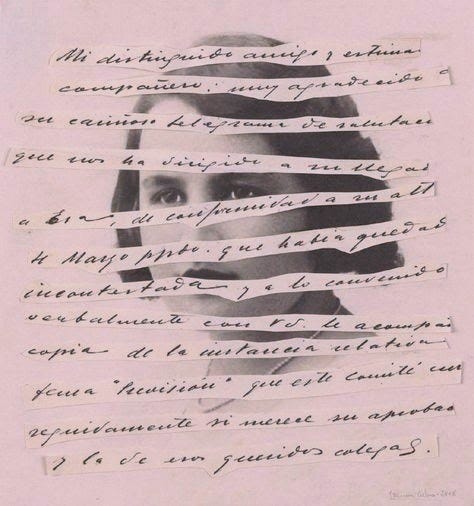
Sidewalks sizzle in Manhattan. Molten, hissing, dangerous. And even more torrid in the tenements where I work for a childcare agency. It is 1966. People, driven to desperation by nine days of temperatures in the high 90s, hack into fire hydrants, preferring to be hit by brutal torrents of water to staying boxed in broiling homes.
I get home at 7 for my other job, the evening shift, as my father’s night nurse. Cancer has racked, ravaged, reduced him to stretched skin on bone. He weighs 95 pounds now, has turned a deep yellow, somewhere between leather and wood, and is twisting, contorted, on sheets of white. He asks for water, then swallows two neon pink pills for pain.
But he must have swallowed many more pills I didn’t see before I got home and planned to take just the last two with me. He tells me not to call 911 and adds he does not want his stomach pumped and does not want to go to a hospital. Then he tells me to read Kierkegaard and to flush the remaining pills down the toilet. I say, “I love you,” and he says, “Thank you. Flush.” Those were his last words.
It is 1966. People, driven to desperation by nine days of temperatures in the high 90s, hack into fire hydrants, preferring to be hit by brutal torrents of water to staying boxed in broiling homes.
I tell my mom about the pills right away, but during the five hours before my father’s last breath, she does not join us. I imagine her sitting like a statue, immobile on the farthest end of the sofa, at the farthest end of our very small home. I don’t know why she does not/can not move. I flush the pills, then sit like a statue, too, holding my father’s hand, something I’d likely never done before. Around midnight my father’s friend, Fred, a doctor, arrives and tells me my dad is “gone.” He means “dead.”
A few weeks later, my father comes back in a box. I plant him in the horseshoe garden. My mom stands there, mute, absent, as she had been the night he died, while I dig a hole and cover the box. Within a year, she sells the house with the box and the horseshoe garden and the lilacs and roses she tended with love.
***
My father had also been a doctor, with two sets of patients: the ones who could pay and the ones who could not. He worked pro bono at Ellis Island for many years, trying to keep in this country immigrants not welcomed here. During the McCarthy era, he was pressured to rat out “commie doctors,” which meant doctors fighting for what is now called Medicare. He declined, developed a huge clot in his leg, and was forced to quit the career he loved because he could barely walk.
I grew up in a house of silent strangers. I was one of them. The clot was like a time bomb which, if dislodged, could shoot to his heart or lungs or brain and kill him in moments. I was made aware of this endless ongoing threat from a very early age. He could die walking down the hall. He could die at any time doing nothing—or anything at all. No day felt safe to me or was safe for him.
I get home at 7 for my other job, the evening shift, as my father’s night nurse. Cancer has racked, ravaged, reduced him to stretched skin on bone. He weighs 95 pounds now, has turned a deep yellow, somewhere between leather and wood, and is twisting, contorted, on sheets of white.
My father could explain suns and moons and stars and planets and Mozart and gravity. He could, but he didn’t. He had loved practicing medicine and likely hated being stuck at home. I learned it was right/good to stay shut in my room, not moving much and not making noise. Alone in my room, I drew large, happy families like I saw on TV. I named each child and tucked their age beneath their feet.
Their moms woke them with a kiss. Mine did not. A pediatric social worker, she fled each morning to the happier, more normal life of kids in a county hospital and was gone at night gaining two advanced degrees. I was not in the picture, not in any picture, not even in the pictures I drew. My mom had thousands of kids, but I wasn’t one of them. She called the kids in chronic care pediatrics, burn units, cancer units, and AIDS clinics, her kids, like she was their mom. Their moms were missing in action and my mom was missing, too. From me.
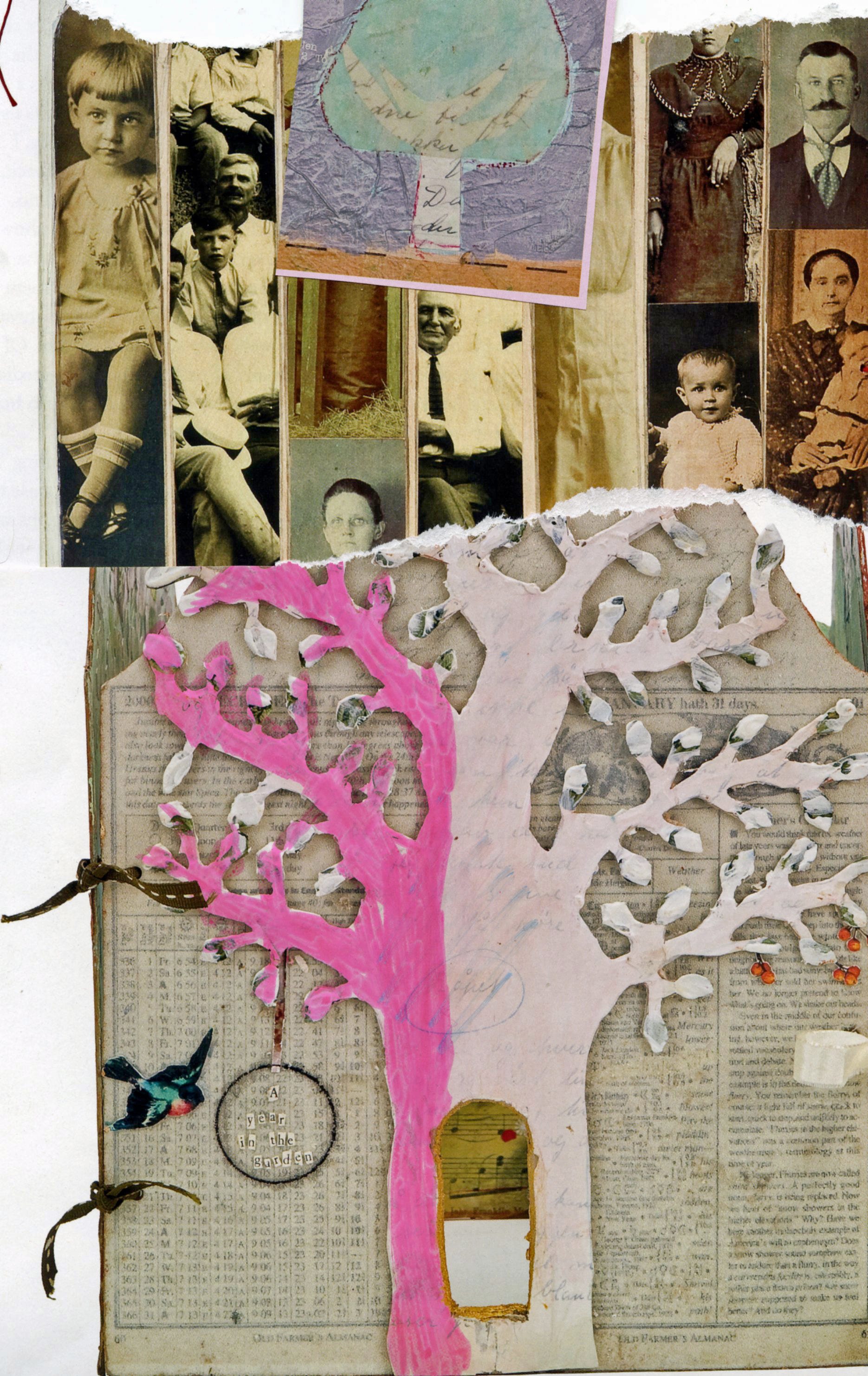
When I was 8 or 9, I found a shoebox stuffed with tattered photographs. The box was at the top of a closet, likely to keep it from me. Evidently, these were pictures of family I had never heard about. Their pictures did not have names. We lived with six million people in six rooms and with six million stories no one could tell, and tiny blue numbers tattooed on arms, which no one discussed.
What did I want? I wanted to be the little girl that everyone wanted, the perfect little girl with blonde curls and blue eyes who grew up to have one hell of a tennis serve and was an equestrian marvel, and went to the right schools, married the right guy, and had the right kids and a happy family always welcome anywhere.
He must have swallowed many more pills I didn’t see before I got home and planned to take just the last two with me. He tells me not to call 911 and adds he does not want his stomach pumped and does not want to go to a hospital. Then he tells me to read Kierkegaard and to flush the remaining pills down the toilet. I say, “I love you,” and he says, “Thank you. Flush.” Those were his last words.
I wanted Halo shampoo and Ba-Bo cleanser and Juicy Fruit gum and Hostess cupcakes and a father who could walk and a mom who looked like Donna Reed. My father spoke to me, though rarely, as if we had never met. An awkward impersonal courtesy. I learned nothing about him from him—and very little from others.
I had a blue bike then, and rode it sometimes. Other kids were taught to ride a bike by their dad, or perhaps by their older brother. I was taught by a high school kid my mom paid to teach me. I was an only child. On bad-weather days, when all the other kids were picked up by their moms, my dad picked me up at school. I hated it. The moms, who were in their 20s or early 30s, had 2.8 kids and shiny hair that matched their shiny cars. My dad drove an ancient, gray Buick. It was a relic and so was he. I was ashamed that I was ashamed.
Dinners for the two of us were strained, the reverse of comfort food. Speed-eating. Brittle, busy, masticating. You could call it serving time. Hard to say who felt more trapped, or more released when we rose and went back to our separate cells. My father labored to heat things up, baking potatoes in a dark gray dented thing that may have survived World War I. It looked a bit like a helmet. In my father’s first years as a doctor, he treated veterans of World War I and victims of the Spanish Flu. Maybe that’s why his face looked closed, like a cabinet.
A few weeks later, my father comes back in a box. I plant him in the horseshoe garden. My mom stands there, mute, absent, as she had been the night he died, while I dig a hole and cover the box. Within a year, she sells the house with the box and the horseshoe garden and the lilacs and roses she tended with love.
Eating by myself was better. Chunks of Velveeta and mayo on Wonder Bread with 12 essential vitamins, consumed standing in the kitchen. I mastered that meal in second grade. Once I learned to open cans, I ate Franco American spaghetti with butylated hydroxyanisole (BHA), ethoxylated diglycerides, ammonium sulfate, sulphur dioxide, azodicarbonamide, rBGH, rBST, methylcyclopropene, fructo-oligosaccharides, and propylene glycol alginate.
Later, I branched out. Swanson Roast Turkey with mashed potatoes, stuffing, gravy, and peas, or Banquet Fried Chicken, also with mashed potatoes and peas, which I ate sitting down. A few nights a week, my mom returned and shared a meal with us. I liked drying dishes, standing side by side with her, just the two of us, before she called “her kids.”
When I got a report card, my father would tear a sheet off his prescription pad on which was printed Max Weiss, MD plus his Rx license. On the prescription he’d write two words: “Congratulations. Dad.” It was attached with a paper clip to my report card, which was often blue, and placed in the middle of the white chenille spread on my bed. I imagined being adopted by a perfect family. Like the perfect families I had drawn for years. It didn’t work. I needed them. They didn’t need me. So I adapted a way of speaking. Any sound or style or speed. Any way or voice you need. Some folks borrow a cup of flour; some borrow a family. Others just imagine one.
When I was in college, I got a job wrapping packages. They looked great. I wanted to be like them. Then I worked for magazines. I cut and pasted words so they made sense and landed the right words in the right place at the right time. They looked great. I wanted to be like them. This was called freelance writing. It entailed making even more lovely places I did not belong and even more lively conversations I wasn’t in, and even more wondrous places I had never seen.
I could sound like Vogue or Elle or Elmo or Vanity Fair or New York or Esquire or Big Bird or Kermit the Frog. I could disappear, voiceless, nameless, telling someone else’s story in someone else’s words. I made things fresh, fun, perky, cozy, easy, sweet. Home the way you wanted it. Life the way you wanted it. The scent. The color. The texture. The ease. I was called “an outside creative.” Pretty creative, very outside.
Which of these sounds less likely? My mom had thousands of kids. My family was stashed in a shoebox. I freelanced for Martha Stewart. I was a ghost. They’re all true.
Check out all of Judith Hannah Weiss’s essays for Oldster.
 | A guest post by
|
Deeply grateful for your words. Thank you.
This text brought me to tears. My mother, too, spent her entire life working exhausting shifts caring for oncological patients—giving all of her light and energy to saving others, leaving our home in a quiet, cold shadow. From the age of nine, I would take a public bus home alone, eat cold meals because I wasn't allowed to touch matches, and buy the evening bread, waiting for everyone to arrive. I used to sit on my parents' bed, eating not just food but also everything that came from that square glowing TV screen.
Today, she quietly reproaches me for not connecting with her. Your words beautifully and painfully validate the lonely geometry of being a child left in the margins of a mother’s heavy, noble work. Thank you for this, Judith. Thank you for sharing Sari.