

Invisible at the Top
On being the first woman editor-in-chief of an automotive magazine—except no one knew it.

While scanning the obits in The New York Times, I came across one for Jean Jennings. I read there that she was the first woman editor-in-chief of a national automotive magazine.
But The Times had it wrong. I had been the first.
As I read the obituary, I flashed back to my time in the 1980s as top editor of an automotive magazine. I saw the bars of colored lights that exploded before my eyes as my body flopped around in a race truck. I remembered the blazing hot parking lot where I looked over a young man’s truck and discussed his shocks and suspension lift kit. I felt the cold water shock when a burly friend threw me out of his Jeep in the High Sierras. I had stalled his vehicle while fording a river, water rising over the floorboards.
None of this mattered. Because the New York Times story wasn’t about me, of course. Jean Jennings was the editor-in-chief of Automobile magazine from 2000 to 2014. She had a 30-year career, starting at Car & Driver, and then as co-founder of Automobile, where she rose to editor-in-chief.
I, on the other hand, had a much shorter career as the top editor of an automotive magazine, years before. It happened by accident, at an international off-road publication called Four Wheeler. I only managed to work there for two years, from 1982 to 1984.
While scanning the obits in The New York Times, I came across one for Jean Jennings. I read there that she was the first woman editor-in-chief of a national automotive magazine.
But The Times had it wrong. I had been the first.
Unlike Jennings, I had never repaired engines, won a demolition derby, or hobnobbed with auto executives. Unlike me, Jennings had no background in journalism and had never worked at a magazine. But I learned the automotive stuff and she learned the journalism stuff. We both rose to the top with credentials in one area and none in the other.
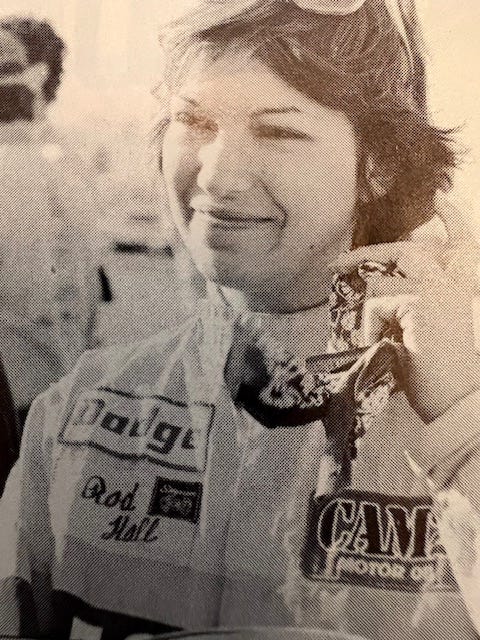
I realize now that Jennings was around when we both worked at automotive magazines. Her name had been Jean Lindamood when she worked at Car and Driver. We never met because we didn’t run in the same circles, even though she once rode in an off-road race with Walker Evans. I once rode in an off-road race also, with Rod Hall. But generally speaking, the vehicles she covered stayed on the blacktop or the racecourse. Mine raced in deserts and dry lake beds, rumbled on Bureau of Land Management terrain designated for four wheeling, and ambled through narrow trails in national parks.
While Jennings made her way to the top by writing for two well-known automotive magazines, I was a recent grad of a university journalism program when I joined the company that published Four Wheeler and the short-lived Los Angeles Home & Garden. Aside from penning a feature about antique car collectors while in college, a career as an automotive magazine editor had never entered my mind.
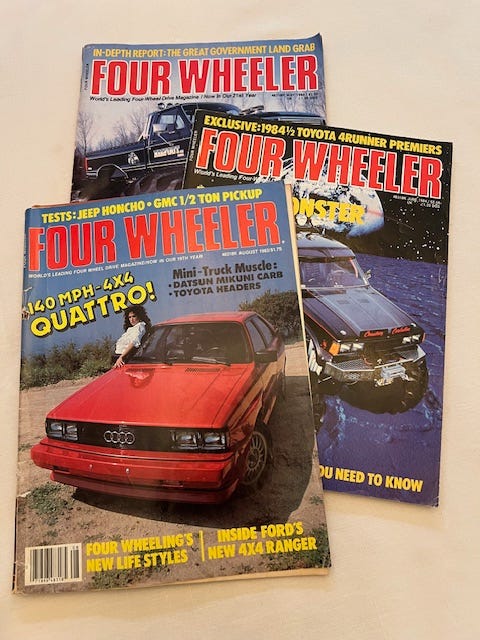
At 29 years old, I was older than most of my fellow graduates but just as broke. As an editorial assistant, I made half the yearly average for wages in 1982, around $15,000. I lived with two other roommates in a modest house in a suburb, and I had graduated with student debt. When Los Angeles Home & Garden went under only a few weeks after my job began, the publisher asked if I wanted to join the only remaining publication, Four Wheeler. I didn’t. It was a magazine for men about building and riding off-road vehicles. I had never been off-road and knew nothing about trucks and the outdoors. But I also didn’t want to look for another job. I just wanted a job as a magazine editor, regardless of the subject matter.
Jennings took a different route to the top job. Her parents were already in the automotive field and possibly inspired her long career at related magazines. Her dad was the editor of Automotive News and her mother worked for a newspaper. She dropped out of university to drive a cab, and taught herself how to do tune-ups and brake jobs by reading Chilton manuals. She landed a job at Chrysler Proving Grounds, where she was a mechanic. Even her brother was in the business. Like his dad, he was an automotive journalist, and he encouraged her to get a job at Car and Driver.
My parents were refugees who worked as bookkeepers. They wanted me to get married and have children. They were not excited when I went to college and then university, nor when I got jobs with newspapers and magazines.
Jean Jennings was the editor-in-chief of Automobile magazine from 2000 to 2014. She had a 30-year career, starting at Car & Driver, and then as co-founder of Automobile, where she rose to editor-in-chief.
I, on the other hand, had a much shorter career as the top editor of an automotive magazine, years before. It happened by accident, at an international off-road publication called Four Wheeler. I only managed to work there for two years, from 1982 to 1984.
When Four Wheeler hired me, the publisher promoted me to managing editor, which is usually the person who gets the magazine out each month. But I had to sit at the reception desk, said the publisher, because “there was no one else to do it.” Obviously, this was crap. But back then, it was ordinary sexist crap, and I had experienced it before. In the 1970s, at the newspaper where I was a section editor, I found out I was underpaid compared to a young man with a similar job. At a city magazine, the publisher wheeled a cot into my office and said he wanted me to work late and sleep with advertisers.
I don’t know what kind of bosses Jennings had, or how men treated her. I hope it was better than my experience. At Four Wheeler, my new boss was Julian Schmidt, the editor-in-chief. He was a muscled, balding blond man in his 30s who wore tight shirts to show off his physique. Offended by his boss’s hire of a woman, he refused to speak to me.
What would Jennings have done, I wonder now? Stormed off? Quit? I read in her Car and Driver obituary that she said the publisher “hired me to piss off the boys there.” That sounds familiar. I was usually the only woman among men at my job. And plenty of women still had to put up with a sexist work environment in the 2000s.
Soon after I started at Four Wheeler, the editor’s temper got him fired and I replaced him. The publisher wouldn’t give me the same title of editor-in-chief. My title was executive editor, even though there was no editor-in-chief above me. I guess the publisher figured I was cheap, and I could learn the tech stuff. I bet Jennings wasn’t cheap, but I suspect she was paid less than what a man would have earned in the same job. In 2000, the median full-time wage of salary workers had weekly earnings of $491 for women and $646 for men. Women made 76 percent of what men made.
In my new position as the head editor, I built a staff, mostly by stealing established editors and writers from other automotive magazines. They were off-road enthusiasts, probably gun owners, who loved the outdoors. Some could take apart a vehicle and put it back together. All were great writers who loved their subjects. Subscriptions increased from 30,000 to 130,000 during my two-year reign.
I wrote a few features, to prove my credibility, but mostly I planned out the stories and managed the men on my staff. While they weren’t sure how I got the job as their boss, they respected me, overall. Except for my next-in-charge, a seasoned automotive writer, and a Mormon with several children. He was paid more than me because he had many mouths to feed, the publisher explained.
That man and I stayed late to work on a story one night. We were alone when he pulled a photo of his wife from his wallet. In it, she was naked behind a bush. “My wife reminds me of Eve,” he said, gesturing at the photo. “Can we take off our clothes and run around the office naked?”
I stared at the woman and her naked shoulders. Then I said no, and we went back to work. I didn’t feel rage, but I felt uncomfortable. There were no HR seminars about sexual harassment in the 1980s. The guy must have felt that the risk was low. And he was right.
This kind of workplace nonsense didn’t have a name. In the 1980s, sexual harassment was just what happened. It wasn’t until several years later, in 1991, that I heard the term “sexual harassment” while I watched Anita Hill testify before Congress against future Supreme Court Justice Clarence Thomas.
Soon after I started at Four Wheeler, the editor’s temper got him fired and I replaced him. The publisher wouldn’t give me the same title of editor-in-chief. My title was executive editor, even though there was no editor-in-chief above me. I guess the publisher figured I was cheap, and I could learn the tech stuff. I bet Jennings wasn’t cheap, but I suspect she was paid less than what a man would have earned in the same job. In 2000, the median full-time wage of salary workers had weekly earnings of $491 for women and $646 for men. Women made 76 percent of what men made.
Jennings’ career as an automotive editor started nine years after that trial. Was it any better for her? Yes. She may have started as the Executive Editor at Automotive, but eventually she got the title of editor-in-chief, while I, as I mentioned, did not.
Even though my name appeared at the top of the masthead as the executive editor of the magazine, my publisher hid me from the bigwigs of the automotive world. He hired a former editor-in-chief of Four Wheeler and promoted him to associate publisher. With this title and his former connections, the associate publisher received all the invitations to lavish events so he could hobnob with major automotive manufacturers and executives. No one knew I existed, because that guy was the face of the magazine.
Now that I know more about Jennings, I wonder if I could have met her at some of these events so long ago, if I was ever allowed to go? Especially when I read this in a personal essay in Car and Driver by a writer who used to work for Jennings: “C-Suiters, Aristocrats, and ego puffers didn't stand a chance when Jean walked in. Walls fell, posing stopped, and everyone's attention shifted to her. And she owned and satisfied every expectation.” I wish I could have seen that.
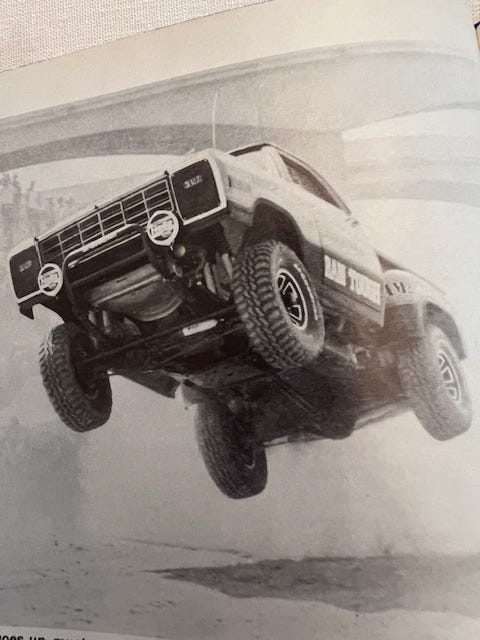
Fortunately, I did get to leave the office behind to write stories. In my adventures I rode shotgun with an off-road racer over a dry lake bed, drove along a trail in the Blue Ridge mountains with Southerners who smoked weed, and joined a three-day off-road race from Baja, Mexico to Vancouver, Canada. I wrote feature stories for the magazine about them and took the photos too. I wanted to prove to my male staff—and to myself— that I could do the job as well as they could. Out there, I had a blast. I was a minor celebrity, and treated as such. The wives rode shotgun and made the meals. The guys let me drive. I was game for adventure, and they let me have it.
My next-in-charge was a seasoned automotive writer, and a Mormon with several children. He was paid more than me because he had many mouths to feed, the publisher explained.
That man and I stayed late to work on a story one night. We were alone when he pulled a photo of his wife from his wallet. In it, she was naked behind a bush. “My wife reminds me of Eve,” he said, gesturing at the photo. “Can we take off our clothes and run around the office naked?”
It was my first trip out of the office that got me hooked. I took the company vehicle, a big truck with FOUR WHEELER emblazoned on the driver’s side door, and drove for some 50 hours, alone, to reach a desert trailhead in Southern California.
When I hopped out, wearing a Four Wheeler t-shirt and jeans, the all-male crowd’s disappointment at my being female was palpable. They were awaiting the magazine’s editor, and now here I was, a “girl” in my late 20s. They stared at me in silence until a man came forward and shook my hand. Then the crowd dispersed, except for a few who were so incredulous they said I had to pass a test. They wanted me to get in an old Army jeep with no brakes, and drive it up a cliff. So I jumped in and drove the vehicle up and over a 12-foot-high vertical hill. I had just recently learned to drive a stick shift.
That shut the guys up. They assigned me to ride shotgun with the single man, my fate on trips like this—to sit beside an off-roader who didn’t bring his wife or didn’t have one. And it was fun, bumping along the dusty trails, sharing meals around a campfire, and enjoying the desert scenery of ocotillo cacti, their long sprays of red flowers swaying in the wind like the blow-up waving men on the roofs of car sales lots.
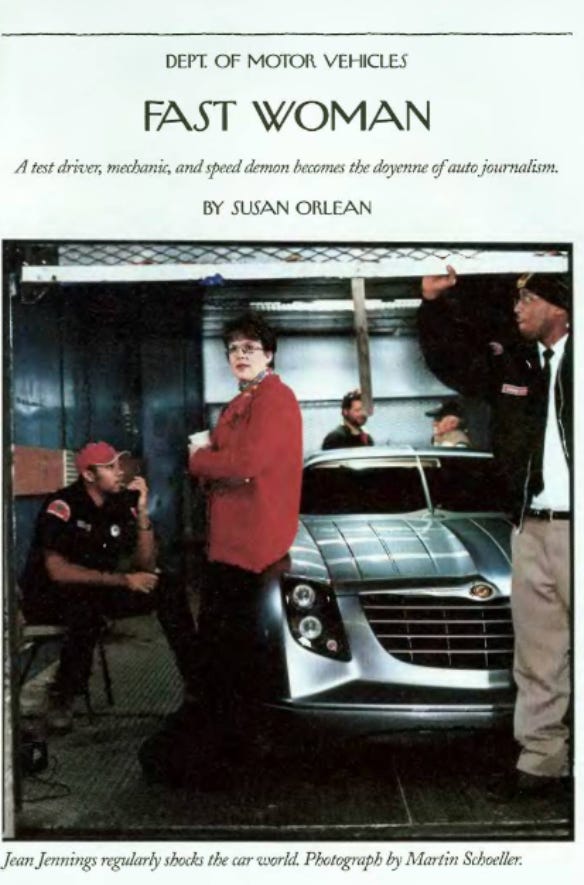
From what I read about Jennings, she also relished her adventures on the job. She was always game and once drove a Bugatti Veyron across the Florida panhandle. She avoided federales during a Car and Driver road test in Mexico and ended up “driving the patrol car and manicuring the cop’s girlfriend’s nails.”
The more I researched her, the more there was to admire. It’s clear that her staff respected the way she handled herself. Under her belt, the magazine won awards, she was inducted into the Michigan Journalism Hall of Fame, and writer Susan Orlean even profiled her in The New Yorker. Jennings was a “high-powered high-visibility personality” who was fun, according to an affectionate Car and Driver obituary.
When I hopped out, wearing a Four Wheeler t-shirt and jeans, the all-male crowd’s disappointment at my being female was palpable. They were awaiting the magazine’s editor, and now here I was, a “girl” in my late 20s. They stared at me in silence until a man came forward and shook my hand. Then the crowd dispersed, except for a few who were so incredulous they said I had to pass a test. They wanted me to get in an old Army jeep with no brakes, and drive it up a cliff. So I jumped in and drove the vehicle up and over a 12-foot-high vertical hill. I had just recently learned to drive a stick shift.
An editor at Car and Driver made a point in Jennings’s obit about how she wasn’t just a woman. "It's important to me to mention that she wasn't an inspiration simply by being female,” said Elana Scherr. “Jean was a good writer. She was brave, she was funny, she had imagination and ambition. She wasn't afraid of fast cars or wild people. It's what gives her stories so much energy. She was excited to be there, doing things, and she made it seem possible for me, and many other writers, both men and women, to pursue a career in having adventures."
I’d like to think I was like that too. Ironically, another female automotive magazine editor said this in the obituary, “When I started in 1995, there were so few of us in the biz, but there was Jean, near the top of a masthead of a Very Important Magazine. Every female automotive journalist was and should have been proud of her. “
Perhaps more than anyone else, I know what Jennings faced in her position decades ago, and I am, indeed, proud of her. “First Female Editor-In-Chief of An Automotive Magazine” is an easy title to concede. She deserves it, as well as my respect.
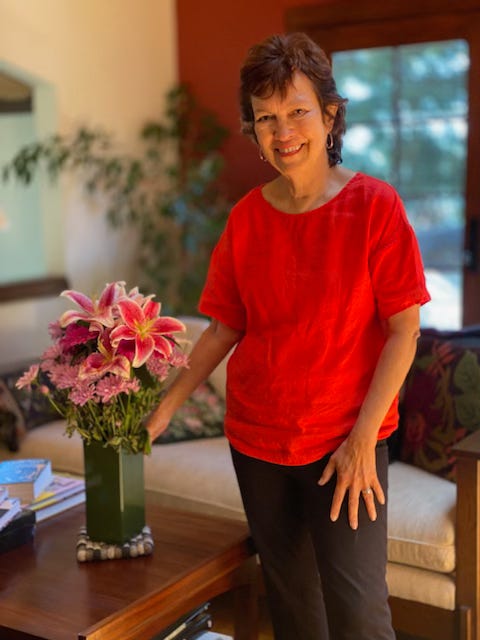
Dianne Jacob is a journalist, writer and writing teacher based in Northern California. Her freelance writing has won national awards, as has her how-to book, Will Write for Food, about becoming a food writer. She writes a newsletter for food writers at diannej.substack.com. Previously her essay “Cooking with Dana for the Last Time” was published in Memoir Land.
 | A guest post by
|
That’s my lovely wife, and her drive and dedication to her craft are a few of the reasons I was drawn to her in the first place. And she still has that same passion for her work.
I admire both Dianne and Jean for their brio, grit and leadership in a man’s world where men would not cede power without undermining women’s authority every way they could. Women starting out today have no idea how it was. As a memoirist and former journalist, I am amazed that so few women of Dianne’s generation and mine are telling the jagged, confounding, exhilarating stories of their careers. Work is a huge part of life, deserving the same writerly respect as growing up, raising kids and sustaining a relationship. Dianne points the way for other writers. I loved this piece.