

I Wrote My Eulogy and It Changed Everything In My Life
A surprisingly effective way to stop wasting your life on “someday.” PLUS: An open thread forum where you can share your own.


Readers,
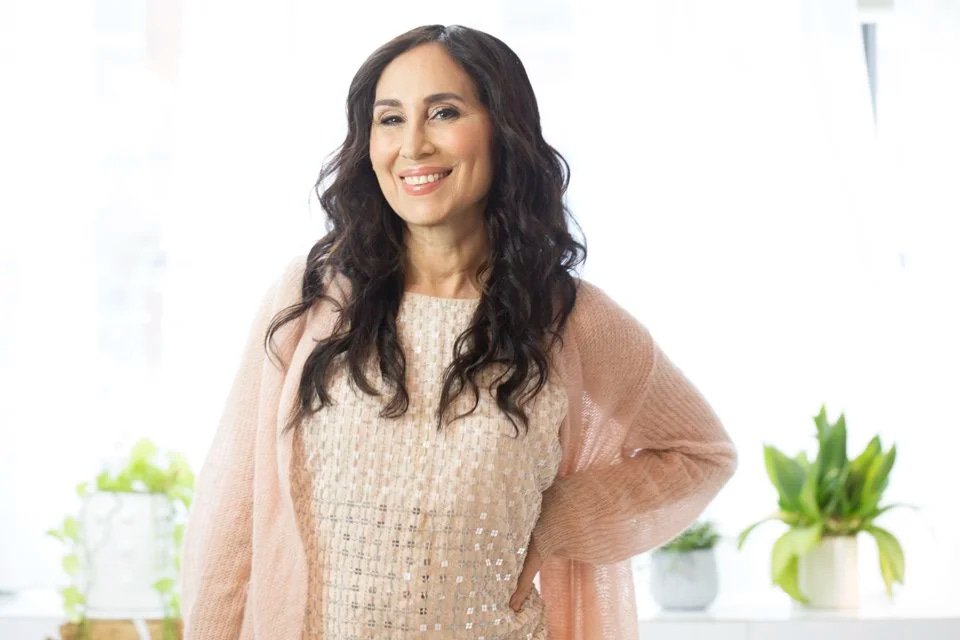
Today we have an essay by Karen Salmansohn, bestselling author most recently of Your To-Die-For Life: How to Maximize Joy and Minimize Regret…Before Your Time Runs Out. a guide to living a meaningful life. Her essay here is about how writing her own eulogy, and keeping it easily accessible on her iPhone, has motivated her to achieve difficult things she’d been putting off forever. You can find it down below this section. ⬇️
I think writing your own eulogy—including goals you aspire to achieve—is a great exercise, and a useful way to get focused on things you’d like to do with your life before it’s too late. So I thought I’d prompt you to follow suit.
First read Salmansohn’s piece, below, then, if you’d like to participate, in the comments write a mini-eulogy for yourself. Who are you? Who do you intend to become before you die? What do you hope have achieved by then?
Here’s mine:
Sari Botton was a writer, editor, publisher, teacher, performer, filmmaker, host of the Oldster podcast, and creator of the multi-season streaming series, Oldsters of America, in which she traveled around the country interviewing interesting people about their experiences—the good, the bad, and the ugly—of getting older. (← Anybody want to fund this?)
She followed up her New York City essay collections, Goodbye to All That and Never Can Say Goodbye, with a series of Oldster anthologies, dubbed “yearbooks.” She followed up her 2022 memoir-in-essays, And You May Find Yourself, with several others—one of them graphic, featuring her crayon illustrations—and a few novels. In her 60s she produced and appeared in the documentary Confessions of a Closet Vocalist, in which she interviewed many, interrogating the question: Why is it embarrassing to sing? In her later years she founded Oldster Manor, a non-profit senior residence for childless elders with no one to care for them in their dotage.
Eventually she got into a good habit with her eyedrops, remembering to put them in before bed. Also, she cleaned out her closet, her dresser, the basement, and the garage, the last two with the help of her loving husband. She forgave herself for never learning to drive a stick shift, knit, dive, or use PhotoShop or Quicken. She stopped caring what people thought of her and did her own thing, unapologetically.
Yes, Sari was a hard worker, but she tried to also be a good wife, daughter, sister, cousin, and friend to those she loved.
Salmansohn’s essay is here. ⬇️

I Keep My Eulogy on My Phone And It Makes Me Do Things I'm Scared Of
A low-tech mortality hack for courage, clarity, and follow-through.
by Karen Salmansohn
A decade or so ago, I decided to do something some of my friends found deeply profound, and others found deeply disturbing, depending on their relationship with mortality and how much wine they’d had:
I wrote my own eulogy.
Not because I’m morbid or have insider information about my expiration date. I wrote it because I wanted to live a life worthy of a really good eulogy. And I believe (deeply) that thinking about death wakes you up. It reminds you that you’re here, then you’re not, and it’s up to you to make the “here” part as meaningful as possible.
Unfortunately, most of us don’t think about our future selves. We live for Now Us and forget there’s a Future Us who’s counting on us not to be idiots.
So we fall into Someday Syndrome, which comes with familiar refrains like:
• Someday I’ll live more bravely.
• Someday I’ll take more chances.
• Someday I’ll speak up, move forward, start that thing.
Someday, someday, someday. It’s humanity’s favorite word for never.
You can coast on someday for decades. Until something snaps you out of it. A health scare. The death of a loved one. Or just doing the math on how much time you have left.
If you’re in your 60s and reading this (and lucky enough to be relatively healthy), the stark reality is that you have somewhere between twenty and forty years left to live, give or take. Could be more. Could be less.
If it’s twenty years, that’s about 7,300 days. It might sound like a lot—until you realize you’ve already lived roughly 23,725 days to get here. You’ve used up most of your days. The remaining ones are few enough that you could technically sit down and count them
(I do not recommend doing this if you’re trying to have a good afternoon.)
Instead, I recommend something far more useful: Write your eulogy. Same wake-up call. Much better motivation.
How do you write your eulogy? Glad you asked. There are two kinds of eulogies you could write. Only one is recommended.
The first is the one you’d write if you were to die next Tuesday. It would be filled with things like:
• She always meant to call her mother more.
• She always meant to clean out her closets.
• She always meant to finish that project.
• She always meant to reconcile with her brother.
Notice how much work the phrase “meant to” is doing here?
There’s this thing we do where we confuse intention with action. Where we think planning to become someone better is the same as becoming them. It’s not. But it feels close enough that we can coast on it for years. Decades, even.
“I’m going to write that screenplay,” you might say. And just saying it releases enough pressure that you kind of feel like you don’t actually have to write it. You’ve done something—you’ve announced your intention. That counts, right?
(Narrator voice: No, it does not.)
But we keep procrastinating, because the alternative (actually moving forward with the scary thing) requires discomfort. So we choose comfort and someday… until someday becomes never… and never becomes the truest thing about us.
The second kind of eulogy is an aspirational one. This is the kind I recommend you write. It’s the one about a future you who actually does the things you keep saying you’re going to do. At first, it will feel wildly aspirational. Even slightly delusional. That’s okay. Write it anyway.
Whenever you read the eulogy, it will function like a life mission statement, quietly motivating current you to become the person described.
Here’s how to start:
Write a list of uncomfortable goals. My list for my Aspirational Eulogy included aspirations like:
• Call my Mom every Sunday at 11am—not only when I remember. Not only when I feel like it. Every Sunday.
• Call my brother and reconcile that discomfort between us.
• Finish the book I’ve been “working on” for ten years. The one I’m excited about—the one on the power of mortality awareness.
• Stop saying yes to things when I mean no.
• Stop saying no to things I’m just scared of.
• Show up. Actually show up. For friends, for family, for colleagues. Don’t send a text. Don’t make an excuse that sounds legitimate, but is really just cowardice with charisma.
• Tell people what they mean to me. Out loud. In complete sentences.
I kept writing things until I had a long list. Then I realized the list wasn’t a list of tasks. It was a list of ways I’d been living wrong, ways I’d been choosing comfort over truth, safety over connection, later over now.
When you start writing your own eulogy, people will worry about you. Be prepared. I was re-reading my first draft when my partner Howard walked into the room holding a bag of pretzels.
“What are you writing?” he asked.
“My eulogy.”
He put down the pretzels carefully, the way you put things down when you’re deciding if this is a crisis.
“Your... eulogy?” He repeated.
“Mm-hmm.”
“Are you dying?” His voice went up half an octave.
“Of course I’m dying. You’re dying. We’re all dying. Even the plant in the corner, though that might be because I forgot to water it.”
“This is not comforting.”
“It’s not supposed to be comforting. It’s supposed to be motivating.”
“Why are you doing this?” Howard asked.
“Because I want to know if the person I’m currently being is the person I want to have been.”
He thought about this. “That’s either brilliant or batshit.”
“Why choose?” I asked.
He laughed an awkward laugh then left the room. The pretzels stayed. I grabbed them before he got out the door.
***
As it turned out, writing the eulogy was the easy part. Living up to it was harder. I needed a system to actually use it. So here’s what I did. I pasted it into the notes section of my phone and started reading it every Sunday morning. My new weekend ritual: coffee and contemplation of my own mortality.
At first it felt morbid. But after a few weeks it felt less like morbidity and more like clarity—like I’d been walking around with a blurry vision of my life and someone had finally handed me glasses.
I also started to read it before making big decisions.
• Should I text my mom or call her? What would Eulogy Me do?
• Should I avoid this difficult conversation or have it? What would Eulogy Me do?
• Should I say the true thing or the easy thing? What would Eulogy Me do?
I quickly realized: Aspirational Eulogy Me has her shit together in ways Current Me does not. She doesn’t waste time on things that don’t matter. She shows up, speaks up, moves forward.
I understand why. Aspirational Eulogy Me knows something Current Me keeps trying to forget: Time is the only thing you can’t get more of. You can get more money, more friends, more shoes. But time only moves in one direction. And that direction is toward your death.
Not exactly cheerful. But true. Which makes it useful. And very effective.
***
I didn’t become fearless overnight. But eventually my eulogy inspired me to do many hard things I’d been avoiding. Here are 3 examples.
1. The Phone Call
I finally called my brother. We hadn’t spoken for almost a year over some fight that seemed important at the time, inspired by the need to be right—the most costly need a person can have.
My brother answered on the third ring.
“Hey,” I said.
Long pause. Long enough that I could hear him deciding whether to hang up or engage.
“Hey,” he said back.
We talked for 47 minutes—about his kids, my book, the weather. Whether our mother’s lasagna was actually good or we just thought it was because we were children and didn’t know any better.
At the end he said, “We should do this more.”
“Yeah,” I agreed, “we should.”
And we have.
2. The Book
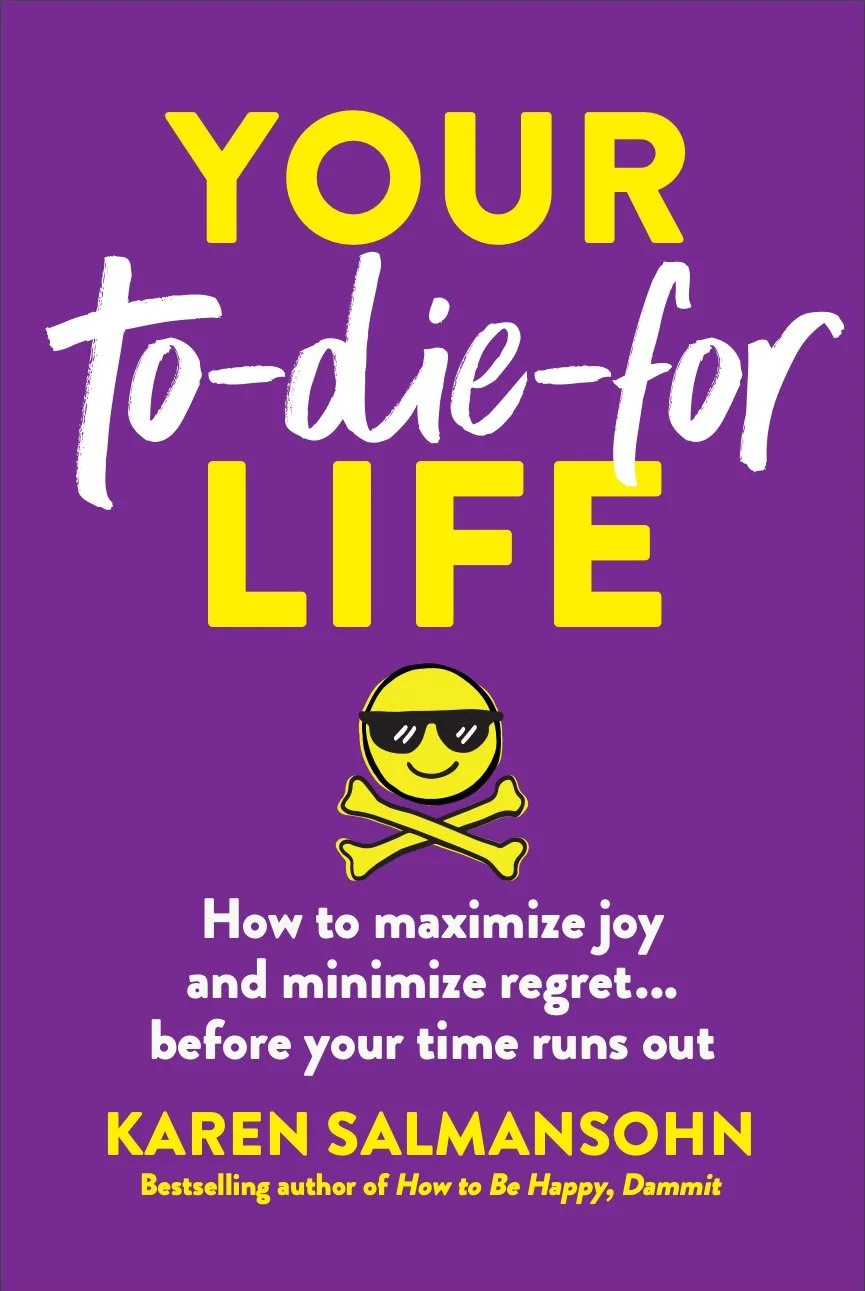
I finished the book I’d been wanting to write. The one about mortality awareness. I titled it Your To-Die For Life, and it came out summer 2025 as a #1 new release. (Both Current Me and Aspirational Eulogy Me are very proud.)
3. The Telling People Hard Things Part
I started telling people what they meant to me. Out loud. With actual words. Like some kind of feelings exhibitionist.
It’s harder than it sounds. Your mouth doesn’t want to say it. Your brain keeps offering safer alternatives. But I do it anyway because future-dead-me knows this matters more than being comfortable.
Last year I told my friend Sarah she’d been the most consistent person in my life for twenty years and I didn’t know what I’d do without her. I said it in a coffee shop. She cried. Then I cried. Then we both laughed because we were crying in public and we thought at this point we were too old for that.
“Why are you telling me this now?” she asked.
“Because I don’t want to die without having said it.”
She squeezed my hand. “You’re not dying.”
“We’re all dying. Some of us are just more aware of it.”
***
While writing and reading (and re-reading) your aspirational eulogy is transformational, it doesn’t change absolutely everything.
I mean, I’m still a mess in some ways. Yesterday I ate ice cream for dinner. Last month I avoided a difficult conversation and said “I’m fine” when I was definitely not fine.
But the gap between who I am and who I want to be is shrinking incrementally, choice by uncomfortable choice.
This isn’t just my weird anecdotal experience, by the way. There’s actual science backing up that embracing your death jumpstarts better living. I know because I looked it up.
Studies consistently show that mortality awareness inspires people to make better decisions. Plus people become more grateful, generous, brave, authentic, and less anxious about superficial things that don’t matter.
You’d assume thinking about death would make you depressed and unable to function, but nope.
However, you know what actually does make you miserable? Pretending you have forever ahead of you, while secretly knowing you don’t. And then living with the constant low-grade hum of “I should be doing something more with my life,” while doing nothing more with your life.
Meaning: thinking about death doesn’t create anxiety. It resolves it.
Here’s my recommendation for you: Write your aspirational eulogy. Keep it somewhere uncomfortably visible. Let it haunt you a little.
Stop pretending you have unlimited time to live the life you want. You don’t. You have THIS time, right now. Then you have LESS time. Then you have NO time. And THEN someone else will be writing your eulogy.
Start appreciating the time you have. And know that each day is irreplaceable. Even the boring ones. Even today, which feels like nothing special but is actually everything you have.
Okay, your turn…
First read Salmansohn’s piece, above, then, if you’d like to participate, in the comments write a mini-eulogy for yourself. Who are you? Who do you intend to become before you die? What do you hope have achieved by then?
Big thanks to Karen Salmansohn—and to all of you, for reading, subscribing, and for supporting Oldster. I appreciate all of you—and couldn’t do this without you. 🙏💝
 | A guest post by
|
Rev. Dwight Lee Wolter done what he could. The End.
Sari, about your "future" in this sentence: "In her later years she founded Oldster Manor, a non-profit senior residence for childless elders with no one to care for them in their dotage." There actually is such a place I learned about only when a person I knew forty years ago recognized herself in a piece of fiction I wrote and published on Substack. We had a wonderful two-hour catchup. "Nobody's ever written about me," she said. Pilgrim Place has been around for about eighty years, and it's amazing.