

Here for Gidget
The passing of a beloved dog showed me how I really fit into the family.


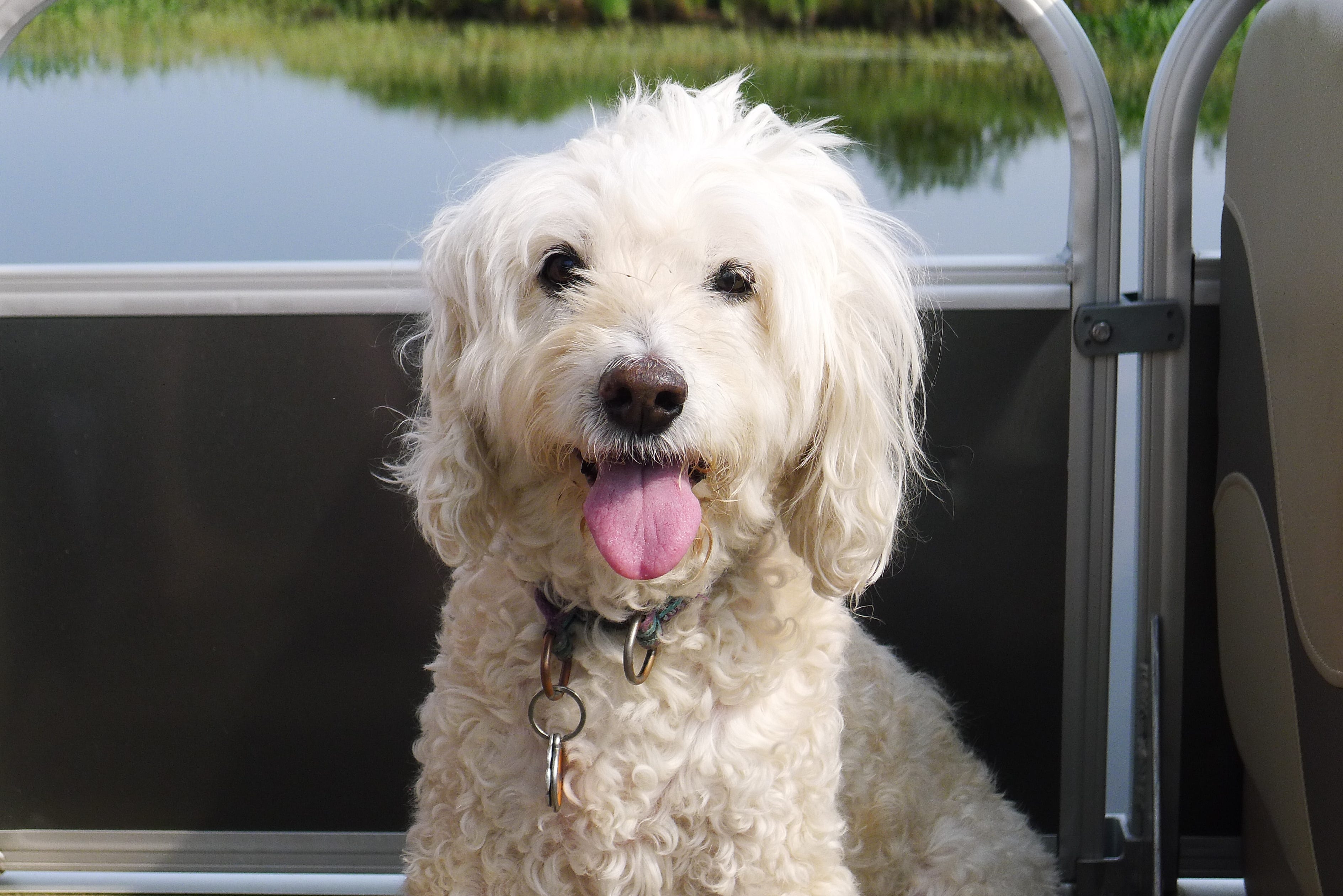
The other day I noticed a piece of fluff stuck to one of the legs of my husband’s nightstand. Dust, I thought, except when I leaned down to inspect, I saw it was a piece of fur. Hair, really—did you know hypoallergenic dogs have hair, not fur? I detached it from the base of the nightstand, brought it in close to examine it. Gidget’s hair. Though she didn’t shed as a poodle-plus-something-undefined, she gave off little tumbleweeds around the house: a puff here, a tuft there.
The tumbleweeds are now gone, minus this errant strand. Instead, we have locks of her fur in envelopes tucked into various drawers. We have two pictures of her on the kitchen table. Her unfilled water and food bowls are still in their place. Her collar rests on the counter where we keep dog treats, but now they’re only for Ramona, the black and grey poodle who has become our solo dog. We have the small wooden box adorned with a pawprint inlay that contains Gidget’s ashes; it sits on a small table surrounded by other precious objects.
Those are some of the things that live in her place.
***
My story with Gidget doesn’t start until she’s nearly 10 years old.
Gidget was my husband Ezra’s dog, with his previous wife and their two children. Ezra’s son, Quinn, had been just 5 when Gidget was adopted from an animal shelter on Long Island nearly eighteen years ago, a puppy for the family. Daisy, Ezra’s daughter, was 9. Gidget, maybe 6 months, was an apricot-white curly-haired moppet. In photos, her head often tilts to the side like she’s intent on hearing what you have to say.
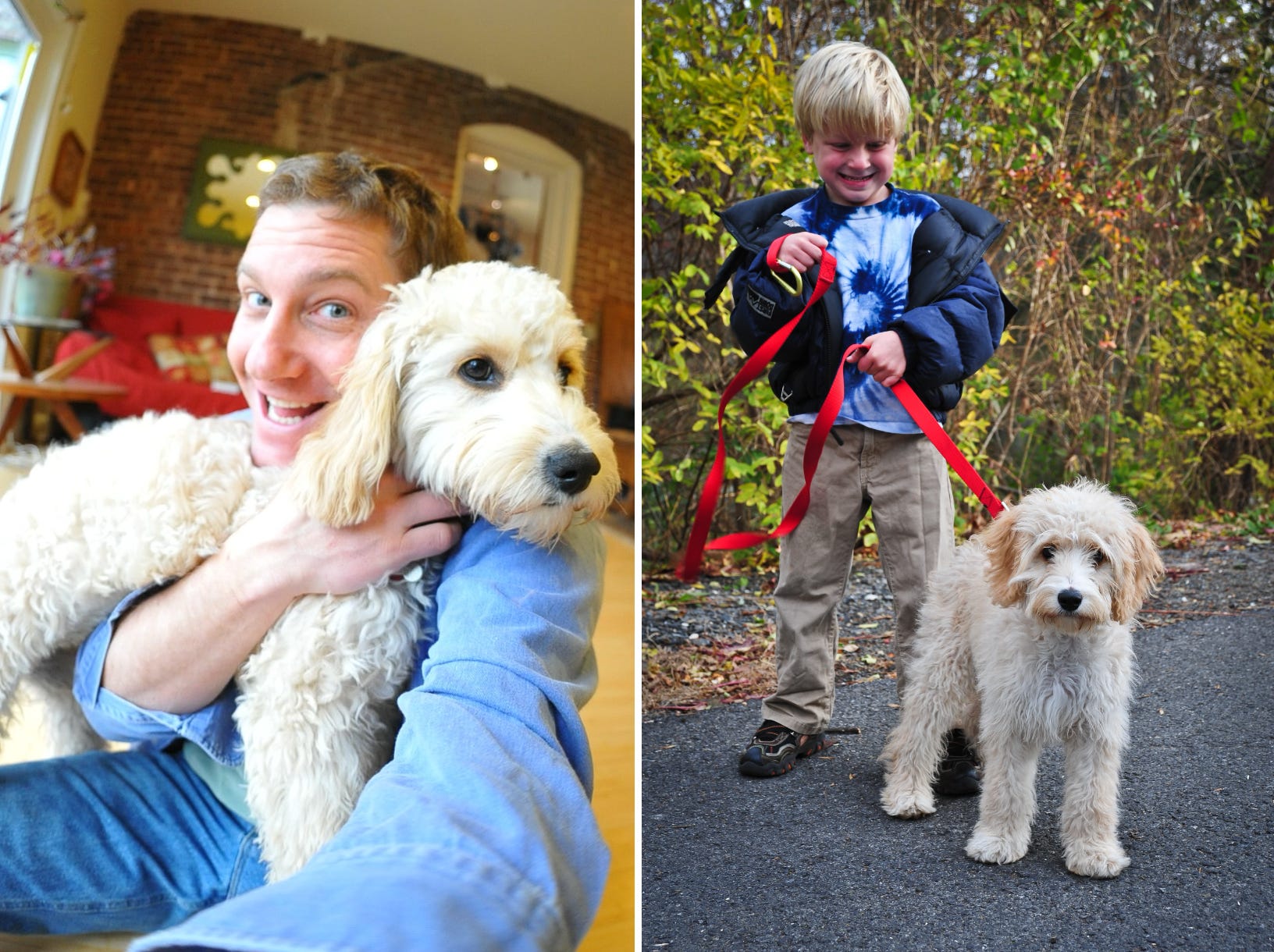
After Ezra’s divorce, a plan had been worked out: The kids and the dog would go back and forth together between Rosendale, where Ezra lived, and New Paltz, where their mom lived. By the time I came into the story, Daisy was away at college, and Quinn was just starting high school. I’d begun visiting Ezra at the Rosendale house, which had a beautiful fenced-in yard, perfect for dogs and a writer girlfriend who could work on her novel on the back porch.
My story with Gidget starts when I come into her life, and I do not leave. It is a story, I think, not of choice, at least not in all of its latitude and freedom, but of acceptance, of slow-growing love and connection.
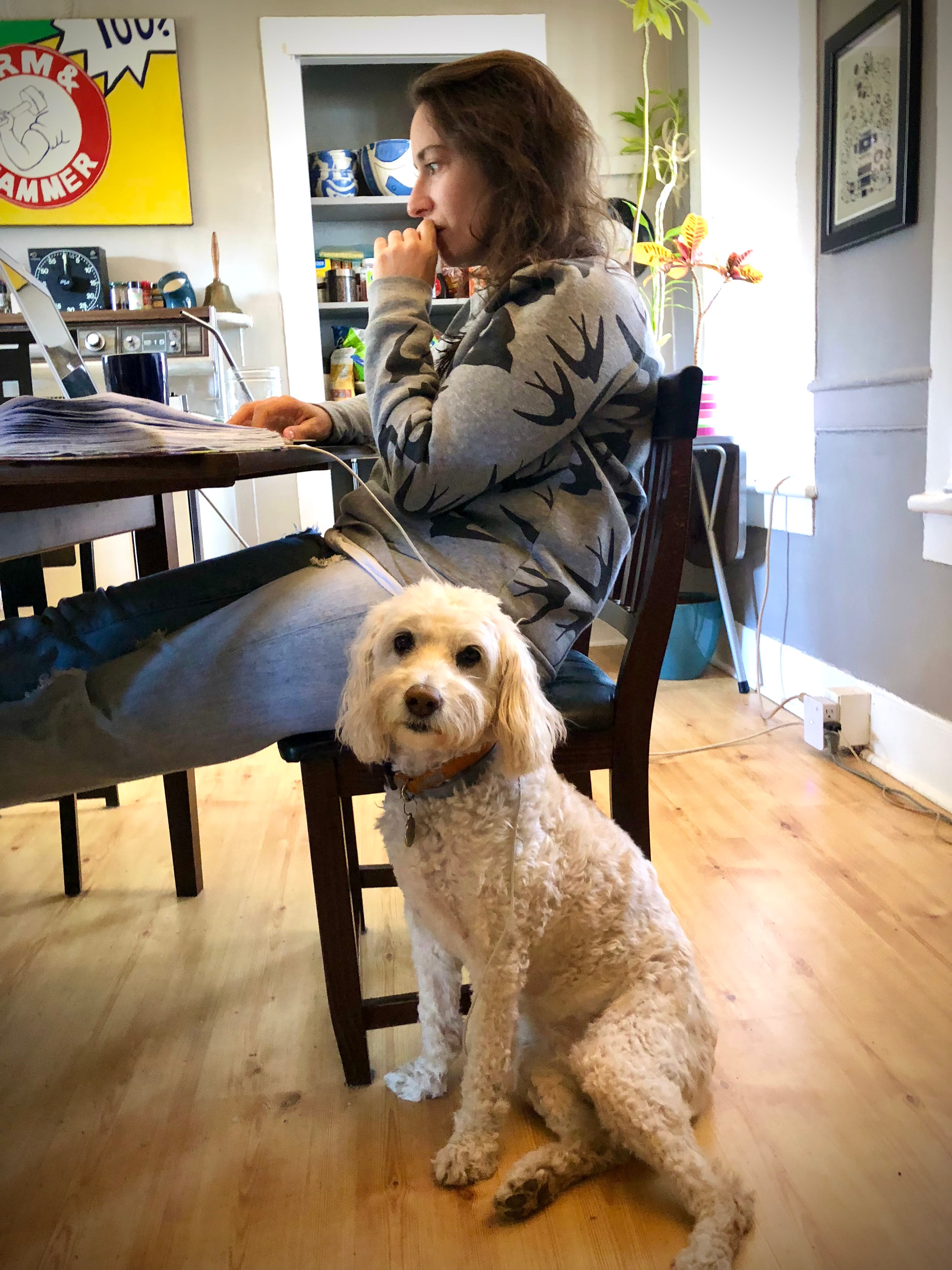
During the on-weeks, Quinn would go to school from the Rosendale house in the morning, and Ezra would go to work. I would stay in the house, doing my own work, Gidget curled up on the couch next to me, or out in the yard, lazily loping around. Sometimes, we’d be in the kitchen, me working at the kitchen table, Gidget lying on the floor. She’d go to the door and whine to go out, and I’d get up and let her out; moments later, she would whine to come back in, and I’d open the door for her. I’d laugh. Who was I kidding? I was already Gidget’s servant.
At night, Gidget would sleep at the foot of the bed, a warm, sweet body ready to wake up when you did. Ezra would go to work and Quinn would leave for school, and I’d be alone in the house, except I wouldn’t be alone because Gidget would be there. You’re never alone with a dog. A dog will come to the bathroom with you, if you let it.
Okay, but even before that there was that time, early in our relationship, when I came up from the city to visit Ezra on a weekend that he had Gidget, but Quinn was away. Ezra and I decided to try some pot-laced chocolate, which resulted in hours of me shaking and huddled near the toilet, waves of alternating heat and cold across my body, panic, and the brief subsiding of that panic, and then the panic again. Ezra did his best to calm me, but Gidget was the most soothing presence. I could put my hand on her soft fur and feel her chest rise with her breath. When it was time for me to return to the city, I was still too flooded with anxiety to take the bus—what if I had a panic attack on the thruway, in the midst of all those people?—so Ezra agreed to drive me back.
“Can we bring Gidget?” I asked. I sat in the backseat with her the entire time.
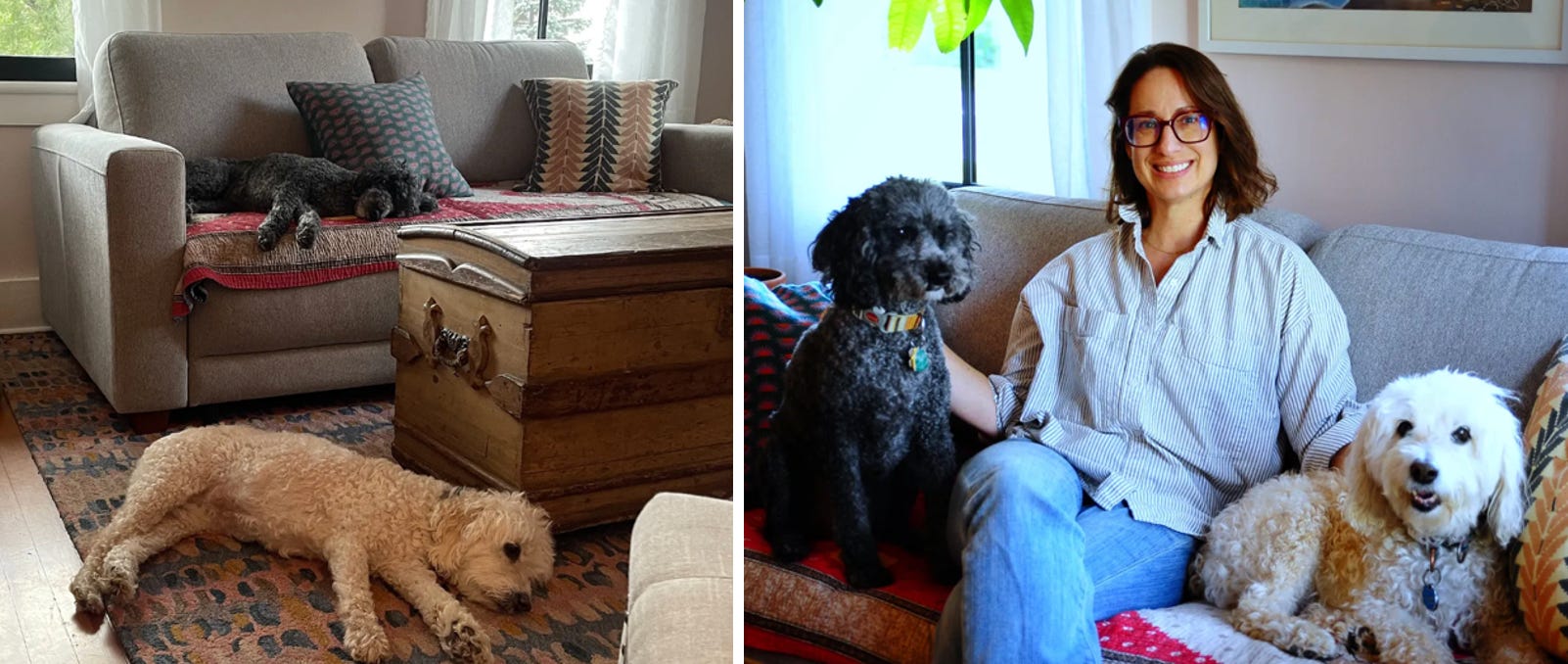
In Quinn’s high school years, after Ezra and I got married, Quinn and Gidget stopped going back and forth and stayed with us for good. I was glad. Before, when they left for the other house, there was an emptiness that couldn’t be filled. It was part of why we got Ramona, because it felt so sad not to have a dog in the house. At first, Gidget kept as far from Ramona as physically possible, but eventually, the two were sleeping in beds right next to each other. They were a family. We were a family.
Then, when Quinn turned 20 and moved out and started living his own independent life, we kept Gidget with us. His schedule was erratic. I worked from home. I could be home for her.
My story with Gidget starts when I come into her life, and I do not leave. It is a story, I think, not of choice, at least not in all of its latitude and freedom, but of acceptance, of slow-growing love and connection.
***
Looking back, it’s hard to say where Gidget’s decline began; as it’s happening, you only see that so much has changed. The walks get shorter and slower; me tethered between two leashes as Ramona surges ahead and Gidget drags behind.
Gidget had always contained mysteries—who dropped this adorable creature off at the animal shelter at just a few months old, and why?—but the mysteries of her old age are frustrating, heartbreaking: She starts behaving oddly, licking and biting her paws so much they become infected, and peeing and pooping in the house without warning. She whines from the wee hours of the morning until we go to bed at night. And then there are the sudden and debilitating shakes, where you can only hold her and tell her it will be okay as you feel yourself shaking, too, waiting for it to end.
Looking back, it’s hard to say where Gidget’s decline began; as it’s happening, you only see that so much has changed. The walks get shorter and slower; me tethered between two leashes as Ramona surges ahead and Gidget drags behind.
The vets can’t solve these mysteries. They tell us what we know: Gidget is 17-and-a-half years old. She has kidney disease. She’s lost most of her hearing; can’t see that clearly anymore. (She still loves her treats, but watch out, fingers!) She has doggy dementia. She might have cancer. We don’t want to do expensive, invasive surgeries that Gidget would struggle to recover from, so we try new drugs—gabapentin, antibiotics, prednisone, doggy ibuprofen, trazodone—and new suggestions. (“Have you tried a lick mat?” one vet asked, and I wanted to scream. Why don’t YOU try a lick mat?)
I search for support online, landing on Reddit threads where people blamed the owner for not loving their animal enough. I join a doggy dementia support group on Facebook, though I never have much time to read it. Sometimes, full of frustration, I threaten to snap. I never got the adorable fuzzy puppy years, but somehow I ended up the main caregiver of this aging dog. It feels unfair, and then I feel bad about that, too.
We realize we’re propping her up, prolonging the inevitable with expensive medication that has questionable effectiveness. “You have to look at her quality of life,” says the vet pointedly, “and also your own.” Everyone says “you’ll know when you know,” but we still don’t know. They also say it’s better to end things too early than too late, but what does that even mean?
I contact an animal psychic who tells me Gidget wants another six months, but she doesn’t know if she’ll get it. Forever, I will feel guilty she doesn’t get another six months.
I take Gidget to the groomer, a kind woman who has worked with her patiently through all of this, and I say I think it might be Gidget’s last visit. I burst into tears, and she hugs me. “I thought so.”
***
The weekend we say goodbye to Gidget, Daisy, who is then 26, comes up from the city. The minute she walks into the house, she starts crying. “Why now, though?” she asks.
It’s right before Christmas, a horrible time to say goodbye to anyone, but that’s not what she’s asking. There’s no good time to say goodbye to a member of the family who’s been there—underfoot, in your bed, in her own bed, just with you, for nearly 18 years. And maybe it’s not the right time. Maybe we could just keep doing this forever, but who would that be good for?
That night, Quinn and Daisy sleep downstairs on the floor, Gidget between them. She doesn’t whine at all.
The next day, the vet who will administer the at-home euthanasia arrives. I’m in tears at hello. “Is this even the right thing to do?” I ask. He is calm, soothing. “Let’s sit down and talk about it,” he says.
I have made Gidget a pound of beef, and she is eating bits of it. The vet talks us through the process. I finally say, like a minister at a wedding, that if anyone doesn’t think this is the right thing to do, we don’t have to. But Ezra, Quinn, and Daisy all agree. This is the best goodbye we can give her, peaceful and surrounded by us.
“She is very loved,” says the vet.
The whole day, afterward, I feel hungover, though I haven’t had a drop of alcohol. The heaviness lodges somewhere in my chest, and, as we watch a TV show together, I feel tears streaming down my face.
When we all say goodnight, I tell Daisy, “I just feel like I let her down.”
She hugs me, crying too. “No. You were more of a mother to her than any of us.”
***
Ezra has a story he tells about Gidget’s 2008 adoption. The shelter operated on a first-come, first-served basis. With the family determined that this was their dog, he left the Hudson Valley around lunchtime to get there in the late afternoon, ensuring he’d be first in line when the shelter opened the next day at 8 a.m. He got a sub sandwich from a deli and parked to wait.
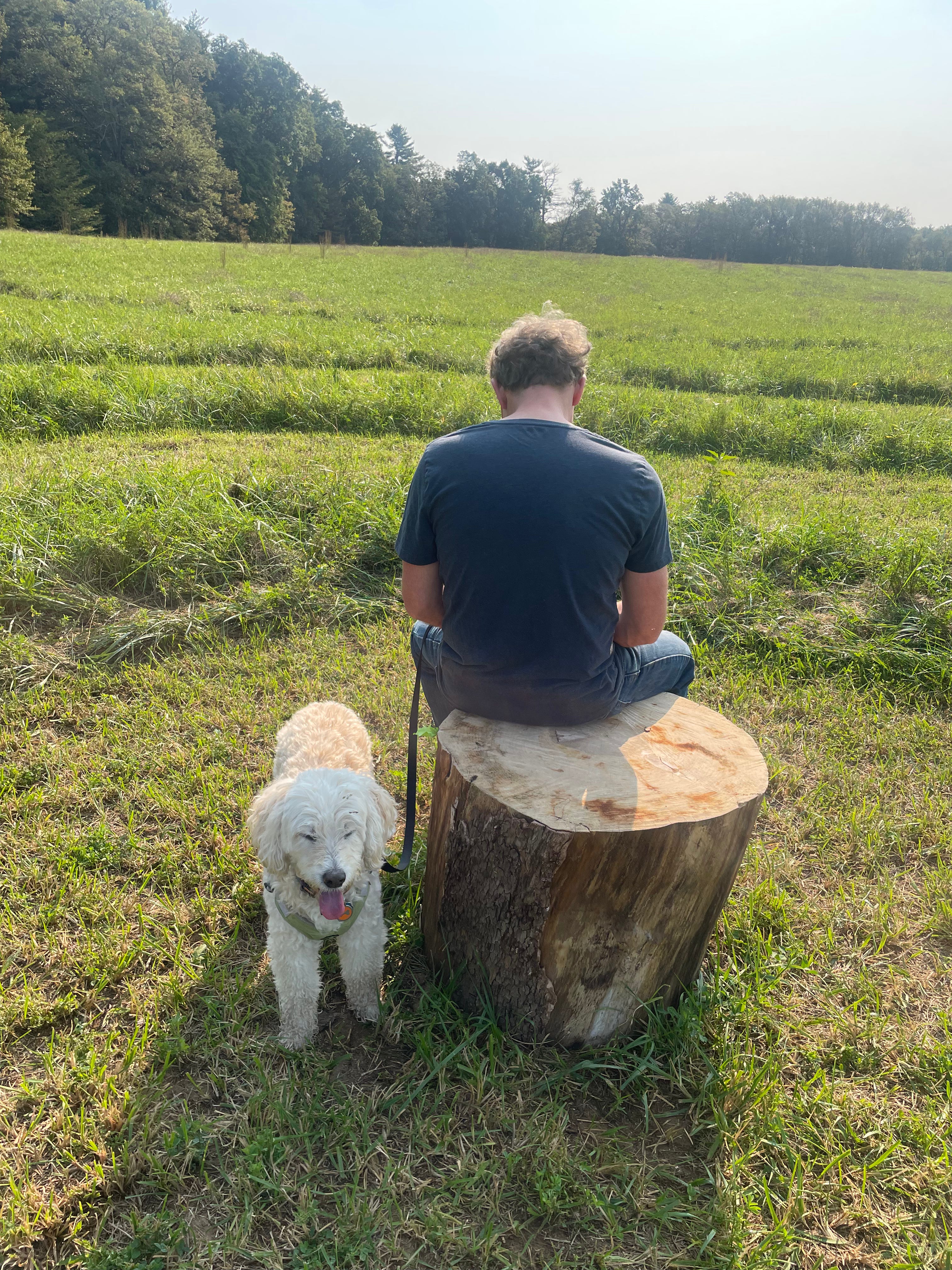
Over the course of the evening, people pulled up behind him, knocked on his window, asked if he was there for Gidget. One guy wailed that his wife was going to kill him for not getting there first—he had to watch his show! Eventually, Ezra put a sign in the back window of his car that read “Here for Gidget.” In the morning, he watched as a car drove to the front of the animal shelter (not to the assigned adoption pickup spot, where he’d parked), fearing they were trying to cut the line. An official-looking woman was walking up to the building with keys, so he went to notify her that he was there; had, in fact, been there since 5 p.m. the night before.
“Don’t worry,” she told him. “You’re in exactly the right place.”
***
For the next bit of time, I will be too full of grief to consider what Gidget would have loved about her ending. Her precious people and her dog-sister around her. All of us making much of her, petting her, looking into her eyes as she eats all the beef she wants. Quinn singing a song he wrote for her, strumming his guitar, which brings us all, including the vet, to tears. This family, blended and real, bonded over the loss of the unconditionally loving dog who gave us so much. I have never said “I love you,” or heard it back, as many times as I did that day.
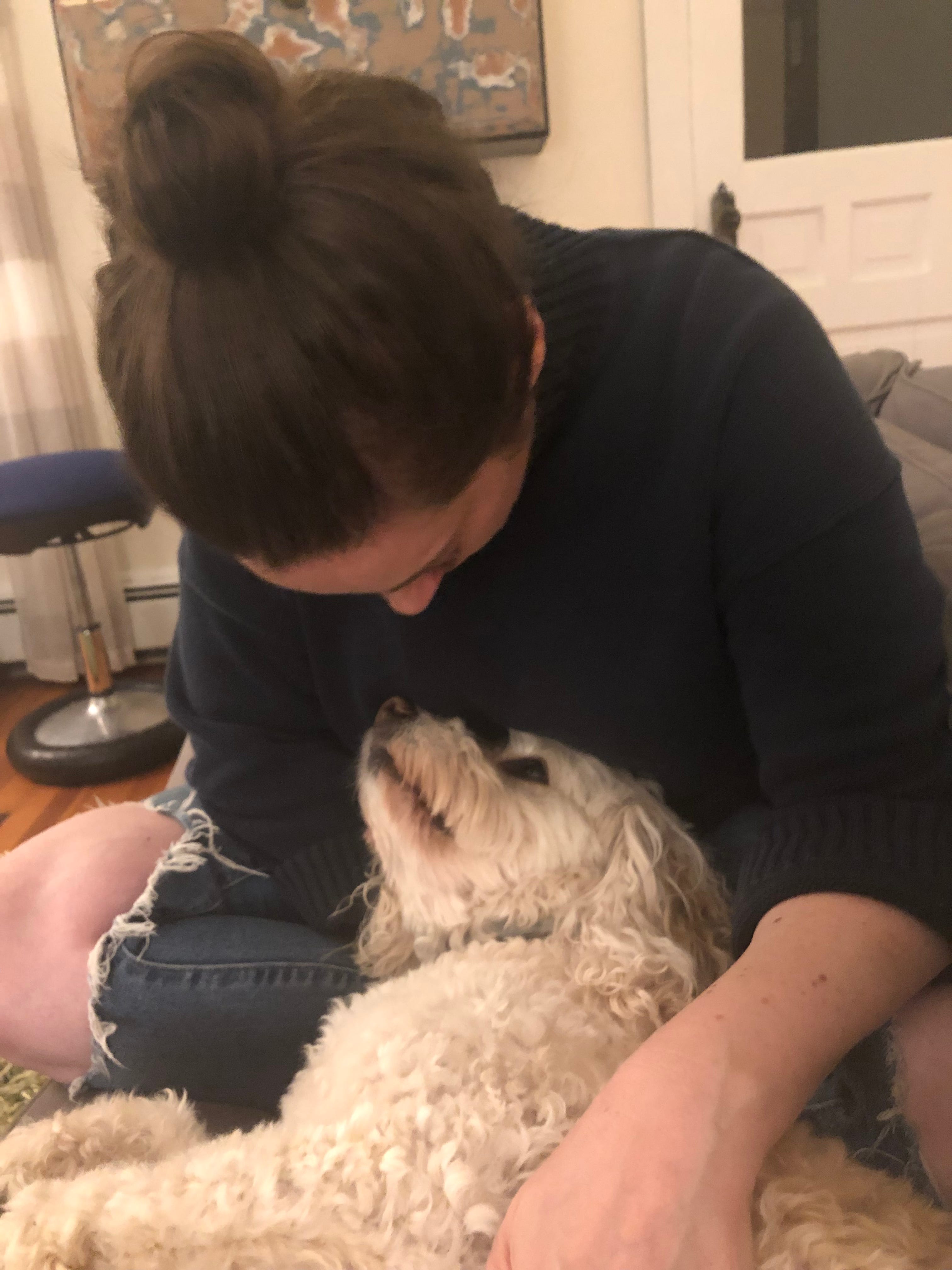
I’d come into Gidget’s life late, but I’d come into all of their lives late. I was the second wife, the stepmother, the stepdogmother. That didn’t mean we loved each other any less. Maybe in the end it meant, somehow, that I had a little extra to give.
Jen Doll is the author of the memoir Save the Date (Riverhead, 2014) and the YA novels That’s Debatable and Unclaimed Baggage. You can find her writing in the New York Times, the Village Voice, the Atlantic, New York, and more. She is at work on a new novel. Previously, she published “Age Appropriate” in Oldster. Check out her newsletter, Settling.
From August 27-30 Jen is co-leading a “Beyond the Noise” writing and yoga retreat with Elizabeth Voetsch at The Spruceton Inn. Just two spots remain…
 | A guest post by
|
Anonymous:
It came to me that every time I lose a dog they take a piece of my heart with them, and every new dog who comes into my life gifts me with a piece of their heart. If I live long enough all the components of my heart will be dog, and I will become as generous and loving as they are.
Jen, this was so beautiful and heartbreaking. We had to let our sweet boy go last October when he was 16.5. The conversations about when, the agonizing, the guilt, the meds, the research, and the intimacy of his last moments all the same. Dogs are worth the price we pay at the end but the emptiness they leave is real. Thanks for sharing your story.