

An Auld Acquaintance, Not Forgot
At the new year, 83-year-old Sydney Lea reflects on a friendship from his teenage years.


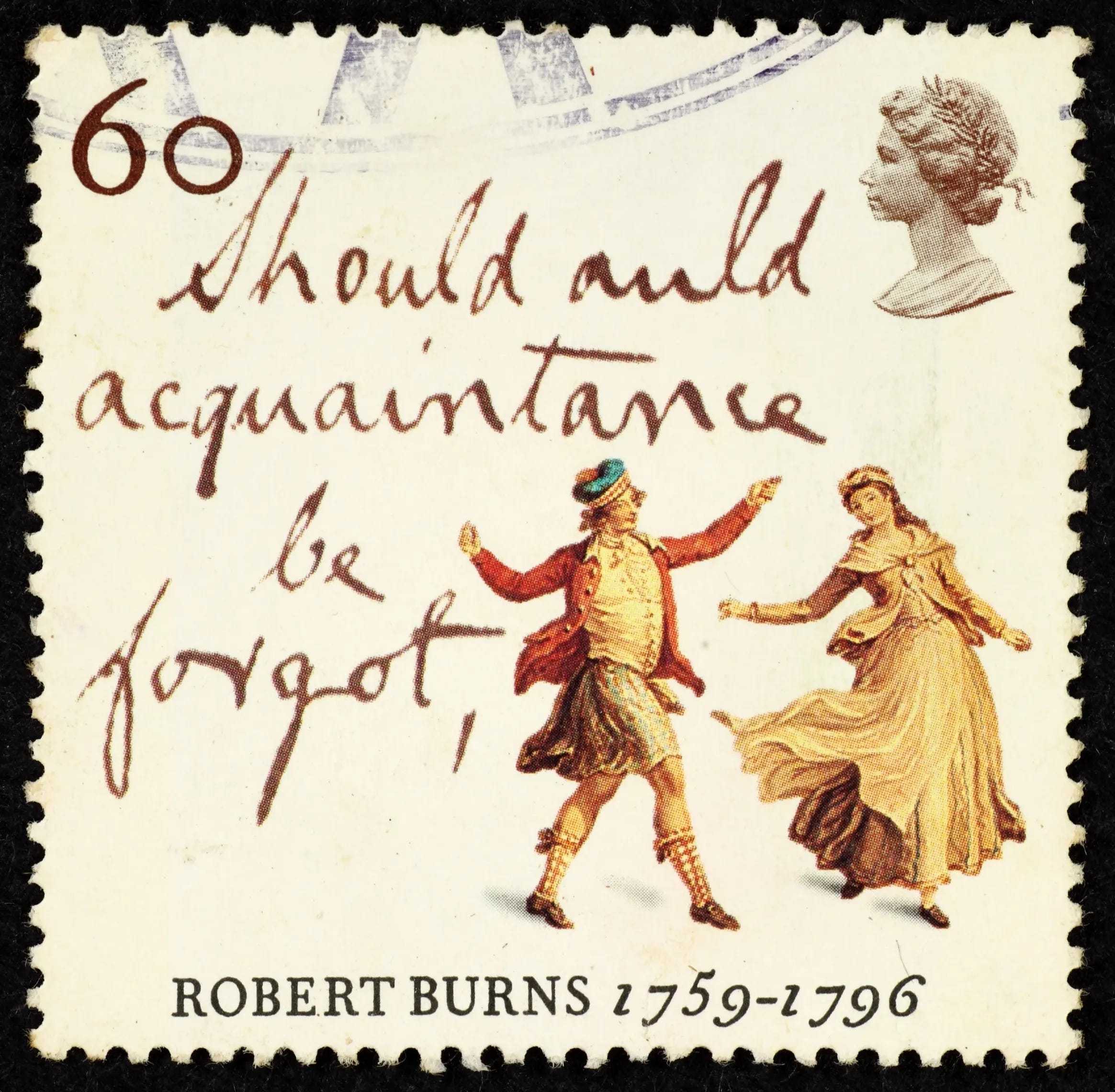
I woke up this morning humming “Auld Lang Syne.” It’s almost the New Year, although, having just turned 83, I won’t stay up and celebrate the actual turning of the calendar. And yet the gist of that venerable Scottish chestnut still seems appropriate, even if I put down the “cup of kindness”—or in my case, of ruin—ages ago now.
For all my New Year’s resolutions to get in touch with some auld acquaintances I haven’t talked to for overly long, I’ve been detoured by the evergreens out my window. They’re turning gold in the early sun. The temperature outside is below zero, a condition I welcome because it makes for the best version of such gilding—clear air and a cloudless sky.
Tomorrow is the last day to save 20% for life on annual subscriptions to Oldster Magazine. Paid subscriptions keep Oldster going, and help pay essayists and interviewers…
I immediately find myself further distracted, however, by thinking about the thousands on thousands of shamefully unsheltered men and women who struggle here in the world’s wealthiest nation. What do they do on days like this, and worse, the nights on either side of them? It would be better if these unfortunates were bees, fueled by their own honey, beating the air with wings and so keeping the hive “warm and cozy.” That’s what my field guide claims at any rate.
But I’ve gotten off track. Golden pines and firs? The homeless? Honeybees? I have for the moment forgotten old companions even as I softly whistle the very tune that cautions me to remember them. Small surprise: as my wife points out, my mind was inclined to wander even when I was a young man.
You get auld and your auld acquaintances can be forgot, or at least can go silent. Some of them are dead and others have simply fallen out of touch in other ways. And I remind myself to avoid looking at all this from the wrong end of the telescope. Too many longtime friends, one of whom I met in kindergarten, have sunk so far into dementia that, yes, they have forgotten me.
As I was saying, or meant to be saying, you get auld and your auld acquaintances can be forgot, or at least can go silent. Some of them are dead and others have simply fallen out of touch in other ways. And I remind myself to avoid looking at all this from the wrong end of the telescope. Too many longtime friends, one of whom I met in kindergarten, have sunk so far into dementia that, yes, they have forgotten me.
Do you detect a note of self-pity? No doubt. But my real pity lies with them. Being homeless and enduring arctic weather on the streets—that’s a misery I can’t fathom, but the world of my addled friends is at least equally exotic. I was about to say that I can only imagine it, though in fact, I have no idea whatsoever how the world looks to those who have entirely lost their bearings. Please God, let me never learn.
Just now my thoughts turn to a specific sufferer, whom I knew best way back in the 1950s. As an adolescent, I was a typical, witless, libidinous American male (an unsavory type whose resurgence has lately been encouraged by America’s vile chief executive and his vile, misogynistic toadies). So it was very un-typical that I had a female friend—I’ll call her Molly here—who was only that, a friend.
I can’t explain why I never lusted for Molly, given her extraordinary beauty and my rampant hormones. Somehow I just didn’t. No, she turned out to be the one person, gender be damned, with whom I shared my sorrows and insecurities more candidly than with anyone else—certainly more, say, than with my rather imperious mother, not to mention my fellow male rowdies.
I especially recall one summer night when Molly and I sat on the ground in my uncle’s apple orchard, the Buck Moon almost as bright as the sun that’s climbing into its dark blue sky this morning. Molly suddenly jumped up, broke off the tip of a branch laden with green apples, and dragged the stick down her cheek. Blood caught the moonlight right away.
“What in hell are you doing?” I shouted.
“I don’t know,” she whispered, her eyes streaming. “I just feel like such a piece of garbage I need to be punished.”
I won’t rehearse the reasons why, but I identified so vividly with what she said that I grabbed the piece of wood out of her hand and did the very same thing to myself. Looking back, this all seems uncanny, including the fact that—unaccountably, or perhaps not at all—we both soon broke into laughter that lasted for minutes on end.
Molly, of course, was anything but garbage. It was scarcely only that she was lovely to look at. She had a keen intelligence and talent enough that she had a performing career with a renowned troupe, after which she became a much-admired choreographer.
Just now my thoughts turn to a specific sufferer, whom I knew best way back in the 1950s. Molly and I were able to read each other’s minds and hearts. All we needed to do was make a phone call, greeting each other with, “Hello, garbage,” and we’d instantly break into that cleansing laughter again. Molly, of course, was anything but garbage.
Nor was I so base a creature as I thought just then. I’d go on to a satisfying academic career and to some moderate distinction as a writer. And I now see my self-loathing as a sort of grandiosity, which I’ve done pretty well to extirpate. Oh, it can come back even now, but for mercifully far shorter periods.
My main point, however, is that Molly and I were able to read each other’s minds and hearts in the moment I describe. There were other moments, to be sure, but this one was sufficiently purgative that neither of us felt so low again in the sweat shop of adolescence. All we needed to do was make a phone call, greeting each other with, “Hello, garbage,” and we’d instantly break into that cleansing laughter again.
Though we two ended up in very different parts of the country, we kept in touch for a decade or so. And then we let auld acquaintances abruptly be forgot. No, that’s too strong. At all events, life and family concerns intruding, we did cease our correspondence.
It stayed dormant for quite a spell, and then Molly, having read one of my poems in some journal, found an email on my website and wrote me a sweet note. She said she wanted to catch up on how I was. I told her I’d married more happily than I could ever have hoped and was father to three children, a number that would swell to five after that reconnection. I also prosed on about the teaching and writing life until, eventually, it occurred to me in a subsequent email that I might ask about her life.
As it turned out, Molly was a miracle. In her late 20s, she’d been diagnosed with Guillain-Barre Syndrome, a neural disorder usually beginning in the legs and resulting in muscle weakness or even paralysis—a death sentence, you’d think, for a dancer. Through sheer determination, however, she rehabilitated herself to the degree that she did a final dancing tour in her late thirties, after which she went on to the choreographic work.
We kept up the correspondence, however sporadic, for several years. Then, about half a decade back, she simply quit it again. I was confused by her silence but in time I learned its cause from a mutual friend, one I’d also known, though far less well, in our high school days. She wrote me a longhand letter, a quaintness in our time, describing the rapid and corrosive effects of Parkinson’s Disease on Molly’s marvelously athletic body. Not so long after, another letter referred to the effects of Alzheimer’s Disease on her cognition.
For my dear chum, then, it has never rained without pouring.
We kept up the correspondence, however sporadic, for several years. Then, about half a decade back, she simply quit it again. I was confused by her silence but in time I learned its cause from a mutual friend, one I’d also known, though far less well, in our high school days. She wrote me a longhand letter, a quaintness in our time, describing the rapid and corrosive effects of Parkinson’s Disease on Molly’s marvelously athletic body. Not so long after, another letter referred to the effects of Alzheimer’s Disease on her cognition.
I did get one more email from Molly, sadly if predictably consisting of gibberish. I can see by way of the Internet that she’s still living, and I know I’m a coward not to have asked our common friend about her deterioration. I’m selfish too: I simply long to retain the image of that teenaged girl, so eerily beautiful in the moonlight that sifted through the apple trees and lit up those globes of blood on her cheek. And I can rationalize: that mutual friend, in her last communication, informed me that Molly now had no idea who I was anyhow.
Though I could easily summon others, I have a compelling motive for concluding with that single tragic instance of auld lang syne. It’s still the holiday season for us, the extended family filled with those five children and their own eight children, along with assorted spouses and partners. Joyful chaos reigns. I’m trying to avoid getting mired in sad reminiscence now, but I mean to try even harder now that the crowd has convened.
Robert Frost, in his great poem “The Need of Being Versed in Country Things,” describes “the sigh we sigh/ From too much dwelling on what has been.” For me, that dwelling can be almost addictive, but as long as my own mind is more or less clear and my loved ones hale and hearty, I’ll struggle as hard as I can to stay on the near side of heartbreak.
Read all of Sydney Lea’s essays for Oldster.
Oldster Magazine explores what it means to travel through time in a human body, at every phase of life. To support this work, please become a paid subscriber. 🙏 Now through New Year’s, save 20% off annual subscriptions, for life.
 | A guest post by
|
This is beautiful writing on an important topic.
This is going to sound harsher than it's meant to, but just because she doesn't know you anymore, doesn't mean she doesn't need you. That your presence might give her joy, your voice on the phone might spark something even if she can't put a finger on it. My mother recognized the voices of those she loved and who loved her long after she'd lost the ability to name them or recognize their faces. Even now, she talks with the invisible friends, who knows who they are, but she craves company. Those family and friends who stopped calling or visiting or asking after her because "would she even know who I am?" were cut from my life because for them, their interactions with Mom, before dementia or after, was all about them. We don't need that. Sounds like you two go back far enough, and close enough that maybe a photo, or a call, or a Zoom if that still works for her (Mom could never make sense of FaceTime, even at her best, she was busy starting at her own image on screen). Don't let go so easy. I say all of this with love, for her, for what you had, and for you, now and going forward.